ESN Premium heard from executives at battery energy storage system (BESS) firms Rept and Fluence on the EU funding ban on Chinese inverters in solar and BESS projects.
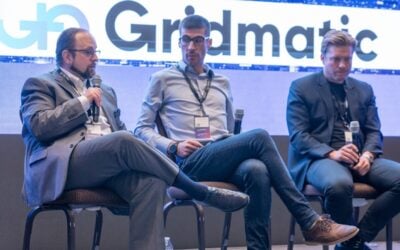
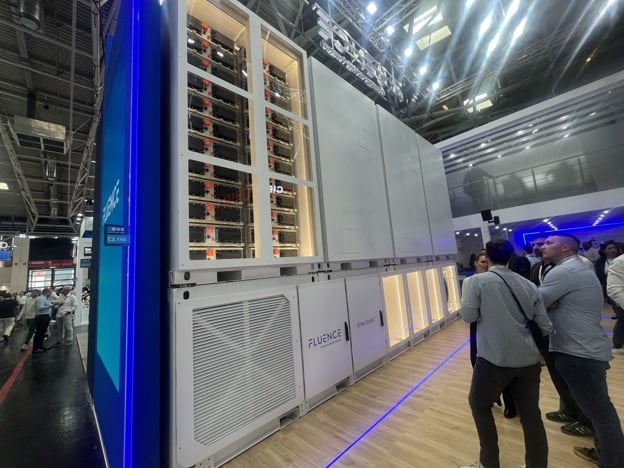
The topic was one of several discussed by Lars Stephan, director of marketing, policy and public affairs EMEA for Fluence, and Andy Tang, CEO of overseas business for Chinese OEM Rept Battero in exclusive video interviews at The Smarter E trade show in Munich, Germany, today.
The European Union (EU) imposed its restrictions on the use of inverters from four countries in EU-funded projects: China, Russia, Iran and North Korea in April. These are the same four designated in the US’ One, Big, Beautiful Bill Act (‘OBBBA’) as countries that prohibited foreign entity (PFE) companies would be tied to and of course, of the four, China is the major producer and exporter of inverters and other clean energy equipment.
The decision to ban funding for projects using inverters from ‘high risk’ countries from major financing instruments including the European Investment Bank (EIB) followed a call from Members of the European Parliament (MEPs) last year to restrict Chinese access to EU energy infrastructure.
Try Premium for just $1
- Full premium access for the first month at only $1
- Converts to an annual rate after 30 days unless cancelled
- Cancel anytime during the trial period
Premium Benefits
- Expert industry analysis and interviews
- Digital access to PV Tech Power journal
- Exclusive event discounts
Or get the full Premium subscription right away
Or continue reading this article for free
The group of 30 MEPs cited cybersecurity concerns in an open letter to executive vice president of the commission, Henna Virkkunen, and commissioner for energy and housing, Dan Jørgensen. They called for “immediate and binding measures,” to restrict “high-risk” solar inverter vendors, as reported by our colleagues at PV Tech last November.
It was later confirmed that the rules extend to the bidirectional power conversion system (PCS) inverters used in battery energy storage system (BESS) projects. While not an outright ban on Chinese inverters being used in EU countries at this stage, it will nonetheless be applicable to many projects, including those being supported by Recovery and Resiliency facility grants and loans for economic reconstruction.
‘Re-engineering, diversification of supply chains may be required’
Fluence’s Lars Stephan said the impact of the ban is being felt more greatly in solar than in BESS: “Part of it is that in the solar side we have much stronger deployment of string inverters which are more dominated by Chinese suppliers where in the battery space central inverters have a larger market share. And for central inverters there’s European suppliers or Western suppliers that have a stronger market share.”
But in the long-term what this does is force the industry to develop optionality and resiliency in its supply chain, he said.
“Everybody is really becoming aware, ‘Hey, I need to think about my inverter choices.’ If you have projects that fall under this funding, you will not be able to use Chinese inverters anymore. This can provide hiccups in supply chains and specific project design. So re-engineering might be required,” Stephan said.
“I think key learning from this and all the impact for European supply chains is create optionality, understand risk, and understand what is the potential future risk coming, for example, from the Cyber Security Act. It’s about making sure that your supply chains are resilient and has optionality to change your procurement depending on how legislation changes.”
We asked Rept’s Andy Tang, formerly head of Wärtsilä’s energy storage division, for his views on where this ultimately might be heading and how a Chinese company needs to respond.
“The reality is that the Chinese battery manufacturers really have a pretty dominant position in the industry. And from a cost perspective, if we think about the cost to deploy these systems, China has a really dominant position that’s going to be really hard for the West to overcome,” he said.
“What you’re seeing in the United States as an example, which is an example of an administration or a policy-driven guidance, which is really trying to choke off battery supply from China, and you’re seeing a lot of chaos and a lot of dislocation and a lot of project delays because of the misunderstanding of where the various tariffs and legal structure stand with using batteries made in China.”
Inverters and PCS play central role in controlling assets
“My personal view is that this should be an economic decision and that most policy across most nations will leave it as a policy and economic decision really towards achieving their goals to green their economies and to become self-sufficient on power and continue the march to decarbonisation,” Tang said.
However, he conceded that for inverters it is ultimately a different discussion than for a BESS unit.
“On the inverter front, I do believe that takes some special thought. The fact of the matter is that, and I say this with a little bit of caution, but at the end of the day, the DC box of batteries is somewhat of a dumb box of batteries sitting in the field. The inverter is where you control the power being discharged or charged onto the grid and that’s where you can create some grid issues.”
“Whether that should be an outright ban by Chinese inverters, I think that’s a bit strong, but I think there’s definitely some further thought or evaluation that should be done on the EMS that controls that and looking at ways to manage that situation.”
He added that most of the projects he has worked on to date have used European inverters, and Rept could use those manufacturers if required.
Video interviews from the Smarter E event, including the ees Europe energy storage expo and conference, will be posted to ESN Premium and Energy-Storage.news in the coming weeks.
Additional reporting by Andy Colthorpe.