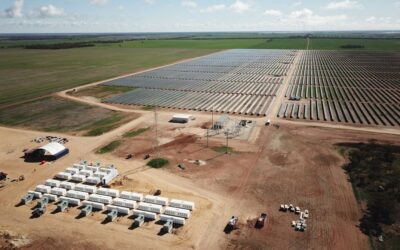
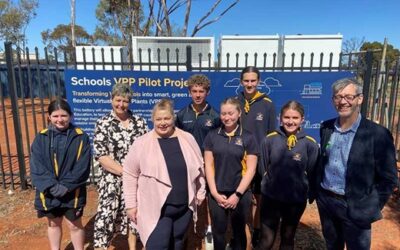
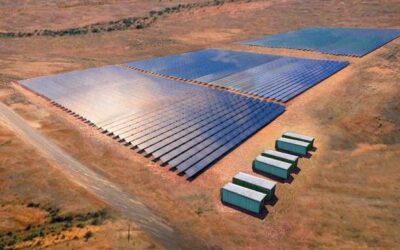
A five-year long project to trial the use of energy storage at community-scale in a Western Australian suburb achieved an 85% reduction in consumption of energy from the grid at peak times for participating households.
In the past couple of weeks, national and state government organisations in Australia have announced various stages of development for solar projects with a range of advanced and innovative storage solutions attached.
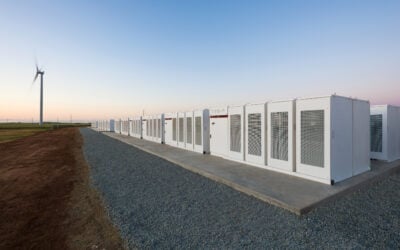
Australia’s national Clean Energy Finance Corporation (CEFC) has said it will commit AU$50 million (US$34.14 million) to help fund expansion of landmark Hornsdale battery project in South Australia.
Make no mistake – headlines in the mainstream press this week around Australia, climate change and energy are not positive. But enthusiasm at state level, where arguably politicians have closer relationships with their constituents, appears to run counter to apathy or even obstructionism from the top.
In order to address intermittency in its grid, the South Australian Government has introduced a AU$50 million (US$36 million) Grid Scale Storage Fund (GSSF) to help accelerate the deployment of new large energy storage projects, including pumped hydro, hydrogen, gas storage, solar thermal, bioenergy and battery storage.
Australia is to trial using solar and wind power to produce hydrogen via electrolysis, with the hydrogen then being used for long-term energy storage in the Sydney gas network.
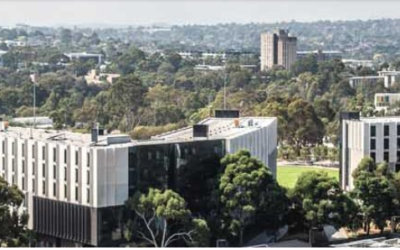
The Australian Renewable Energy Agency (ARENA) has partnered with Monash University and technology provider Indra Australia to trial a microgrid as a first step to powering Monash’s Clayton campus entirely with renewable energy by 2030.
Australia’s ‘peak national body’ representing transmission and distribution organisations in both electricity and gas, Energy Networks Australia (ENA), has pushed for a more consistent approach to grid connections of solar PV and battery storage by issuing a set of guidelines.