Repurposing EV battery packs and modules into BESS obviously has environmental benefits, but challenges around pricing, performance and safety remain, panellists at an industry event in London said last week.
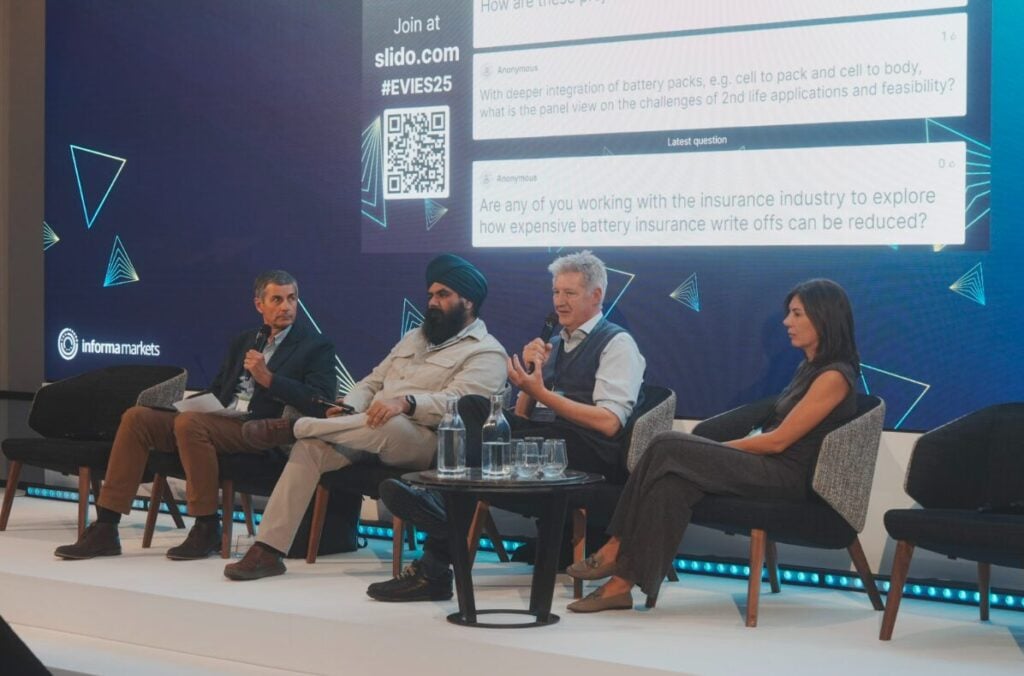
The topic of putting EV batteries into stationary battery energy storage systems (BESS) was discussed on the ‘Second Life Batteries: Unlocking Value Before Recycling’ panel discussion on Day One of Informa’s EV Infrastructure and Energy Summit in London yesterday (1 October).
The panel was preceded by a case study presentation from Pedro Miguel Ferreira, innovation unit manager for energy group Galp on the learnings from a second life BESS deployed in Madrid.
Ferreira’s colleague Carla Tavares, head of renewables and commercial innovation centre, then said on the panel that there was still a lot that was not known about second life projects.
Try Premium for just $1
- Full premium access for the first month at only $1
- Converts to an annual rate after 30 days unless cancelled
- Cancel anytime during the trial period
Premium Benefits
- Expert industry analysis and interviews
- Digital access to PV Tech Power journal
- Exclusive event discounts
Or get the full Premium subscription right away
Or continue reading this article for free
“On the safety side, it raises issues because as an end user we don’t have the knowledge to look inside the batteries that we are reusing. That’s why we count on companies that do the repurposing and packaging,” she said.
“Furthermore, from our experience in deploying second life BESS at scale, it raises a lot of concerns in terms of safety and in terms of how many years I can consider in my Excel spreadsheet when I’m buying second life batteries? We don’t know yet. It could be five, it could be seven, it could be 10. And it makes a lot of difference, especially when we now have price parity between new ones and second life ones.”
The price parity is because the price of new lithium-ion, lithium iron phosphate (LFP) battery modules has fallen sharply over the past 2-3 years, reducing the business case of using second life ones. Second life might still be cheaper at point of sale, but it has extra costs of disassembly, triage, testing and re-assembly that new ones don’t.