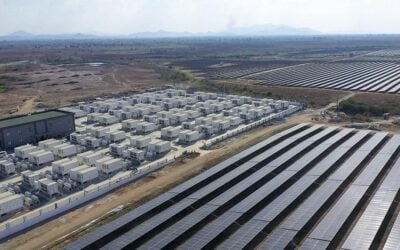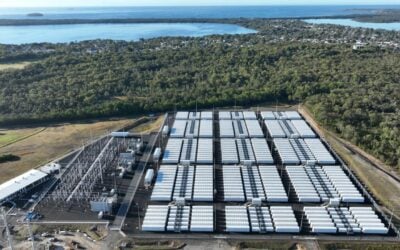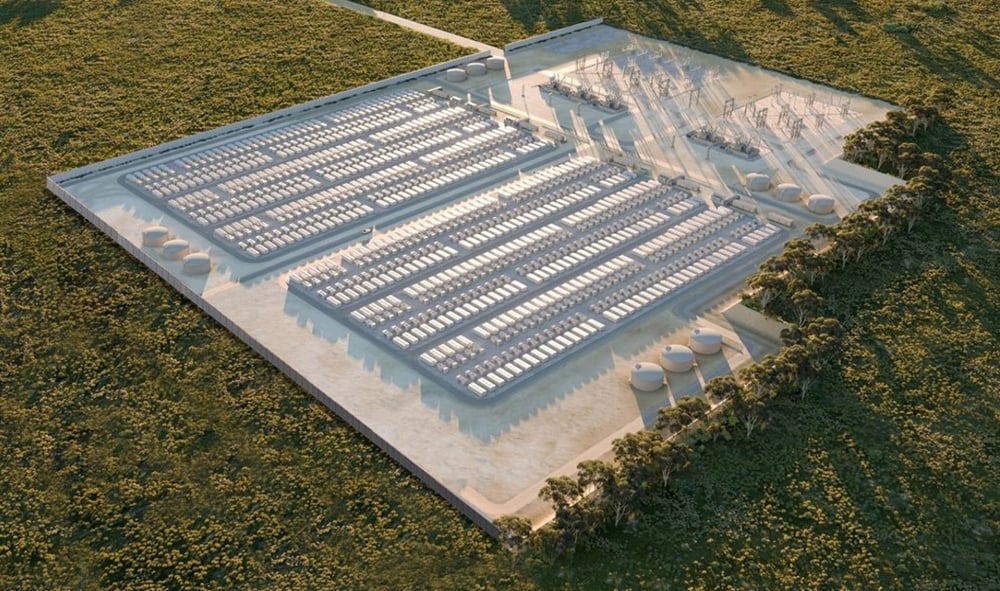
Samsung C&T Renewable Energy Australia has submitted the 600MWh Comet Park battery energy storage system (BESS) for federal environmental assessment under Australia’s Environment Protection and Biodiversity Conservation (EPBC) Act.
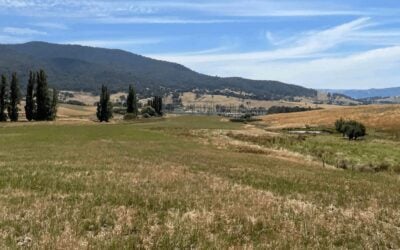
The Comet Park BESS is proposed in the Leeton Shire local government area of New South Wales, approximately 1.5km southwest of Yanco and 6km south of Leeton in the Riverina.
The system will have a power output of up to 150MW and 600MWh of energy storage capacity, using lithium iron phosphate (LFP) technology.
The project area covers approximately 53 hectares, with a referral area of up to 11 hectares encompassing all components of the facility, including the battery containers, inverters, transformers, substation augmentation and ancillary infrastructure.
Try Premium for just $1
- Full premium access for the first month at only $1
- Converts to an annual rate after 30 days unless cancelled
- Cancel anytime during the trial period
Premium Benefits
- Expert industry analysis and interviews
- Digital access to PV Tech Power journal
- Exclusive event discounts
Or get the full Premium subscription right away
Or continue reading this article for free
The BESS will connect to the National Electricity Market (NEM) via a transmission line to the existing Yanco Substation, which will require augmentation to accommodate the additional infrastructure.
Three potential design options for the transmission connection are under assessment. The project is also subject to environmental assessment under the New South Wales planning framework as State Significant Development (SSD), meaning the EPBC submission is the federal component of a dual approval pathway already in progress.
Construction is expected to take 18 to 24 months, with a peak workforce of approximately 45 full-time equivalent personnel. The facility would have a design life of up to 30 years and a small operational workforce.
At the end of life, the project would be either decommissioned and rehabilitated to pre-existing land use or repowered under a separate development application.
Samsung C&T’s Australian renewable energy arm is the local development division of Samsung C&T Corporation, the South Korean conglomerate’s construction and trading business.
Samsung C&T’s expanding Australian pipeline
The Comet Park referral extends a pattern of accelerating EPBC submissions from Samsung C&T Renewable Energy Australia across New South Wales and Queensland.
The company currently has five solar PV power plants totalling 1.28GW of capacity, each with an associated BESS, and six standalone battery storage systems with a combined capacity of 2.82GW in development across the two states, according to publicly available project pipeline data.
Samsung C&T proposed a 200MW grid-scale BESS near Townsville, Queensland, in October 2025, as the Block BESS project, featuring 192 battery modules and 48 inverter transformers in a grid configuration with integrated temperature regulation and fire suppression systems.
In September 2025, the company submitted its Dunmore solar-plus-storage project to the EPBC Act, comprising a 300MW solar PV plant co-located with a 150MW/300MWh 2-hour duration BESS, connecting to a new 330kV switchyard between the Braemar and Bulli Creek substations.
Prior to this, in June 2025, Samsung C&T submitted the 100MW/400MWh Mangoplah BESS near Wagga Wagga in New South Wales to the EPBC Act, with Tesla Megapack technology under consideration for the installation at the time.
The Comet Park BESS, as a standalone grid-connected asset at 150MW/600MWh, sits at the 4-hour duration bracket that has dominated Capacity Investment Scheme (CIS) tender awards and NSW Electricity Infrastructure Roadmap procurements.
The 4-hour specification positions the system to shift peak demand across the evening demand window, absorbing daytime solar generation and dispatching it through the late afternoon and early evening as demand rises and solar output falls.
Our publisher, Solar Media (part of Informa Group), will host the Battery Asset Management Summit Australia 2026 on 25-26 August at Amora Hotel Jamison in Sydney. You can find out more about the Summit on the official website.