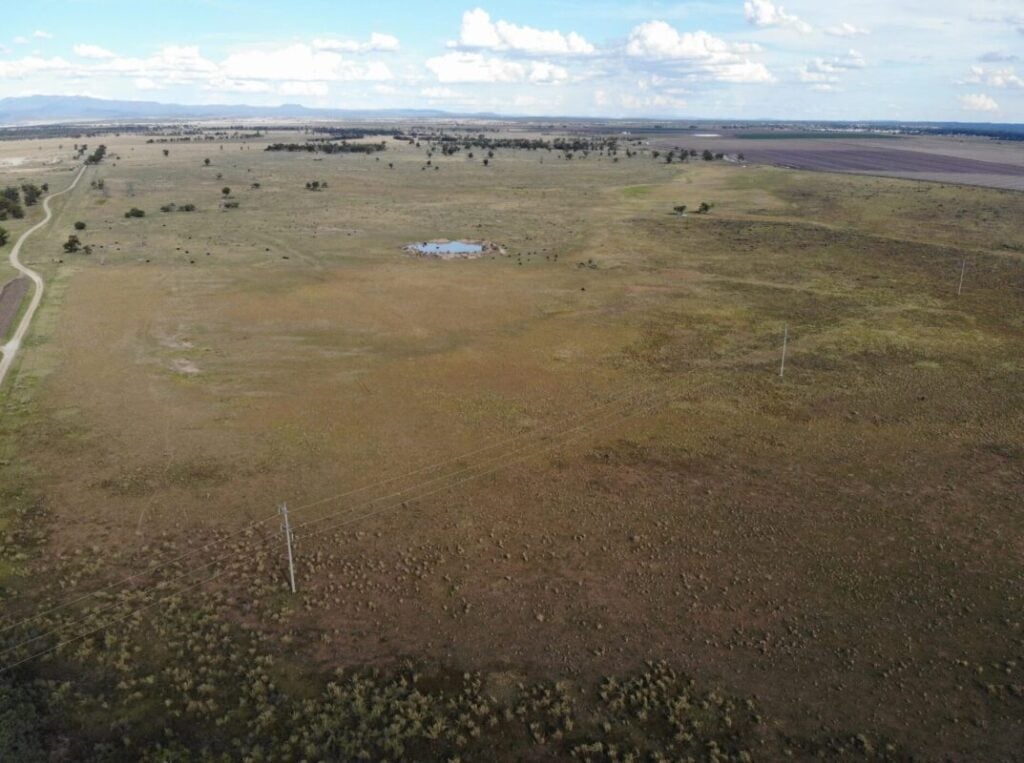
Samsung C&T Renewable Energy Australia has submitted plans for a 300MWh solar-plus-storage project in Queensland to Australia’s Environment Protection and Biodiversity Conservation (EPBC) Act.
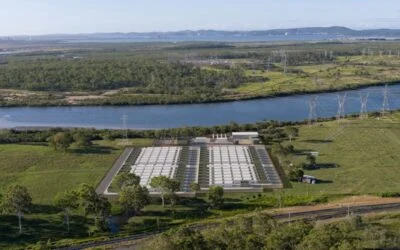
The Dunmore Solar Farm and battery energy storage system (BESS) will be constructed on a 534-hectare portion of a larger 1,056-hectare site at Cecil Plains Moonie Road, located roughly 240km west of the state capital, Brisbane.
It will consist of a 300MW solar PV power plant co-located with a 2-hour duration 150MW/300MWh BESS, which will be installed on a concrete pad adjacent to site offices and operational areas.
According to documents submitted as part of the EPBC Act application, the Dunmore development includes a new 330kV switchyard between Braemar and Bulli Creek Substation, with a proposed Dunmore substation occupying a 300m x 300m area.
Try Premium for just $1
- Full premium access for the first month at only $1
- Converts to an annual rate after 30 days unless cancelled
- Cancel anytime during the trial period
Premium Benefits
- Expert industry analysis and interviews
- Digital access to PV Tech Power journal
- Exclusive event discounts
Or get the full Premium subscription right away
Or continue reading this article for free
Construction of the Dunmore project is scheduled to commence in July 2027 and will involve several distinct phases.
The initial site preparation will include clearing and grubbing of vegetation, followed by civil works to establish access roads, drainage systems, and foundations for both the solar arrays and BESS infrastructure. The construction team will install approximately 600,000 solar modules mounted on the single-axis tracking system.
Specifically, the site will use Horizontal Single-Axis Solar Tracking (HSAT) PV modules to maximise energy capture throughout the day. Power conversion units consisting of inverters and step-up transformers will convert DC electricity from the solar modules to high-voltage AC for efficient transmission to the substation.
Meanwhile, the BESS deployment will involve specialised electrical and mechanical contractors installing the battery modules, inverters, transformers, and associated control systems.
Samsung C&T estimates that the construction phase will create approximately 150 jobs over a 12-18-month period. The project is expected to be fully operational by early 2029, aligning with the planned grid connection date.
Once complete, the project will provide long-term renewable energy generation and storage capacity to the National Electricity Market (NEM), which spans Australia’s eastern and southern states and territories.
The development has already received approval from Toowoomba Regional Council following a public notification period during which no submissions were received.
This development follows Samsung C&T’s growing portfolio of Australian energy storage projects. The company recently submitted plans for a 100MW/400MWh BESS in Western Australia and an 80MW/320MWh system in New South Wales to the EPBC Act.
400MWh solar-plus-storage project submitted to Australia’s EPBC Act
In other news, developer ACE Power and Osaka Gas Energy Australia have submitted plans for a 100MW solar-plus-storage project to the EPBC Act.
The Narrabri Solar Farm project, which is set to be developed under a special purpose vehicle called Narrabri Solar Power, includes a co-located 100MW/400MWh battery energy storage system (BESS) and will connect to the National Electricity Market (NEM).
The development is situated roughly 410km northwest of the New South Wales capital, Sydney, within the Narrabri Shire Local Government Area. It covers a site of 314 hectares, with construction scheduled to commence in February 2027.
The initial phases will involve site establishment, which includes installing piles to support the solar modules driven 1.5 to 2.5 meters into the ground. Additionally, the project will include constructing internal access tracks, preparing the substation bench and installing security infrastructure.
According to the EPBC Act documents, the construction phase is expected to last approximately 18 months, with peak construction activities concentrated in a 12-month period.
The operational phase is projected to extend for 30 years until 2058, after which decommissioning will occur with commitments to return the site to a safe, stable and non-polluting state capable of sustaining pre-solar PV power plant agricultural land uses.