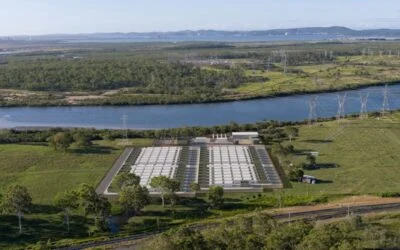
Samsung C&T Renewable Energy Australia has submitted plans for a 100MW/400MWh battery energy storage system (BESS) to Australia’s Environment Protection and Biodiversity Conservation (EPBC) Act.
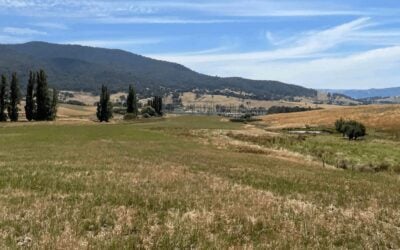
The Australian energy division of South Korea’s Samsung Group’s application to the EPBC Act revealed that the BESS is being proposed 30.6km south of Wagga Wagga in New South Wales, near Mangoplah.
This BESS would supply electricity to the National Electricity Market (NEM), which spans Australia’s eastern and southern coasts and Tasmania, during peak periods. The BESS project will have an operational life of up to 30 years.
The EPBC application states that the Mangoplah BESS project will cover 25 hectares of land. Samsung C&T would also use Tesla’s Megapack solution, with 108 being considered for inclusion in the system.
Try Premium for just $1
- Full premium access for the first month at only $1
- Converts to an annual rate after 30 days unless cancelled
- Cancel anytime during the trial period
Premium Benefits
- Expert industry analysis and interviews
- Digital access to PV Tech Power journal
- Exclusive event discounts
Or get the full Premium subscription right away
Or continue reading this article for free
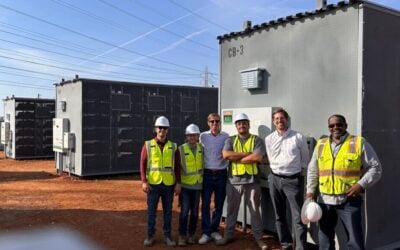
Tesla Megapacks have been used in multiple Australian BESS sites, such as Edify Energy’s 370MWh Koorangie BESS in Victoria and Neoen’s 560MW/2,240MWh Collie BESS in Western Australia.
Samsung C&T predicts that the battery storage project’s site establishment and construction phase will last between 12 and 15 months, and the operation and maintenance of the BESS facility will last 30 years.
BESS integration with Renewable Energy Zone
The standalone BESS could also benefit from the South West Renewable Energy Zone (REZ), one of at least five such zones being developed in New South Wales. Earlier this year, Energy-Storage.news reported that 3.56GW of solar PV, wind generation and BESS were selected to connect to this REZ.
Although the Mangoplah BESS is being proposed just outside, to the east of this REZ, other societal benefits, such as green jobs and infrastructure, could support its development.
Indeed, the developer said that the REZ declaration will “likely further concentrate renewable energy development in the Riverina region” whilst also enhancing the strategic importance of BESS installations.
Samsung C&T is also pursuing the development of the 80MW/320MWh 3-hour duration South Coree BESS located within the Riverina Murray Region of New South Wales. Much like the Mangoplah BESS, it will connect to the NEM.
Horizon Power submits 55MWh solar-plus-BESS in Western Australia to EPBC Act
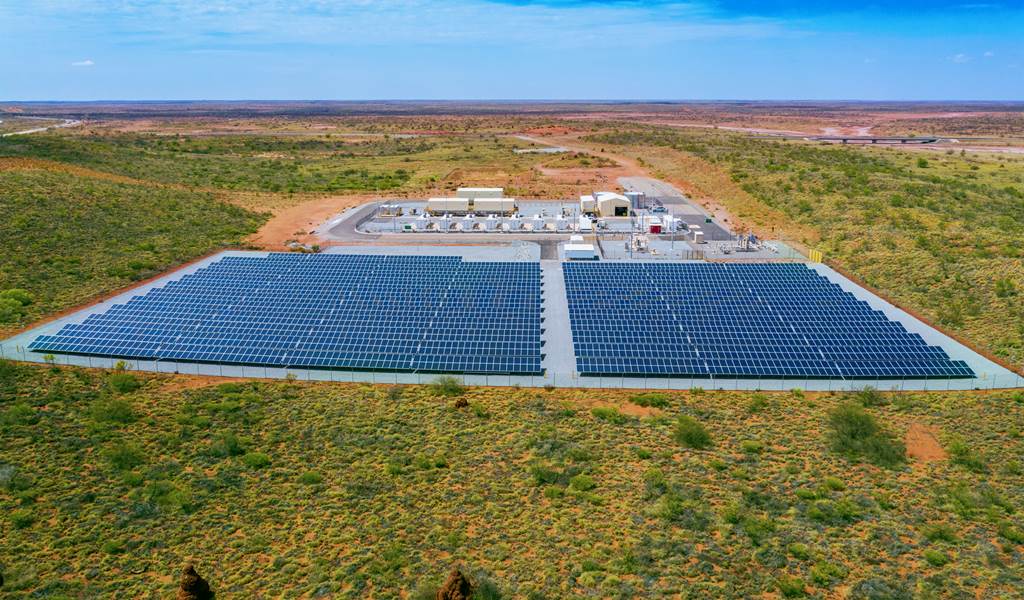
On the other side of the country, Western Australia’s energy provider, Horizon Power, has proposed building a solar-plus-storage project with a 55MWh BESS component.
Called the Derby Future Energy System, the project includes developing a 21MWac solar PV power plant co-located with a 10MW/55MWh BESS and an 8MW thermal power station.
The solar-plus-storage project has been submitted to the Australian government’s EPBC Act, with Horizon noting that it will “remain flexible” with the proposed action design.
The hybrid facility featuring the BESS will be located around 2.5km south of Derby, a town in the Kimberley region of Western Australia. Located 2,197km northeast of the state capital Perth, the small town is known for having the highest tides in Australia, with the differential between low and high tide reaching 11.8 metres.
Horizon Power has been supporting the uptake of BESS technologies in Western Australia, primarily to maintain grid stability as more coal-fired power stations are withdrawn from the state’s Wholesale Electricity Market (WEM), the state’s primary market for generators and retailers.
Western Australia has two primary grids, both of which are seeing battery storage being deployed. The South West Interconnected System (SWIS), the larger of the two, covers areas surrounding and including Perth, whilst the North West Interconnected System (NWIS) primarily serves the Pilbara mining region.
These are both isolated, with Derby being supplied by the NWIS. The solar-plus-storage site will connect to this grid.
Our publisher, Solar Media, will host the Battery Asset Management Summit Australia 2025 on 26-27 August in Sydney. You can get 20% off your ticket using the code ESN20 at checkout.