This edition of our news in brief focuses on activities in the long-duration energy storage space.
Energy Dome closes second tranche of funding round
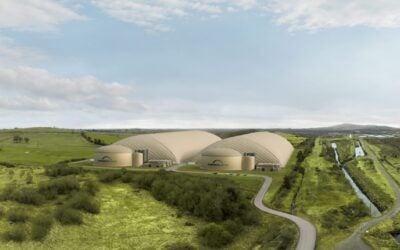
Energy Dome, Italy-headquartered provider of a proprietary energy storage technology which uses carbon dioxide (CO2) as the medium, has closed out the second tranche of its Series B.
The long-duration storage company announced last week that it has been invested in by the European Innovation Council Fund (EIC Fund), the investment arm of the EIC, set up by the European Commission to support technologies at pre-commercialisation stage that offer promise within the European Union (EU).
The EIC Fund’s €5 million commitment brings the second tranche of Energy Dome’s second funding round to €60 million (US$64.26 million), building on a €40 million first tranche which it closed out in April. The EIC had previously provided €17.5 million grant and equity funding to the tech company at the beginning of this year.
Try Premium for just $1
- Full premium access for the first month at only $1
- Converts to an annual rate after 30 days unless cancelled
- Cancel anytime during the trial period
Premium Benefits
- Expert industry analysis and interviews
- Digital access to PV Tech Power journal
- Exclusive event discounts
Or get the full Premium subscription right away
Or continue reading this article for free
Energy Dome claims its technology is safe, scalable and easy to deploy, as well as being cheaper than lithium-ion or pumped hydro energy storage (PHES) technologies. In an interview earlier this year, SVP of strategy, corporate development and investor relations Ben Potter told Energy-Storage.news the technology’s sweet spot is for long-duration energy storage (LDES) applications of between 8-24 hours.
A 200MWh project using the company’s so-called CO2 Battery proposed by US utility Alliant Energy was awarded funding from the US government at the end of September, as part of a US$325 million funding injection into LDES.
German government invests in Malta Inc
A consortium featuring US long-duration thermal energy storage startup Malta Inc has been awarded a €9 million German government grant for energy transition technologies.
The company, which calls its proprietary molten salt-based technology ‘thermal hydro’ or ‘pumped heat storage’, said earlier this week that the German Federal Ministry for Economic Affairs and Climate Protection (BMWK) awarded the funds towards technoeconomic analysis of the technology’s potential for decarbonising electricity and heating.
The money will also support the expansion of the German Aerospace Center’s (DLR’s) testing facility for thermal storage tech based on molten salts, at which a heat exchanger built by fellow consortium member Alfa Laval will be put through its paces.
Malta Inc’s ‘pumped heat’ tech converts electricity into heat, which is used to heat the salt. At the same time, cooling energy which is released is also stored in a special fluid. A heat engine then driven by the temperature difference can then be used to generate electricity, while heat can also be released.
The company counts Bill Gates’ Breakthrough Ventures among its investors, and was a founding member of the global Long Duration Energy Storage Council (LDES Council).
Along with Malta Inc’s German subsidiary and Alfa Laval, funding was also awarded to Siemens Energy, which has an agreement to co-develop the turbomachinery required for the pumped heat systems. Malta has various agreements with potential customers to deploy or trial the technology, but there was perhaps less good news for the company a few days ago when Canadian utility NB Power in the province of New Brunswick said it would be dropping plans for a previously announced 100MW/1000MWh molten salt storage-plus-green hydrogen project, according to local news reports.
Siemens Energy partners with multi-day compressed air storage startup
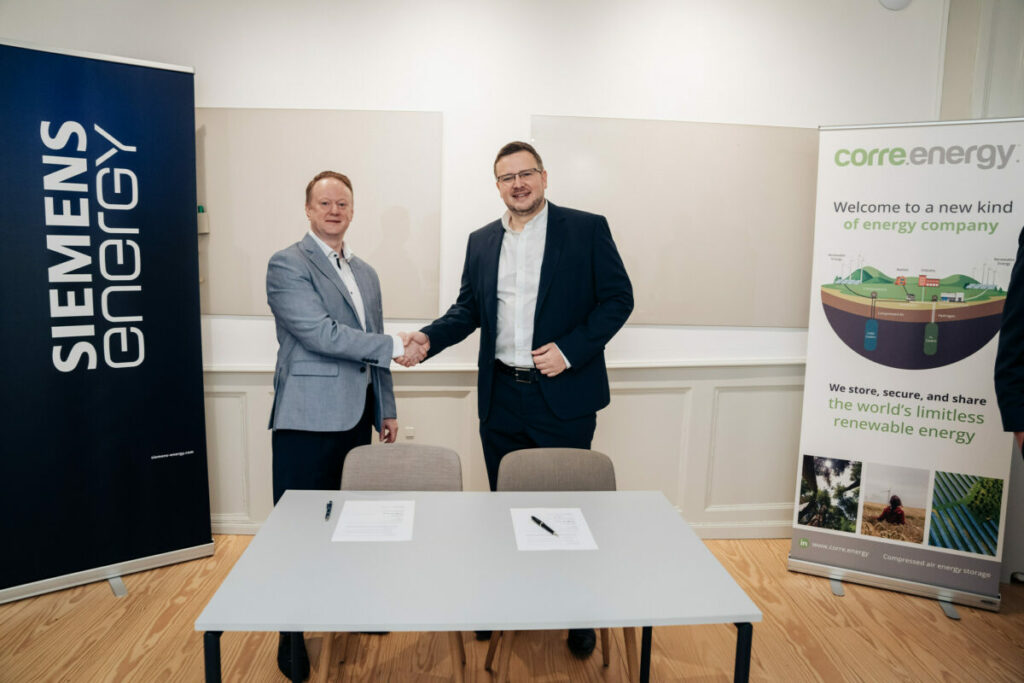
Corre Energy, an Ireland-headquartered provider of a compressed air energy storage (CAES) technology aimed at applications requiring multiple days of storage discharge, has partnered with Siemens Energy.
The Irish company said this week that it has formed a global collaboration with the German engineering company for the commercialisation of its CAES, including using Siemens equipment on a proposed 280MW project in Texas, US.
Corre Energy bought the large-scale project from developer Contour Energy in July this year. It comprises three underground salt caverns in which the air would be stored, and would play into Texas’ ERCOT electricity market. Corre is targeting getting construction started on 1.3GW of CAES by 2026, and signed an agreement with Dutch utility Eneco for a possible 320MW project with 84-hour duration in late 2022.
“We are particularly impressed with Siemens Energy’s groundbreaking progress in demonstrating the ability of its turbines to run on hydrogen which is key to our clean energy plans,” Corre Energy’s US development arm president Chet Lyons said.
In a mid-2022 Guest Blog for this site, Corre Energy chief strategy officer Patrick McClughan wrote about how the company saw LDES as a crucial enabler of energy security and decarbonisation, with specific regard to the EU in the wake of the Russian fossil fuel supply crisis as it got underway.