Renault-Nissan to build 100MW second-life battery project

By John Parnell
LinkedIn
Twitter
Reddit
Facebook
Email
A Nissan Leaf battery pack. Image credit: Wikimedia commons/mariordo

The Renault-Nissan Alliance will build a 100MW battery storage project using its second-life EV batteries, according to media reports.

The car manufacturer confirmed to Reuters that it is working with German firm The Mobility House on a feasibility study for what a spokeswoman called a “major energy storage project”.

The Mobility House then told the newswire it was working on a 100MW project with partners it could not name for confidentiality reasons. It is expected to be built in a high-cost electricty market in Europe.

Neither Renault-Nissan nor The Mobility House was available for comment when contacted by Energy-Storage.News.

This article requires Premium SubscriptionBasic (FREE) Subscription

Try Premium for just $1

  • Full premium access for the first month at only $1
  • Converts to an annual rate after 30 days unless cancelled
  • Cancel anytime during the trial period

Premium Benefits

  • Expert industry analysis and interviews
  • Digital access to PV Tech Power journal
  • Exclusive event discounts

Or get the full Premium subscription right away

Or continue reading this article for free

Nissan has deployed second-life batteries at utility-, commercial- and residential-scale in the past.

It has also developed vehicle to grid infrastructure in the UK.

3 November 2026
Málaga, Spain
Understanding technology and supplier selection for Europe’s utility-scale PV market in 2027. PV ModuleTech Europe 2026 is a two-day conference that tackles these challenges directly, with an agenda that addresses all aspects of PV module, inverter and battery supplier selection; product availability, technology offerings, supply chain traceability, quality assurance, factory auditing, system reliability, and supplier bankability.

Read Next

Premium
October 19, 2026
In the wide-ranging conversation, Shaw starts off by describing the year-end rush as a perennial challenge for the battery energy storage system (BESS) sector in the US.
October 19, 2026
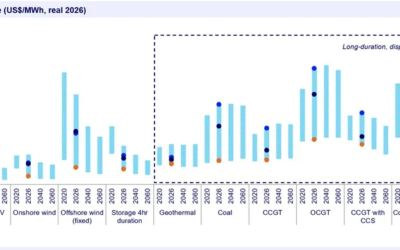
Four-hour battery storage is less expensive than open-cycle gas turbines in the 43 markets in which both technologies were modelled, according to a new report from market research firm Wood Mackenzie.
October 19, 2026
Energy storage is becoming an indispensable new-type power system infrastructure, CATL CEO and chairman Robin Zeng said in an industry speech last week.
October 19, 2026
New Zealand energy storage company ArcActive has switched on a pilot lead-acid BESS in Victoria, Australia, with support from Origin Energy.
October 16, 2026
US energy storage developer Flatiron Energy has closed on approximately US$850 million for its 1,200MWh Energizar energy storage project in Chelsea, Massachusetts, US.