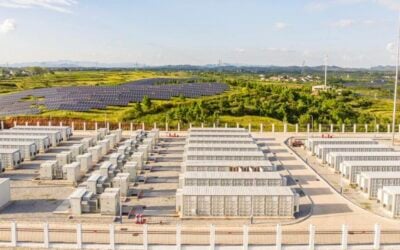
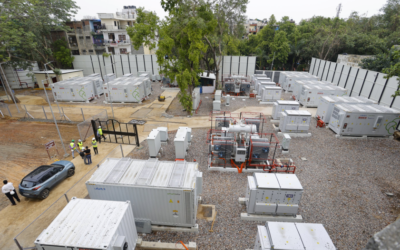
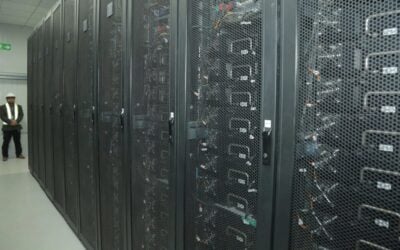
Indian solar manufacturer Premier Energies and RCT India, part of Germany-based RCT Group, have established a joint venture (JV) to develop a 12GWh battery energy storage system (BESS) manufacturing facility in Telangana, India.
The facility will be developed through Premier Energies’ subsidiary, Premier Battery Technologies, with the first phase planned at 6GWh.
The proposed manufacturing plant will serve demand for BESS across commercial, industrial and utility-scale applications in India and international markets, the companies said.
The JV is also intended to establish an export-oriented manufacturing platform, with the partners planning to supply BESS products to overseas markets from India.
Try Premium for just $1
- Full premium access for the first month at only $1
- Converts to an annual rate after 30 days unless cancelled
- Cancel anytime during the trial period
Premium Benefits
- Expert industry analysis and interviews
- Digital access to PV Tech Power journal
- Exclusive event discounts
Or get the full Premium subscription right away
Or continue reading this article for free
Chiranjeev Saluja, managing director, Premier Energies, said, “Energy storage is the need of the hour for the Indian power system. As India expands its renewable energy generation capacity, energy storage will play a critical role in enabling a reliable, resilient and sustainable power ecosystem.”
The proposed 12GWh capacity is expected to be developed in phases, with the initial 6GWh phase forming the first stage of the project.
The announcement comes as India accelerates the deployment of renewable energy and associated energy storage capacity.
Earlier this month, India’s Central Electricity Authority (CEA) proposed mandatory co-located energy storage for new ground-mounted solar and onshore wind projects from July 2027, alongside grid-forming inverter requirements. The draft calls for storage equivalent to at least 10% of project capacity, with duration rising from two to four hours from July 2029.
A recent Wood Mackenzie report highlighted the gap between India’s growing battery storage demand and its limited domestic cell production capacity. As reported by ESN Premium in August 2026, China currently has more than 1,000 times India’s annual battery cell production capacity.
Of the 260GWh of battery storage demand in India’s 2026 project tender pipeline at the time of the report, less than 1% could be supplied by the country’s 2GWh of operational cell production capacity, according to Wood Mackenzie.
The report said downstream component manufacturing is likely to be the industry’s main priority in the near term, with cell production at scale still some way off.
The supply-chain challenge also extends beyond stationary storage. An Energy-Storage.news guest blog published in May, by analysts at the Institute for Energy Economics and Financial Analysis (IEEFA), noted that India’s battery supply chain remains heavily import-dependent, particularly upstream, with most battery cells imported from China.
IEEFA argued that this creates a parallel dependency as India seeks to reduce its reliance on imported oil and gas through transport electrification and grid-scale battery storage.
Against this backdrop, the proposed Telangana facility is expected to contribute to the development of domestic BESS manufacturing capacity while also supporting exports from India.
India’s renewable energy transition, from solar PV and energy storage to grid integration, will be a key topic of discussion at the Renewable Energy India (REI) Expo, co-located with the Energy Storage Summit India (ESS India), in Greater Noida on 22-24 October 2026. For the full agenda and booking details, click here.