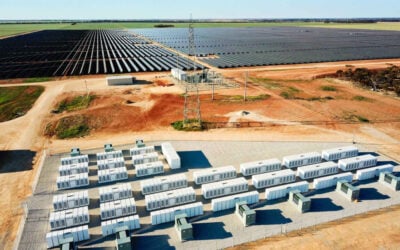
Australia’s federal government has committed millions of dollars in grants to companies involved in lithium battery and vanadium redox flow battery value chains, as part of a wider pledge to support resources and critical minerals sectors in the country.
Energy-Storage.news proudly presents this sponsored webinar with Honeywell, where we talk about the potential for battery energy storage across the Asia-Pacific region and how to address concerns around risk and bankability that hold back a powerful wave of decarbonisation opportunity.
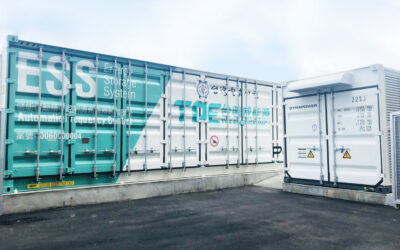
Powin Energy has installed battery energy storage systems (BESS) in Israel and Taiwan which, while small by comparison to some of the company’s recent US projects, mark entry into new territories for the Oregon-headquartered system integrator.
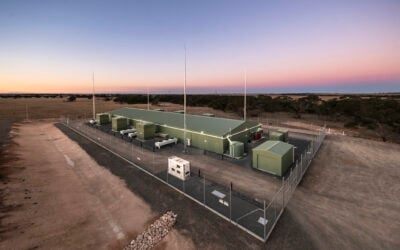
Renewable energy company Maoneng has made public its plans for a 240MWp / 480MWh battery energy storage system (BESS) which it has proposed to build in Victoria, Australia.
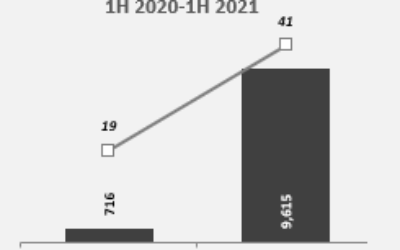
Companies in the battery storage industry raised US$9.6 billion in corporate funding during H1 2021, with European manufacturing startup Northvolt once again the biggest single recipient of venture capital (VC) investment.
India’s government is set to launch 1,000MWh tenders for energy storage across each of four Regional Load Dispatch Centres (RLDCs), the country’s Minister of Power and New and Renewable Energy said at an event last week.
Recognising the importance of energy storage for decarbonising and securing Australia’s energy system in the coming years, the Australian Energy Market Commission (AEMC) has published two new sets of market rules.
The July 2021 episode of the Solar Media Podcast, sponsored by Honeywell, is now available to stream, as we delve into everything you need to know about recent polysilicon trade sanctions in the US.
There’s still a disconnect between what’s achievable and what is actually being achieved in the drive to decarbonise. Despite a boom in renewable energy generation, Australia’s government line is instead commitment to “a gas-fired recovery”. That commitment is a dangerous one, says Lillian Patterson of the Clean Energy Council.