Flow battery startup Quino Energy and developer Long Hill Energy Partners have been awarded US$10 million in grant funding by the California Energy Commission (CEC) to support a 8MWh flow battery energy storage system (BESS) project in Lancaster, California, US.
CEC awarded the grant through the Energy Research and Development Division’s Electric Program Investment Charge (EPIC) scheme.
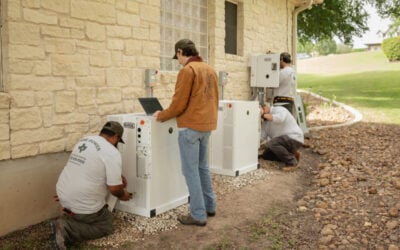
The proposed BESS will be located at the High Desert Regional Health Centre (HDRHC), an urgent care centre in the state.
Quino will develop the project jointly with Long Hill. Quino will lead technology development, integration and testing, while Long Hill will serve as lead for project development, permitting, programme management and reporting.
Try Premium for just $1
- Full premium access for the first month at only $1
- Converts to an annual rate after 30 days unless cancelled
- Cancel anytime during the trial period
Premium Benefits
- Expert industry analysis and interviews
- Digital access to PV Tech Power journal
- Exclusive event discounts
Or get the full Premium subscription right away
Or continue reading this article for free
Los Angeles County will partner with Quino and Long Hill for the demonstration, along with the non-profit Clean Coalition Group.
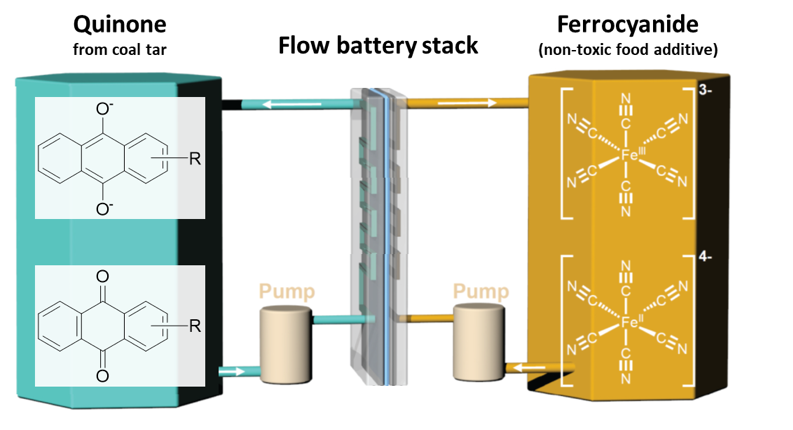
The BESS marks Quino’s first commercial deployment of its organic flow battery technology in the US. The company says the demonstration will prove the technology’s viability in large-scale, long-duration energy storage (LDES) while serving critical infrastructure.
Quino says the organic flow battery is expected to provide back-up power capacity for up to 100% of HDRHC’s energy demands during peak and off-peak hours, while enabling the health centre to save over US$10 million in electricity costs over the project’s 20-year lifespan.
Los Angeles County will also be expanding an existing solar carport at the centre, to help it further save on electricity costs.
Permitting for the project is expected to begin in Q3 2025, and the project is expected to break ground in the fall of 2026, with the BESS expected online in early 2027.
Quino has received funding from the US Department of Energy (DOE) on two occasions, initially in 2021 with a US$17.9 million investment for four research and development projects.
In 2024, Quino obtained a grant totalling US$2.6 million from the US Department of Energy’s Advanced Materials and Manufacturing Technologies Office (DOE AMMTO). The purpose of this funding is to support the company’s effort to demonstrate its flow battery technology integrated with existing oil and fuel storage systems.
Speaking with Energy-Storage.news in a recent interview, Eugene Beh, CEO of Quino said of Quino’s reportedly competitive cost (Premium access article):
“These organic active materials, such as those made by Quino Energy, offer the potential to greatly lower the cost floor of flow batteries such that they are competitive with not just vanadium flow, but also lithium-ion (Li-ion).”
Having an LDES technology be competitive with Li-ion would be a remarkable step in moving LDES projects forward.
At the 2025 Solar and Energy Storage Summit in Colorado, US, Allison Weis, Wood Mackenzie’s global head of storage, moderated a panel discussion about LDES with executives from Con Edison, Alliant Energy and Ameresco.
Raja Sundaraarajan, executive vice president of strategy and customer solutions for utility Alliant Energy, speaking on challenges to LDES installations, said:
“Until the market provides the right price signals, you have to rely on modelling and hope regulators or customers will take a leap of faith.”