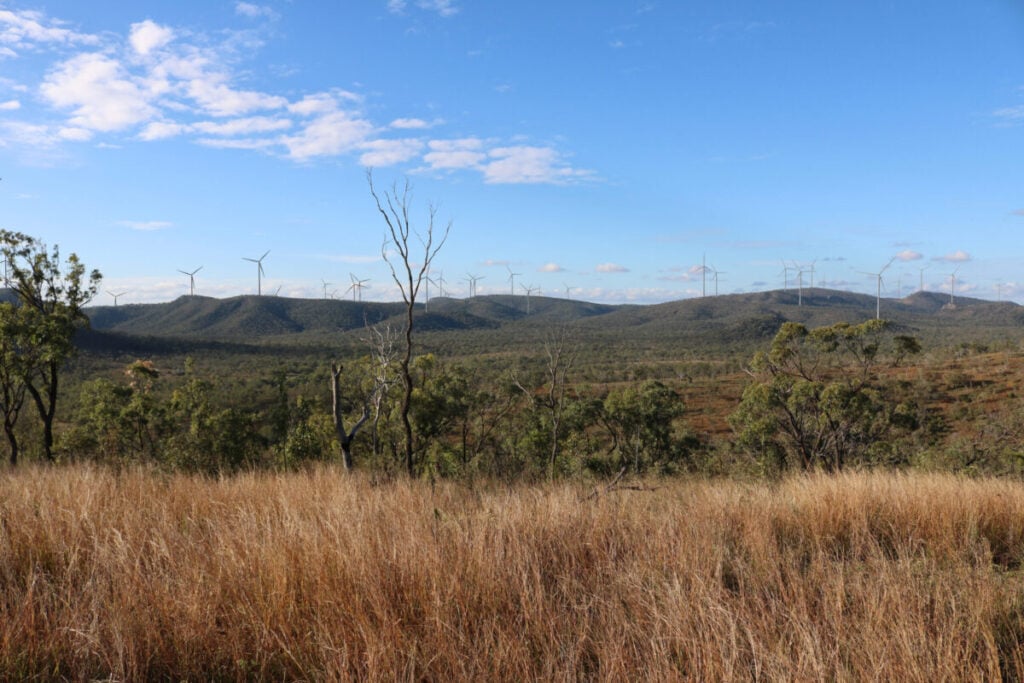
The Queensland government has continued its hard stance on renewables and energy storage by revoking permission to build a 450MW wind-plus-storage facility.
The proposed Moonlight Range Wind Farm was set to have a generation capacity of 450MW. It included plans to develop a co-located battery energy storage system (BESS), the size of which has not been disclosed.
However, due to the introduction of more stringent planning regulations for wind sites and now utility-scale solar PV power plants, an assessment led by the Department of State Development, Infrastructure and Planning deemed that the project would no longer go ahead.
This is despite the project being celebrated as the first wind project approved by premier David Crisafulli’s Liberal National Party (LNP) of the Queensland government in December 2024 via the updated State Code 23.
Try Premium for just $1
- Full premium access for the first month at only $1
- Converts to an annual rate after 30 days unless cancelled
- Cancel anytime during the trial period
Premium Benefits
- Expert industry analysis and interviews
- Digital access to PV Tech Power journal
- Exclusive event discounts
Or get the full Premium subscription right away
Or continue reading this article for free
The site was also waived through the Australian government’s Environment Protection and Biodiversity Conservation (EPBC) Act in early 2024.
Flood of community feedback forces government U-turn
The project, which would have featured 88 wind turbines, the BESS and related infrastructure, would have covered over 1,269 hectares of land. It was to be located around 40km northwest of Rockhampton, in the rural locality of Mornish South, which, according to the 2021 Australian census, had a population of 13.
This rather small population did not stop objections to the Moonlight Range Wind Farm proposal from flooding in.
In a statement released on Monday (26 May), the Queensland government said that more than 550 submissions were received during the public consultation process. 85% of these (473 submissions) called on the government to review the application under the new planning rules.
As such, the government confirmed that the project was to be reassessed around a month after it granted approval.
In doing so, the government found the proposal did not meet the requirements of the government’s new planning laws, which “ensure renewable energy projects are assessed by the same rigorous approval processes as other major resource developments.”
Australia’s Greenleaf Renewables and Canadian asset manager Brookfield Asset Management were co-developing the Moonlight Range Wind Farm. Under an agreement, Brookfield was set to fully acquire the project once all development approvals had been secured.
The government’s statement on Monday also highlighted that around 434 hectares of vegetation would need to be cleared for the proposal to go ahead. There is, however, no mention of the community fund that was set to be established, which would have seen at least AU$100,000 (US$64,000) per year distributed to the local community over the course of 35 years.
This would have seen investment into education scholarships, sponsorships for community groups and events, co-funding opportunities for more significant legacy initiatives, or local business grants.
Deputy premier takes fresh swipe at Queensland’s former Labor government
Deputy premier and minister for state development, infrastructure, and planning, Jarrod Bleijie, stated that the government is fulfilling its election commitment to ensure local communities are consulted on any new wind developments.
“Queenslanders deserve to have a say on any major development in their local community, which is why our government introduced new nation-leading laws to give them a voice on issues that impact the future of their towns,” Bleijie said.
“Today’s announcement highlights how these laws are already helping to level the playing field by ensuring councils and communities have a seat at the decision-making table.”
Bleijie had previously attacked Queensland’s former premier and deputy premier, Steven Miles and Cameron Dick, respectively, for not heeding recommendations to not proceed with the now-cancelled 5GW/120GWh Pioneer-Burdekin Pumped Hydro Project, which was once touted as the largest pumped hydro proposal in the world, amid rising costs.
With news that the Moonlight Range Wind Farm has been axed, Bleijie took a fresh swipe at the former Labor government.
“For too long Queensland communities were ignored by Labor’s failed laws, which shut them out of the approvals process for renewable energy projects proposed to be built in their backyard,” Bleijie said.