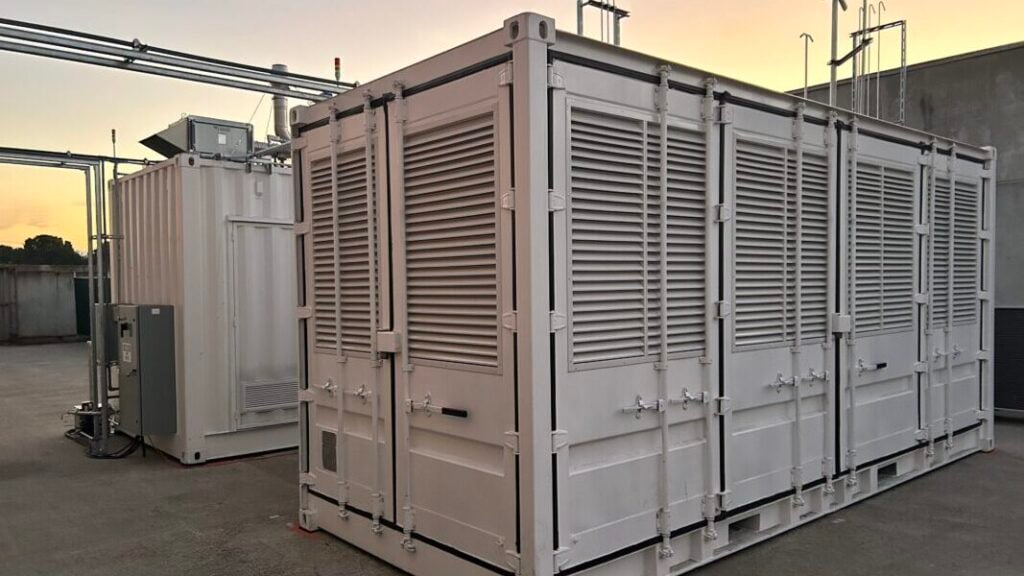
US ‘multi-day’ energy storage startup Noon Energy has announced an agreement with Meta to reserve up to 1GW/100GWh of long-duration energy storage (LDES) capacity.
The collaboration will begin with a 25MW/2.5GWh project, scheduled for completion by 2028. Following the success of that project, Noon will begin delivering systems under a 1GW/100GWh supply contract.
Chris Graves, co-founder and CEO of Noon Energy, said that data centres “stand as one of the best applications for Noon’s battery system.”
Speaking with Energy-Storage.news Premium in February, Graves said “In the big picture, I do think that solar power will be the dominant electricity supply in the world, and that would include data centre applications. We would help that continue by being able to make it fully reliable and firm.”
Try Premium for just $1
- Full premium access for the first month at only $1
- Converts to an annual rate after 30 days unless cancelled
- Cancel anytime during the trial period
Premium Benefits
- Expert industry analysis and interviews
- Digital access to PV Tech Power journal
- Exclusive event discounts
Or get the full Premium subscription right away
Or continue reading this article for free
Noon Energy’s battery functions similarly to a flow battery, which stores energy in liquid electrolyte tanks separate from the power stack. The Noon fuel cell battery also enables the decoupling of power and energy.
It is made of three main portions: a power block that uses reversible solid oxide fuel cell technology to convert electricity into stored energy; a charge tank that transforms electricity into a carbon-based storage medium while releasing oxygen into the air; and a discharge tank that takes in oxygen from the air to convert stored energy back into electricity.
In January, the company unveiled its first operational demonstration project. While Noon did not provide many technical details of this project at the time of release, such as the system’s power output capacity, it did claim the project is capable of 200 hours of discharge at maximum output.
LDES deployed at data centres
This partnership highlights a continuing trend of data centres adopting or exploring LDES technologies.
A recent US news roundup detailed companies Eos Energy Enterprises and Turbine-X, CPower and Vertiv, and Elevate Renewables emphasising the ‘bring your own capacity’ (‘BYOC’) model in data centre-focused announcements.
In Particular, Eos claimed its non-lithium battery technology is suitable for LDES applications of up to 16-hour duration, based on the company’s proprietary zinc hybrid cathode technology, Znyth.
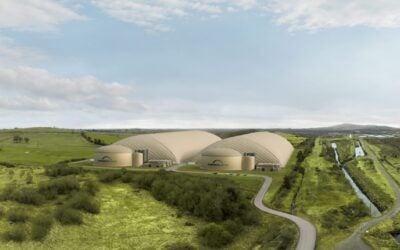
Google announced a partnership with Energy Dome last July, which saw the search engine giant making a strategic investment in the Italian company and evaluating the CO2 Battery’s capabilities.
Earlier this month, Energy Dome and digital infrastructure company New Era Energy & Digital (NUAI) signed a memorandum of understanding (MOU) to deploy Energy Dome’s CO2 Battery Plus technology at a NUAI data centre in Odessa, Texas.
In February, it was announced that Google would use 30GWh of US startup Form Energy’s iron-air batteries for a data centre in Pine Island, Minnesota, installed by utility Xcel Energy. Both Google and Microsoft are among the end-user members of the Long Duration Energy Storage Council (LDES Council), a trade association formed to promote LDES commercialisation and market awareness.
Form also signed a 12GWh supply agreement in the US with AI data centre infrastructure developer Crusoe, around the same time.
Google has additionally announced plans with utility DTE Energy to develop a data centre in Michigan, featuring 1,600MW of solar PV generation combined with 450MW of energy storage. Based on SEC filings, the site, possibly in Van Buren Township, will be called Project Cannoli and would incorporate 400MW/1,600MWh of BESS along with 50MW of LDES technology.
Depth of discharge
In March ESN Premium compared the 100-hour LDES battery technologies from Form, Noon, and Ore. All three of these company’s batteries can discharge for at least 100 hours, though reports suggest Noon Energy’s system may exceed 200 hours—whether this holds up in real-world conditions remains to be seen.
Iron-air batteries are designed for deep discharge, meaning they can reach 0% state of charge (SOC) without degradation. They become fully rusted, and this rust is completely reversible, so no damage occurs. Lithium-ion batteries, by contrast, degrade faster when held at 100% or 0% for extended periods.
Noon Energy hasn’t disclosed deep discharge capabilities for its cells, and it is likely lower than iron-air. While traditional redox flow batteries handle 0% SOC without damage, solid oxide fuel cells (SOFCs) are different.
Since Noon’s technology relies on SOFCs for energy generation and storage, this likely limits deep discharge capability. In SOFC stacks, reaching 0% is considered an uncontrolled failure mode, making deep discharge unlikely. Noon’s specific design may allow it, but the company would need to confirm.
Noon claimed it will begin developing the 25MW/2.5GWh project soon, but did not provide a detailed timeline.