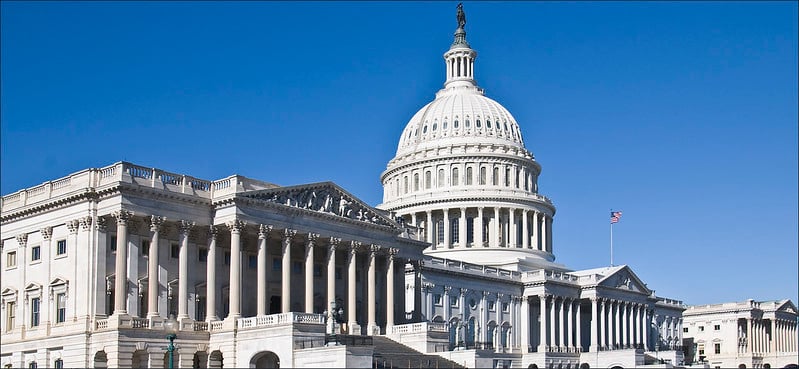
The US House of Representatives has passed a version of the ‘One, Big, Beautiful Bill’ for budget reconciliation that has already been fiercely criticised for its energy provisions.
The House passed the legislation yesterday after a 215-214 vote. Votes cast in favour included those of 14 Republican Representatives who, just a week ago, had asked for reasonable phase-out schedules to be applied for clean energy tax credit schemes instead of the aggressive timelines proposed.
The bill proposed by the House Ways & Means Committee on 12 May, as reported by Energy-Storage.news at the time, would end the clean electricity production tax credit (PTC) and investment tax credit (ITC) schemes by 2030.
They were due to run until 2032 and would have been phased out more gradually than the proposed bill accounted for.
Try Premium for just $1
- Full premium access for the first month at only $1
- Converts to an annual rate after 30 days unless cancelled
- Cancel anytime during the trial period
Premium Benefits
- Expert industry analysis and interviews
- Digital access to PV Tech Power journal
- Exclusive event discounts
Or get the full Premium subscription right away
Or continue reading this article for free
While some had been in place for many years prior, such as the solar ITC and wind PTC, others were introduced through Joe Biden’s Inflation Reduction Act (IRA) in 2022, including the ITC for standalone energy storage facilities—before that, only storage coupled with and directly charged from solar was eligible.
The bill passed by the House of Representatives yesterday was even more aggressive in its treatment of tax credits than the first draft put out by the Ways & Means Committee earlier this month.
Projects hoping to qualify for the 45Y PTC and 48E ITC must be in construction within 60 days of the bill being signed into law. After going into construction, they have to be placed into service by 31 December 2028 to remain eligible.
The tax credit advisory platform Crux noted in a blog post about the bill that the 60-day provision was added at the behest of the Republican House Freedom Caucus.
This means the proposed 2029-2031 tax credit phasedown period is eliminated.
Also considered restrictive and problematic were new provisions for “prohibited foreign entities,” which left many in doubt about how industries still largely dependent on imported materials, components, and finished goods, as well as assistance, investment, licensing, and royalties from overseas partners, will be able to proceed with their projects.
‘American energy dominance across all technologies’
Now comes the crunch time as the bill heads to the Senate and, if agreed upon, goes to US President Donald Trump to sign into law.
Many figures in solar, energy storage and related industries, called for their members, advocates and the public to speak up and put pressure on their Senators, including the Solar Energy Industries Association (SEIA), which has set up a dedicated campaign page to ‘Defend American Energy‘.
Crux said in its blog that it expects Senate could be a “moderating force” on the bill, noting that prominent Republican Senators have publicly expressed desires to see jobs and investment created by tax credits protected, emerging technologies given a longer runway of support before take-off, and tax credit transferability rules to remain in place.
The full bill, designed to enable tax cuts promised by Trump in his first term, is extensive and covers areas including healthcare, education, and energy. The administration claimed it would also end “US$500 billion in Biden-era tax breaks and special interest giveaways.”
However, groups including the Union of Concerned Scientists (UCS), stepped forward to criticise the so-called ‘One, Big, Beautiful Bill’.
“The House has done its level best to engineer an energy crisis, deliberately sidelining the clean energy industry at the exact moment we need it most,” Gretchen Goldman, UCS president, said.
“This bill would undermine hundreds of billions of dollars of clean energy investments and tens of thousands of new jobs, spike monthly energy bills, and increase climate pollution and its attendant impacts.”
Ray Long, CEO of trade group American Council on Renewable Energy (ACORE), said the gutting of support for clean energy ran counter to the US government’s stated aim of achieving “American energy dominance”.
“As ACORE’s own survey of clean energy investors showed, recklessly disrupting tax incentives will undermine projects that are ready to come online, meet our nation’s growing energy needs, and create jobs,” Long said.
“ACORE is committed to working with Congress and President Trump to make any improvements to this legislation and help them deliver on his promise to slash energy costs for Americans by 50%. It’s time to achieve American energy dominance across all technologies.”