Malawi’s energy minister was on hand last week as the southeast African country inaugurated its first large-scale standalone battery energy storage system (BESS).
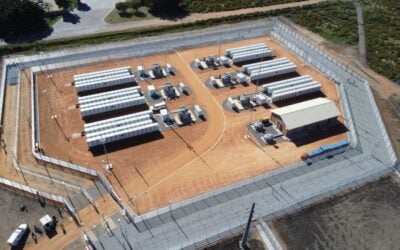
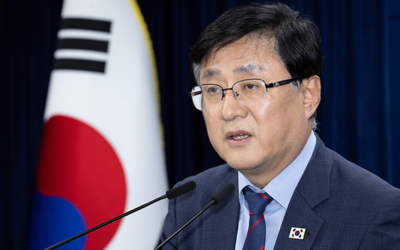
Dr Jean Mathanga, Minister of Energy and Mining, presided over a commissioning ceremony for the 20MW/40MWh BESS project in Kanengo, a township in Lilongwe, the capital.
The ceremony was announced on 24 July by the Global Energy Alliance for People and Planet (GEAPP). Global non-profit GEAPP delivered the project in partnership with state-owned power transmission and distribution operator Electricity Supply Corporation of Malawi (ESCOM).
GEAPP contributed a US$20 million grant toward the cost of a project which aims to help stabilise the national grid, reduce reliance on diesel back-up generation and enable the integration of renewable energy, which otherwise faces curtailment.
Try Premium for just $1
- Full premium access for the first month at only $1
- Converts to an annual rate after 30 days unless cancelled
- Cancel anytime during the trial period
Premium Benefits
- Expert industry analysis and interviews
- Digital access to PV Tech Power journal
- Exclusive event discounts
Or get the full Premium subscription right away
Or continue reading this article for free
The project makes energy storage a core infrastructure asset for the grid, enabling more flexible power systems and a more modern market design, the Global Energy Alliance said.
The Kanengo BESS was installed by renewable energy contractor JIVO Energy. According to the company’s site, which mentions that the project is also equipped with grid-forming (GFM) capabilities, JIVO Energy designed, procured, installed, tested, and commissioned the plant.
For Malawi, access to electricity is also a pressing issue. The country is targeting 70% access to electricity for its entire population by 2030. At present, around a quarter of the 22.8 million population has access, with much higher percentages in urban areas.
The country’s electricity generation largely comes from hydroelectric power and biomass. The hope is that battery storage can enable the increasing integration of variable renewable energy (VRE) resources. The World Bank-supported Malawi Electricity Access Project, which began in 2019 and recently concluded, provided electricity access to around two million people by extending service to existing distribution infrastructure via low-voltage wires.
BESS a gamechanger for system stability, ESCOM CEO says
The new project is part of GEAPP’s programme, Grids of the Future, which helps emerging economies ‘leapfrog’ the need to build traditional transmission and distribution (T&D) infrastructure and instead leverage digitalisation and distributed energy integration.
In 2023, GEAPP and the governments of 11 countries launched the BESS Consortium at the COP28 multilateral climate conference. The BESS Consortium aims to enable 5GW of BESS deployments in low or middle-income countries, with Malawi one of the first 11 signups.
The new project in Lilongwe is also part of the consortium’s work and will serve as a demonstration of how energy storage can strengthen the grid and help build what GEAPP called a pipeline of investable storage assets in emerging markets and developing economies (EMDEs).
“Today marks far more than the switch-on of a battery system—it marks the moment Malawi’s grid became smarter, stronger, and future-ready. For years, grid instability forced us to curtail renewable energy we had already generated and to fall back on costly diesel at the expense of our consumers and our climate commitments,” ECOM CEO William Kayipa said.
“The Kanengo BESS changes that calculus entirely. By storing and deploying power instantaneously, we are stabilising feeder voltages, reducing system losses, and unlocking about 100MW of renewable generation that was previously constrained.”
Kayipa said the project is also the foundation for “ESCOM’s transformation into a financially viable, high-performing utility capable of supporting Malawi’s target of 70% electricity access by 2030.”
There will also be a knowledge-sharing component to the project with Mzuzu University in South Africa’s BESS Centre of Excellence, supporting skills development and knowledge sharing across Africa.
While Kanengo BESS is Malawi’s first-ever standalone project, there is at least one completed co-located solar-plus-storage project reported previously by Energy-Storage.news in the country.
In 2022, independent power producer (IPP) JCM Power and infrastructure investor InfraCo Africa brought online Golomoti Solar PV and Battery Energy Storage project in Dedza district. Golomoti pairs a 28.5MWp solar PV array with a 5MW/10MWh lithium-ion BESS. It was thought to be the first project of its kind in Sub-Saharan Africa.