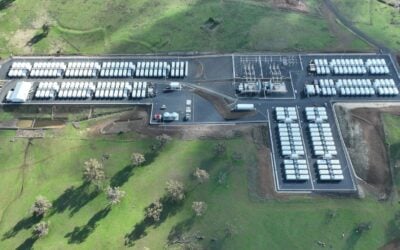
The participation of venture capital (VC) investors seems to have cooled, while project funding has conversely seen a sharp rise, in the latest quarterly report into funding and mergers and acquisitions from Mercom Capital.
In the third quarter (Q3) 2016 report on the smart grid, battery storage and energy efficiency sectors, VC funding for battery storage dropped to just US$30 million across nine deals, compared to US$125 million across 10 deals in the previous quarter. Q3 last year also saw funding drop from the preceding quarter, though not as sharply. In 2015, Q2 and Q3 stood at US$126 million across 13 deals and US$96 million across nine deals, respectively.
Mercom found that six battery sub-technologies shared the VC funds including energy storage management software and supercapacitors, as well as lithium battery makers, whole energy storage system makers, thermal energy storage and flow batteries, the latter of which appear to be a consistent target for VC funding announcements in the past couple of years the report has been produced.
Huge leap in project funding
Try Premium for just $1
- Full premium access for the first month at only $1
- Converts to an annual rate after 30 days unless cancelled
- Cancel anytime during the trial period
Premium Benefits
- Expert industry analysis and interviews
- Digital access to PV Tech Power journal
- Exclusive event discounts
Or get the full Premium subscription right away
Or continue reading this article for free
While there was also some US$51.6 million raised in three deals in debt and public market financing deals including a US$10 million loan raised by Canadian-German lithium battery maker Electrovaya, it is project funding that has stood out this quarter.
In just four deals, US$625 million was raised. This included Tabuchi America, known for its solar inverters, which was the only recipient of funds for residential projects, raising US$300 million for home solar-plus-storage. Coming in second in terms of funding levels was the US$200 million Advanced Microgrid Solutions, which is led by former California Public Utilities Commission chief Susan Kennedy, raised in project financing from Macquarie Capital. At the time that deal went through, Mercom Capital’s Raj Prabhu told Energy-Storage.News that the deal had wider significance for the sector.
“Access to large amounts of project funds is a big differentiator for energy storage system integrators and this is a very positive development for Advanced Microgrid Solutions,” Prabhu said.
The other big-hitters were intelligent storage system company Stem, which is rooted in the US commercial and industrial market and was the top funded company in the same period last year, raising US$100 million from private equity firm Starwood Energy Group. Finally a US subsidiary of Sharp, taken over earlier this year by Foxconn, the Taiwanese company behind the iPhone assembly line, netted US$25 million for solar-plus-storage via its SmartStorage solution.
Mercom said in its report that the amount invested in battery storage project funds has exceeded a billion dollars since 2013 – US$1.1 billion in fact.
The steep rise in project funding, contributed to by big deals for Tabuchi America and AMS. Image: Mercom Capital.