

ESN Premium learns about Hong Kong’s role as a bridge between mainland China and the world, from energy storage solution provider RelyEZ and investment promotion agency InvestHK.
Just over a year ago, Carrie Xiao, our correspondent in Shanghai, wrote about the boom in mainland China-based energy storage companies listing or seeking listings on the Hong Kong Stock Exchange (HKEX).
From CATL’s initial public offering (IPO) in May 2025, which was Hong Kong’s largest to date, to subsequent applications from players including Sungrow, Hithium, EVE Energy, Sunwoda and Sigenergy, the boom continues.
H-Shares, as HKEX shares are known, enable firms to tap financing from a broader base of investors and gain greater international visibility than they do from their A-Share listings on mainland Chinese exchanges.
Try Premium for just $1
- Full premium access for the first month at only $1
- Converts to an annual rate after 30 days unless cancelled
- Cancel anytime during the trial period
Premium Benefits
- Expert industry analysis and interviews
- Digital access to PV Tech Power journal
- Exclusive event discounts
Or get the full Premium subscription right away
Or continue reading this article for free
For example, when Hithium submitted an HKEX listing application in March 2025, the company said the listing would “provide the company with an international platform to enhance its global market visibility, access international capital, optimise its capital structure, further elevate its market position, and attract international talent.”
“The planned listing in Hong Kong is part of our long-term institutionalisation process. International expansion to the overseas market requires more than capital,” Naomi Zhang, CEO of energy storage solutions provider RelyEZ tells ESN Premium.
“Capital is important, but it requires more than capital. It requires transparency, governance, international talents, customers’ confidence, and diversified financing channels.”
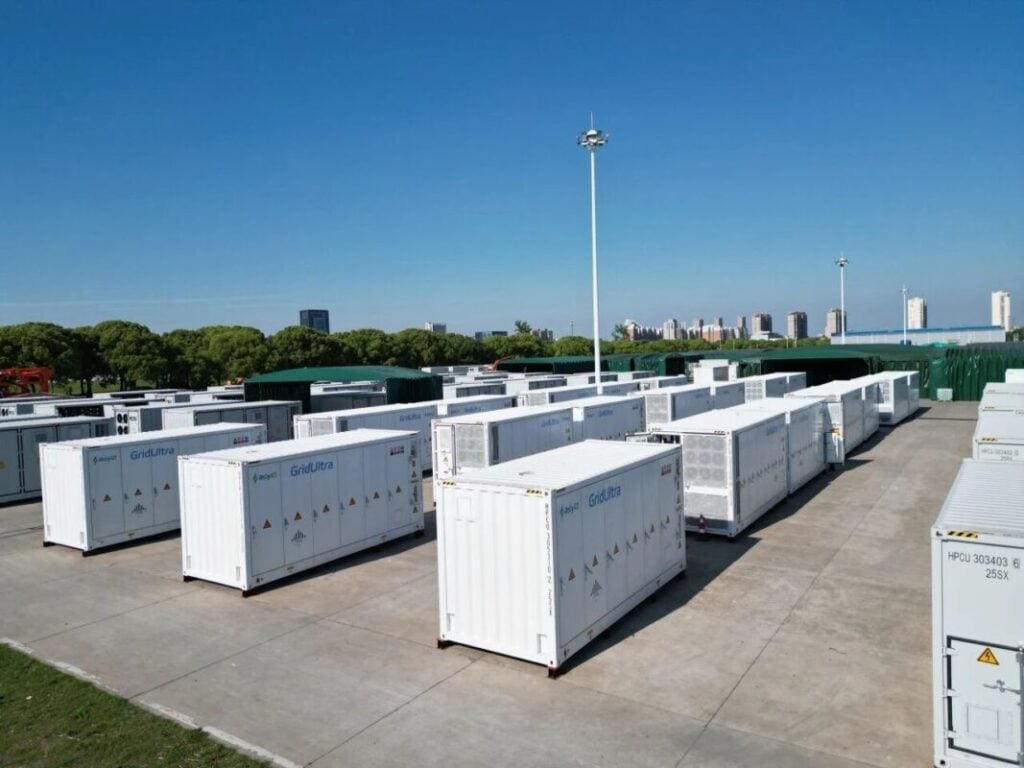
RelyEZ was founded in 2019 and has since delivered more than 13GWh of lithium-ion (Li-ion) battery energy storage system (BESS) capacity across 200 projects.
“That scale has taught us that providing a good battery system actually is only the beginning. The real value for battery energy storage is created through correct system design, reliable delivery, long-term cooperation, and the ability to participate intelligently in the energy market,” Zhang says.
RelyEZ is currently transitioning from “pure hardware supply” to a business model that provides a full spectrum of lifecycle services to customers, spanning project origination and design, system integration, and energy trading and optimisation.
“Every battery storage project is actually project-driven, and it is becoming more and more a financial asset, which is bankable, operational, and can generate long-term revenue,” the CEO says.
The Hong Kong IPO, for which RelyEZ filed its application in January, would align with this goal of generating long-term value, which Zhang says comes from RelyEZ’s founding belief: “We want energy storage to eventually become infrastructure rather than simply equipment.”
Financiers drive decision-making
“Our objective is to build a company capable of supporting energy assets over their full operating life. So, we need to give confidence not only to our direct customers but also for the financial institutions,” Zhang says of the Hong Kong IPO’s potential impact.
RelyEZ needs to gain exposure to those financial institutions, Zhang says, so that they have confidence in the full lifecycle solutions the company provides, not just maximising short-term shipments but also optimising long-term operation.
“Then, more and more, we feel that the ultimate decision-makers for the project financing and for the procurement of the equipment are actually not our direct clients.”
In fact, financial institutions call the shots, and Hong Kong is in a strong position in terms of financing outreach and exposure. Ultimately, Zhang says, listing in Hong Kong will benefit not only RelyEZ’s corporate financing but also its clients’ ability to obtain project financing.
“This is one reason Hong Kong matters to us,” Zhang says. “We want RelyEZ to be visible and credible not only to BESS buyers, but also to the institutions financing the assets that use our technology.”
China is, of course, committed to developing its energy sector both as a vehicle for decarbonisation and energy security domestically and as a powerhouse of its economy and political outreach internationally.
King Leung, global head of financial services, FinTech & Sustainability at Invest HK, the special administrative region’s investment promotion agency (IPA), says that energy storage’s role in adding flexibility and dispatchable capacity to energy networks makes it “critical” to China’s overall national strategy.
Hong Kong fits into that as the international window to China, and last year, the Hong Kong government launched ‘Go Global Task Force,’ a policy to help mainland Chinese firms expand into international markets.
Hong Kong has an edge because of China’s “massive industrial foundations,” says Olivia To, Invest HK’s senior VP for sustainable innovation, technology and entrepreneurship, but it’s Hong Kong that is the “capital funding hub.”
King Leung says that the Hong Kong Stock Exchange not only wants to see more successful IPOs like CATL’s but, perhaps more importantly, wants to create a market vertical in which the HKEX can be globally renowned.
New energy and sustainable technologies could be that vertical, Leung says, which is not only about raising money, it’s also about helping companies—that may not be as established or have the scale of a CATL or BYD—to tell their story to the investor community and wider world.
“For us, Hong Kong plays three roles: a global capital platform, an international innovation hub and a gateway between China’s industrial capabilities and overseas energy markets,” Naomi Zhang says.
“Shenzhen gives us proximity to one of the world’s deepest energy-storage supply chains. Hong Kong connects that industrial capability with global capital, international research and overseas markets.”
Energy storage-as-infrastructure assets
Hong Kong recently surpassed Switzerland as the world’s largest cross-border wealth management centre. Around US$5.4 trillion of private wealth is being managed.
Leung argues that, with global stock and bond markets currently volatile, many Hong Kong-based family offices seeking stable returns find energy storage attractive when viewed as a long-term infrastructure investment.
Energy storage-as-infrastructure, Naomi Zhang says, means originating projects with their commercial purpose in mind, “rather than beginning with a container specification,” because ultimately, the commercial purpose is what the investor wants to achieve, rather than any technical outcome.
That means understanding the grid connection, intended revenue streams, cycling profile and financing requirements, factors that determine the system design.
“After delivery and commissioning, the same logic should continue throughout the asset management, preventive maintenance, corrective maintenance, degradation management and market optimisation,” Zhang says.
“Our objective is not to control every layer; it is to connect the layers so that there are fewer gaps in responsibility and better alignment between technical performance and the investment returns.”
For RelyEZ, the product is the battery system, but the infrastructure’s performance is the business. The company already offers this “full spectrum” of services in China, where it has delivered 5GWh of such projects already, with between 8GWh and 10GWh to be added during 2026.
Overseas, RelyEZ offers nearly all of those services in Poland and Japan at present, although energy trading is the next frontier it hopes to cross in those markets.
Hong Kong as an ‘operational launchpad’ for cleantech firms
Hong Kong is also an important conduit from China’s bank of knowledge and expertise in clean technology to the rest of the world.
RelyEZ has set up a joint venture (JV) with two leading professors of algorithmic trading and climate prediction based in Hong Kong. The JV will serve as both an R&D arm and an outreach to the US and European markets as a service provider.
Invest HK also assists in this talent development and R&D side of the industry. Olivia To mentions Jana Energy, a sodium-ion battery developer in China that has set up business development and R&D activities in Hong Kong, and has also partnered with Cambridge University in the UK.
“From there, they can get very good connections with local stakeholders, universities, infrastructures for R&D, and they can leverage the Hong Kong R&D infrastructure plus the UK infrastructure and both sides of their investors, for scaling their market share,” Olivia To says.
At the time of our conversation, Invest HK had just returned from a delegation to the UK, where it met with cleantech firms, investors and policy decision-makers.
“We want Hong Kong to be a capital accelerator but also an operational launchpad for these global cleantech transition firms, because they are growing so fast in the global markets and they are attracting a lot of capital through Hong Kong markets,” Olivia To says.
This article has been amended from its original form, which contained an incorrect reference to the partnership with Cambridge University as part of a formal investment booster programme, whereas it is purely an R&D partnership.
