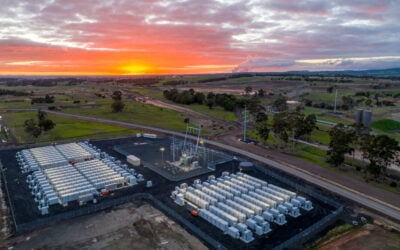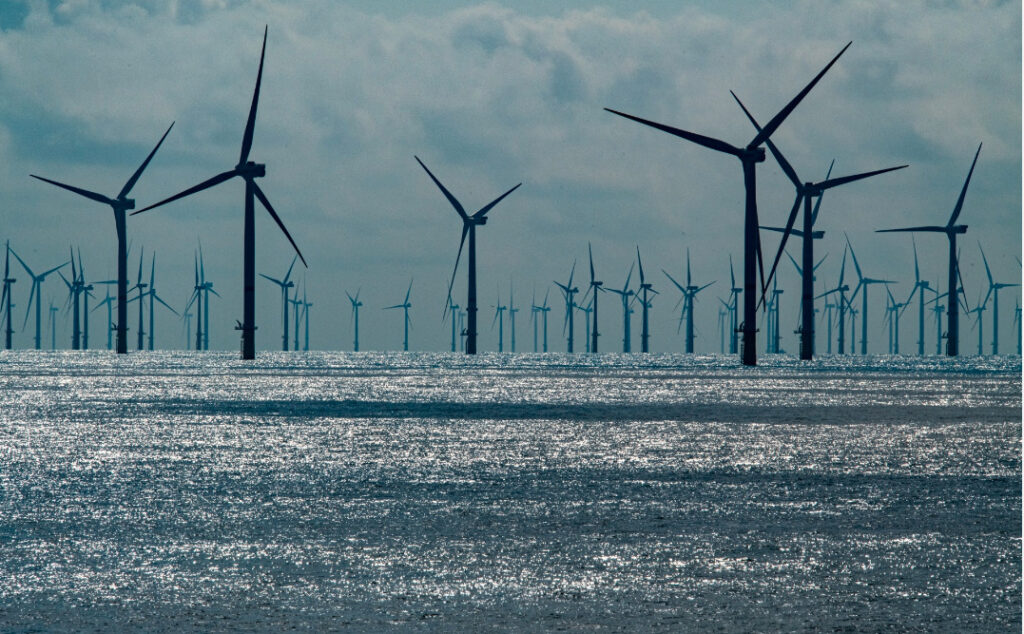
A large offshore wind project proposal in New Jersey, US, by Leading Light Wind includes an option to include a 253MW battery energy storage system (BESS).
The company – a joint venture (JV) between developers Invenergy and EnergyRe – last week (4 August) submitted its project bid for New Jersey’s third competitive offshore wind solicitation.
The solicitation is seeking to procure 1.2-4GW of capacity as part of the state’s aim to deploy 11GW of offshore wind by 2040. The previous solicitation procured 3.75GW.
Leading Light Wind is proposing to build up to 2.4GW of wind capacity in its proposal, which also includes an option to provide 253MW of battery storage capacity which it said would “facilitate grid and ratepayer benefits” and advance the state’s 2GW energy storage target.
Try Premium for just $1
- Full premium access for the first month at only $1
- Converts to an annual rate after 30 days unless cancelled
- Cancel anytime during the trial period
Premium Benefits
- Expert industry analysis and interviews
- Digital access to PV Tech Power journal
- Exclusive event discounts
Or get the full Premium subscription right away
Or continue reading this article for free
The two other bids that the New Jersey Board of Public Utilities (BPU) has received did not include any details of an energy storage facility, from Community Offshore Wind and Atlantic Shores Offshore Wind. Community is a JV between Germany-based energy firm RWE and the international arm of UK transmission system operator National Grid, while Atlantic is a JV between energy major Shell and France-headquartered energy firm EDF.
In its guidance document for the Solication, the BPU spelt out in detail how applicants can include energy storage in their proposal, giving an idea of what the regulator might be expecting from energy storage units included in the projects.
Alongside the basic specs of the project and maximum discharge and charge rates, the document says that applicants must show:”…how storage will be deployed, e.g., maximize energy revenues, reduce peak demand for electricity, or improve reliable operation of the system,” and a “description of how storage will contribute to maximizing revenues to be returned to customers”.
Applicants also need to provide ‘Average Annual Cycle Efficiency %’ for all years from start of operations to 2060.
All three bids contain various commitments to investing in local manufacturing and ensuring economic benefits from the projects are shared with local communities, including by prioritising local union construction labour.
Bryan Schueler, Senior Executive Vice President, and Construction Business Leader for Invenergy, said: “With strong partners in New Jersey, we are committed to delivering the benefits of the clean energy economy to Garden State residents for generations to come.”
Invenergy has also indicated that Leading Light may deploy energy storage as part of other large offshore wind projects it is pursuing.
Commenting on its 2.1GW bid for an offshore wind solicitation from neighbouring New York state in January, Invenergy’s VP offshore development Joshua Weinstein said: “In addition, we’re offering an energy storage solution to provide grid resilience and align our project with New York’s energy storage goals,” though didn’t give any more details.
Wind power is less commonly co-located with energy storage than in the case of solar PV for a few main reasons. One is that its output is much less predictable and much more volatile, meaning potentially heavier and less predictable cycling of the energy storage system. The larger minimum size of wind projects compared to PV also means a minimum larger energy storage size.