
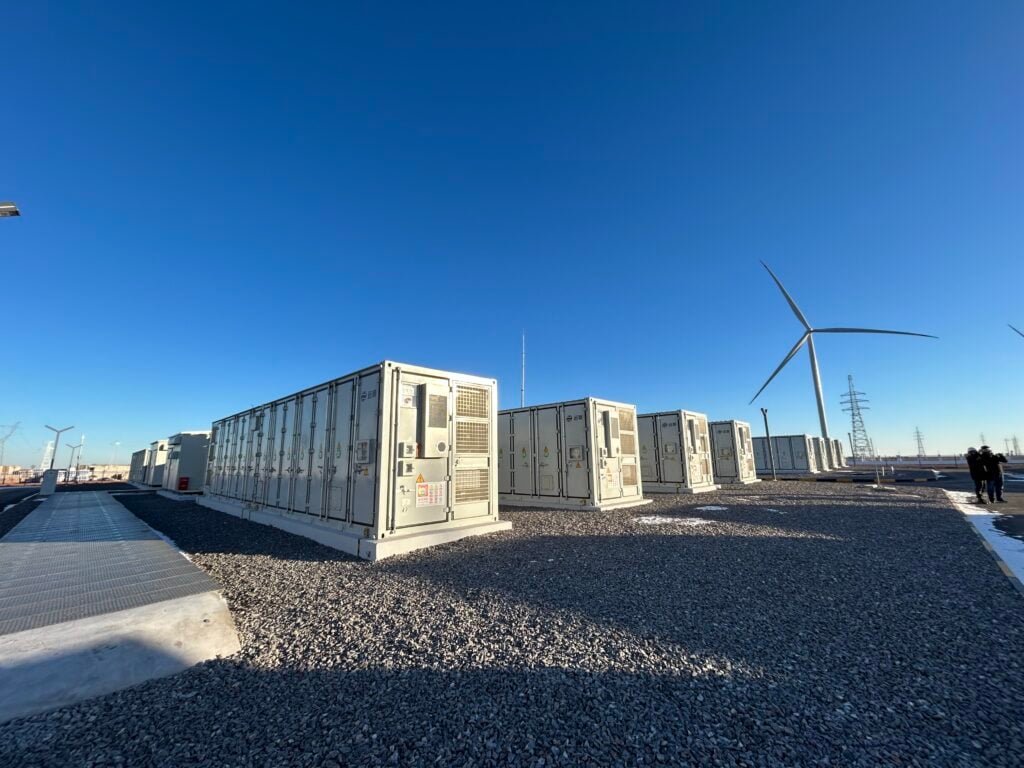
Battery energy storage projects must respond to changing market conditions over their operating lives. Their degradation guarantees need to evolve with them, writes Faisal Mohd, BESS solutions director at Envision Energy Australia.
Anyone who has negotiated a utility-scale battery energy storage system (BESS) Supply and Long-Term Service Agreement (LTSA) knows that battery degradation guarantees rarely come without strings attached. Battery OEMs and system integrators typically impose operational constraints on how the BESS asset can be operated for warranties and performance guarantees to remain in force.
Typically, these operational restrictions include limits on:
- Average daily cycling
- Resting state of charge (SoC)
- Annual energy throughput
- Ambient operating temperature
- Charge- Discharge Rates
- Other operational parameters
Try Premium for just $1
- Full premium access for the first month at only $1
- Converts to an annual rate after 30 days unless cancelled
- Cancel anytime during the trial period
Premium Benefits
- Expert industry analysis and interviews
- Digital access to PV Tech Power journal
- Exclusive event discounts
Or get the full Premium subscription right away
Or continue reading this article for free
The rationale behind these operating boundaries is understandable. Batteries are electrochemical devices and the degradation is heavily influenced by the way the batteries are operated.
While these restrictions are intended protect battery systems from abuse and enable OEMs to stand behind their performance guarantees throughout the warranty period, these same restrictions can prevent asset owners from fully optimising their batteries when market opportunities arise.
The challenge lies in balancing these limitations against the flexibility required to maximise project value.
The concept of flexible degradation applies to BESS projects globally, but the specific market reference in this article is from projects operating in Australia’s National Electricity Market (NEM).
The value that is potentially lost
The reality is that every project’s revenue model is built on forecasts and a bit of crystal-ball gazing into how the market will behave over the years. Those forecasts may be robust, but they are still forecasts. It is unrealistic to expect that over a 25-year project life, market conditions, dispatch strategies, and operating philosophies will remain exactly as assumed during financial modelling at the financial close.
Perhaps the project was originally expected to operate primarily in the Frequency Control Ancillary Services (FCAS) market, where a resting SoC of around 50% is optimal. A few years later, however, energy arbitrage may become the dominant revenue source, or under certain power purchase agreement (PPA) obligations, batteries may be required to dispatch only during specific times. Meaning the batteries are to spend much longer periods at a higher SoC before discharging during peak pricing events.
Similarly, there will inevitably be periods when cycling the battery more frequently creates significant additional revenue, and the asset owner wants to maximise revenues by operating as much as they can to benefit from the favourable market conditions. Under many conventional warranty structures, taking advantage of those opportunities may come at the cost of accelerated degradation or in some extreme cases, operating the asset outside the agreed operational conditions may result in warranties becoming void.
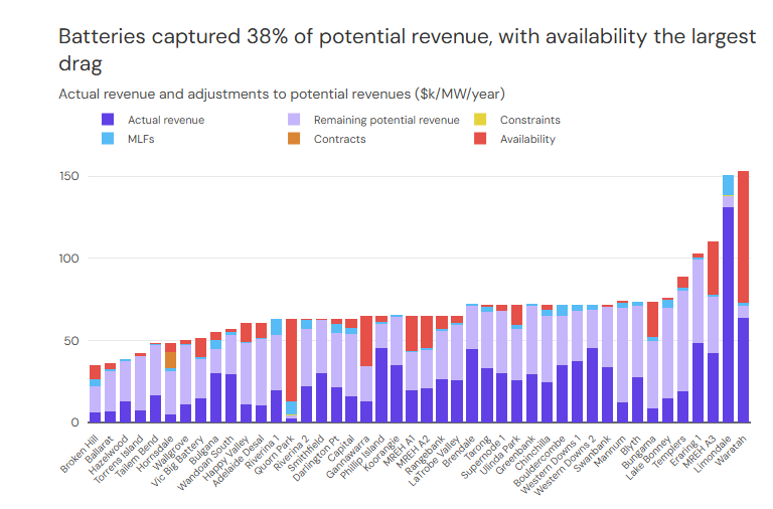
To quantify this impact, recent market data published by Modo Energy highlights that during a recent monthly tracking period, grid-scale batteries operating in the Australian National Electricity Market (NEM) achieved an average revenue capture rate of just 38% relative to their theoretical maximum under ideal market conditions.
While a precise public breakdown isolating the exact percentage attributed strictly to OEM-imposed operational boundaries is unavailable, this benchmark underscores a critical reality: substantial, quantifiable revenue is being left on the table due to real-world asset constraints and inflexible operating parameters.
Limitations of conventional ‘flexible’ guarantees
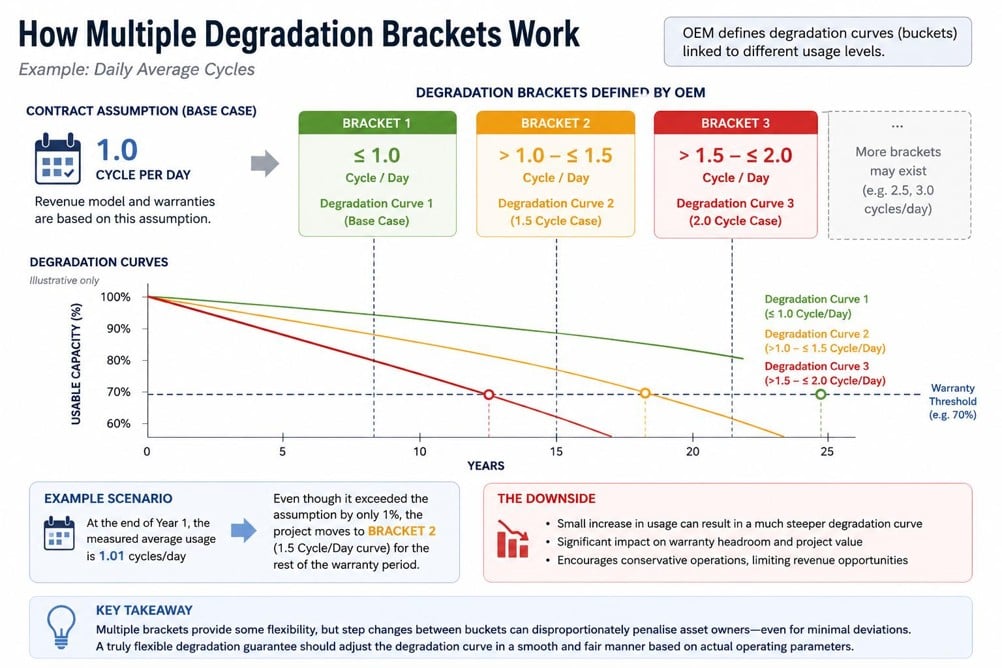
Some OEMs attempt to address these limitations by offering some flexibility through multiple degradation “buckets.”
For example:
1.0 cycle/day
1.5 cycles/day
2.0 cycles/day
At first glance, this appears flexible. However, if the offered degradation buckets were not granular enough, project guarantees are still heavily inclined in favour of OEMs and system integrators.
Imagine the contract baseline was agreed as one cycle per day, and after a year of operation the measured throughput shows that battery averaged 1.01 cycles/day over the last year.
Despite exceeding the usage by only 1%, the entire project’s degradation guarantees may immediately move onto the 1.5-cycle degradation curve. The additional degradation allowance can be disproportionately large compared to the actual increase in battery usage. In other words, the asset owner is penalised as if the asset had been used as an average 1.5 cycles per day, when in reality it averaged only 1.01 cycles per day.
While requesting more granular buckets (1.0, 1.1, 1.2, 1.25, 1.3 cycles/day, etc.) can improve the situation, many OEMs are understandably reluctant to offer that level of detail.
More importantly, this approach only addresses cycling—it doesn’t account for changes in other operating parameters such as resting SoC or ambient temperature.
A truly flexible degradation guarantee should evolve with the way the asset is operated. Rather than accounting for throughput alone, it should also account for other operational parameters such as resting SoC, operating temperature, etc.
This gives project owners confidence that operational decisions made to maximise market revenue won’t unexpectedly compromise long-term warranty protection.
A more practical approach
One of the challenges facing asset owners today is the lack of visibility into how operational decisions affect long-term battery health.
Imagine having a simple model that allows operators to adjust key parameters such as cycling, resting SOC, and operating temperature, and immediately observe the corresponding impact on state of health (SoH) and round-trip efficiency (RTE) throughout the asset’s life.
This is the principle behind Envision Energy’s Forecastable Flexible Capacity Guarantee, which uses a transparent methodology to quantify the relationship between operating behaviour and long-term battery performance.
Delivered through an Excel-based modelling tool, the framework allows users to evaluate different operating scenarios and observe the associated impact on SoH and RTE for each year of operation across the project’s design life.
Conclusion
Historically, for BESS projects, much of the focus has been on headline metrics such as warranty duration and end of life (EoL) capacity retention value.
Whilst these remain important, the real value, for asset owners and investors, lies in understanding the trade-off between revenue optimisation and battery degradation.
Greater transparency around how operating decisions affect state of health (SOH) and round-trip efficiency (RTE) enables informed decisions, reduces operational uncertainty, and allows projects to capture emerging market opportunities without inadvertently compromising long-term asset performance or warranty protection.
In my view, the most valuable degradation guarantees are no longer simply those that provide the longest warranty period—they are the ones that give asset owners the operational flexibility to maximise project value throughout the asset’s life. The battery OEM is best positioned to support operational flexibility while maintaining performance certainty, which will ultimately deliver greater value to asset owners and investors.
About the Author
Faisal Mohd is the technical director for Envision Energy Australia’s BESS business. He is based in Sydney and leads the development of technical solutions for standalone and hybrid battery storage across Australia and New Zealand, helping customers develop innovative energy storage projects that support the transition to a cleaner, more resilient energy future. With 22 years of work experience, Faisal has been developing technical solutions for battery storage projects since 2018 and has contributed to the design and delivery of several gigawatt-hours of deployment in Australia and previously, in Southeast Asia.
Solar Media (part of Informa Group) will host the Battery Asset Management Summit Australia 2026 on 25-26 August at the Amora Hotel Jamison in Sydney, bringing together asset owners, operators, trading teams and optimisers to address revenue strategy, lifecycle management and operational performance across Australia’s fast-growing battery storage fleet.
Readers of Energy-Storage.news can get 20% off their tickets using the code ESN20 at checkout. Find out more about the Summit on the official website.
