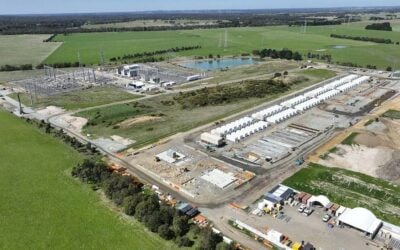
Two large-scale battery storage systems which will charge from nearby solar to help power iron ore mining operations in Western Australia have been commissioned.
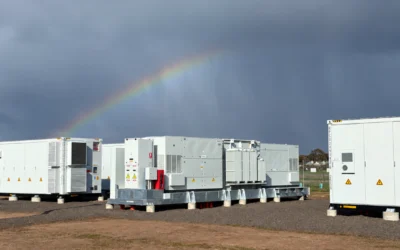
Renewable energy company Hybrid Systems Australia, a subsidiary of power producer Pacific Energy, said this morning that work has been completed on the two interconnected battery energy storage system (BESS) facilities for customer Fortescue Metals Group.
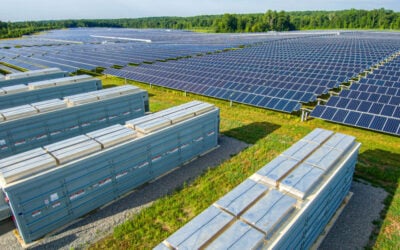
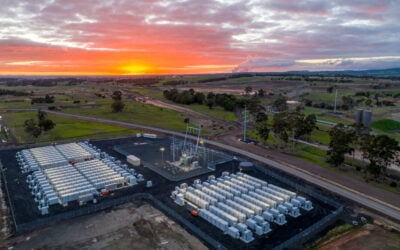
Sited in Western Australia’s mineral deposit-rich Pilbara region, the two BESS add up to 42MW of output and will be charged from a new 150MW solar PV power plant that Fortescue is installing in the region.
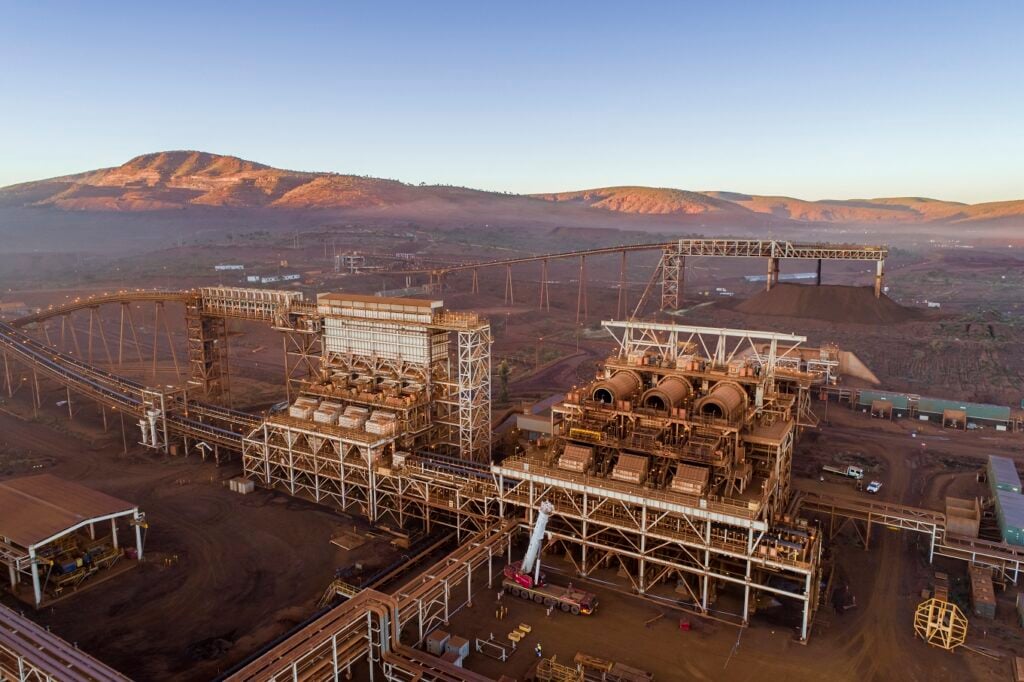
It’s part of a wider project called Pilbara Energy Connect, through which Fortescue is building new renewables, energy storage and transmission lines, as well as natural gas generation, to power its Iron Bridge Magnetite mine.
Try Premium for just $1
- Full premium access for the first month at only $1
- Converts to an annual rate after 30 days unless cancelled
- Cancel anytime during the trial period
Premium Benefits
- Expert industry analysis and interviews
- Digital access to PV Tech Power journal
- Exclusive event discounts
Or get the full Premium subscription right away
Or continue reading this article for free
So, while it does include some gas, which is the main fuel used at mining operations in the region currently, overall, the reduction in gas consumption should be significant.
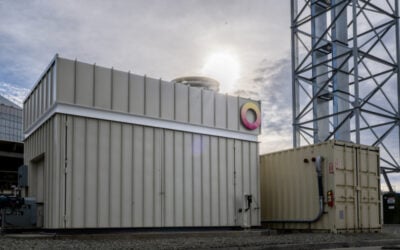
The new battery storage facilities use BESS equipment and components supplied by Hitachi Energy and cell manufacturer Kokam.
Meanwhile, various other Pacific Energy subsidiaries contributed to the installation, including power control engineering firm MVLV which designed, manufactured and installed switchgear and BESS enclosures, and BESS control systems from Digital Intelligence, a company Pacific Energy acquired mid-last year. A Pacific Energy subsidiary will also build the new Pilbara Energy Connect gas power plant.
In a 2020 announcement around the project, Fortescue Metals Group (FMG) CEO Elizabeth Gaines said the company’s AU$700 million (US$483 million) commitment to it would put infrastructure in place to allow for large-scale solar and wind to be added “at any point on the integrated network,” meaning FMG could continue to increase its share of renewables powering the mine.
FMG executive chairman and billionaire founder Andrew ‘Twiggy’ Forrest has been increasingly bullish on the potential for renewable energy to decarbonise the group’s operations, launching a green hydrogen business and taking delivery last month of a prototype battery system for a zero-emissions long haul mining truck. That 15-tonne truck alone would have a 1.4MWh battery storage system, according to the company.
Among its other clean energy projects in development is Uaroo Renewable Energy Hub. Also in the Pilbara, FMG wants to build a combined 5.4GW of wind and solar PV generation together with about 9GWh of battery storage.
Fortescue is certainly one of the most prominent movers in renewable electrification of mining power in the Pilbara region, but is far from alone.
In November, Rio Tinto said it would invest around US$400 million into 200MW of solar PV and 200MWh of BESS to add to an existing 34MW of PV it has deployed for its iron ore mines there, to come online by 2026.
Similarly, in September, mining group BHP contracted with utility company Alinta Energy for 45MW of solar PV and 35MW BESS at BHP’s port facilities in Western Australia (WA), connected to the company’s Pilbara mining operations. BHP alone accounts for about 300 million tonnes of iron ore coming out of the region each year.
Energy-Storage.news’ publisher Solar Media will host the 1st Energy Storage Summit Asia, 11-12 July 2023 in Singapore. The event will help give clarity on this nascent, yet quickly growing market, bringing together a community of credible independent generators, policymakers, banks, funds, off-takers and technology providers. For more information, go to the website.