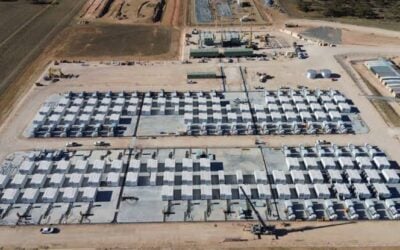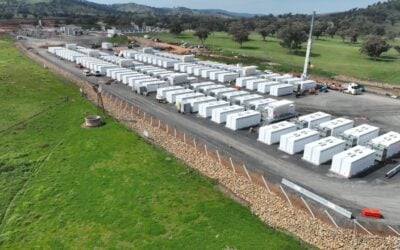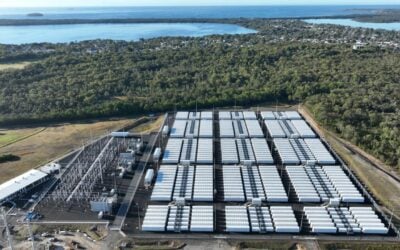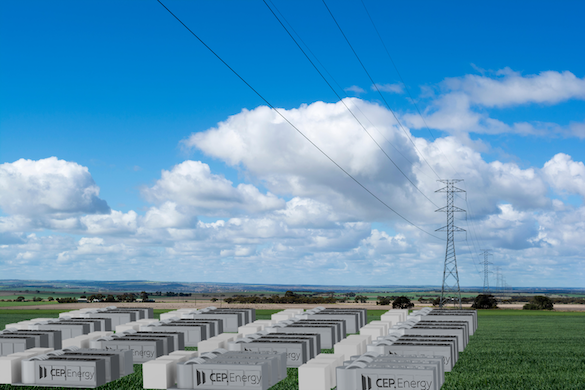
Infrastructure developer and investor Equis is the latest company to propose building Australia’s largest-ever battery energy storage system (BESS).
Singapore-headquartered Equis said last week that it plans to build Melbourne Renewable Energy Hub (MREH), a 1,200MW/2,400MWh BESS project in the state of Victoria. One of its main objectives would be to support Victoria in reducing its reliance on coal generation.
The company is partnering with Australian renewables engineering, design and construction group Syncline Energy to jointly develop MREH, with Equis retaining full ownership.
Equis claimed the battery will be the first over 200MW to connect directly to the National Electricity Market (NEM) via the 500kV high voltage transmission system, while its development and design is unique in that six separate 200MW connection points to the NEM will be included, allowing portions of the BESS to perform different applications.
Try Premium for just $1
- Full premium access for the first month at only $1
- Converts to an annual rate after 30 days unless cancelled
- Cancel anytime during the trial period
Premium Benefits
- Expert industry analysis and interviews
- Digital access to PV Tech Power journal
- Exclusive event discounts
Or get the full Premium subscription right away
Or continue reading this article for free
“The scale and uniqueness of MREH’s approvals and development mean it will be capable of providing both short and long hour storage and response services catering to the changing demands of the National Electricity Market,” Equis managing director David Russell said.
The BESS will support three of Victoria’s planned large-scale Renewable Energy Zone (REZ) projects, and at its planned full capacity could support 1,600MW of solar PV or 1,200MW of wind power, although Equis said it will be built in two 600MW stages.
Syncline’s managing director Phil Galloway said his company had “combed Victoria for the ideal location to build a large-scale grid storage battery which would partially replace the State’s ageing fleet of coal generation plants,” four years ago.
“We needed enough space to operate safely and to minimise the impact on the community. It also had to be at the Metropolitan load centre, to ensure that we could improve the reliability and resilience of the grid and materially support regional wind and solar energy,” Galloway said.
“Finally, we had to connect at 500kV to deliver the volume of energy that is required when Australia’s large thermal generators retire over the next 10-years. MREH was the ideal location.”
That “ideal location” is in Melton, about 25km from the commercial business district (CBD) of central Melbourne.
It would potentially take the crown of largest BESS in Australia from another project in the same state, the Victorian Big Battery, a 300MW/450MWh system which went online in late 2021 through developer Neoen and BESS technology provider Tesla.
That said, some other very large projects in the country have been proposed, some perhaps more speculatively than others. They include the Waratah Super Battery in New South Wales (NSW), which is being supported by the state’s government and is likely to exceed 1.9GWh capacity; and the 500MW/2,000MWh Hunter Energy Hub proposed by integrated energy retailer-generator AGL.
Back in February 2021, specialist renewable energy fund CEP.Energy proposed the construction of a 1,200MW output BESS, also in the Hunter Economic Zone region of New South Wales. As with MREH, plans for Hunter BESS projects largely focus on easing the retirement of coal power plants.
For context, just over a gigawatt-hour of battery storage was installed across all market segments in Australia in 2021, according to research group Sunwiz, including 300MWh of residential systems.
Equis said that it expects to begin construction of the first 600MW stage next year, to bring online in 2024. Equis’ David Russell said MREH will involve more than AU$1.9 billion (US$1.26 billion) investment into Victoria, creating 200 construction jobs and 15 operational jobs.
The project can also facilitate work on a battery recycling hub and hydrogen hub, Russell said, which would utilise sewage wastewater, while another first for Australia is that the BESS will be connected to the grid via underground transmission lines, according to the Equis managing director.
Victoria’s government has deemed the MREH project to be of ‘State Significance’ and all required planning and environmental approvals, as well as community impact assessments have been completed, Equis said.
Equis is backed by main shareholders Abu Dhabi Investment Authority sovereign wealth fund and institutional investor Ontario Teachers’ Pension Plan Board.
Energy-Storage.news’ publisher Solar Media will host the 1st Energy Storage Summit Asia, 11-12 July 2023 in Singapore. The event will help give clarity on this nascent, yet quickly growing market, bringing together a community of credible independent generators, policymakers, banks, funds, off-takers and technology providers. For more information, go to the website.