Battery energy storage systems (BESS) in Australia’s National Electricity Market (NEM) are facing new operational and revenue challenges as minimum system load events force grid operators to implement out-of-market interventions that prevent batteries from operating economically.
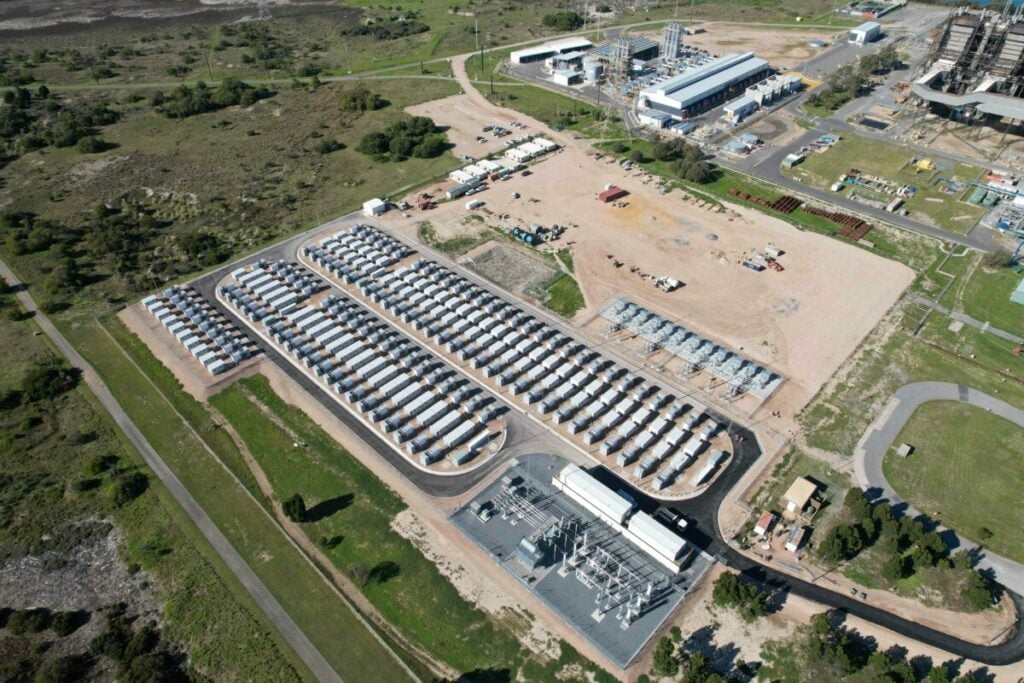
According to new research from Modo Energy, the 250/250MWh Torrens Island battery storage system became the first BESS to be directed by the Australian Energy Market Operator (AEMO) under minimum system load management protocols on 11, 12 and 15 November 2025.
These interventions prevented the BESS facility from charging during optimal pricing periods, resulting in lost revenue of AU$5,354 (US$3,569) on 11 November and AU$3,876 on 12 November when the battery storage system missed the cheapest one-hour charging windows on both days.
When operational demand falls below minimum system load thresholds, AEMO must take out-of-market actions to maintain system security by directing assets to follow specific dispatch trajectories rather than economic dispatch.
Try Premium for just $1
- Full premium access for the first month at only $1
- Converts to an annual rate after 30 days unless cancelled
- Cancel anytime during the trial period
Premium Benefits
- Expert industry analysis and interviews
- Digital access to PV Tech Power journal
- Exclusive event discounts
Or get the full Premium subscription right away
Or continue reading this article for free
The revenue impact becomes significant when large price differences exist between the instructed profile and economic operation, particularly affecting battery storage systems that rely on price arbitrage for revenue generation.
The interventions at Torrens Island occurred during extended periods when the battery was prevented from charging, specifically from 07:30 to 15:00 on 11 November and from 07:00 to 14:30 on 12 November.
These timeframes coincided with the most economically attractive charging opportunities, directly impacting the facility’s ability to optimise its trading strategy in the NEM.
Modo Energy’s research noted that under the National Electricity Rules, Torrens Island may be eligible for compensation when its dispatch is altered through out-of-market intervention.
The compensation formula uses a benchmark price based on the 90th-percentile price over the past 12 months for the region, multiplied by the difference in energy output with and without the direction.
For the November events, this formula suggests that Torrens Island could receive up to AU$37,895 and AU$28,091, respectively, which is significantly higher than the actual financial losses incurred.
However, compensation is not guaranteed, and the assessment process remains unpredictable. The current compensation framework, designed for traditional generators, proves difficult to apply to storage assets, as it pays based on benchmark pricing rather than spot prices, resulting in outcomes that do not always reflect the actual financial losses experienced by battery operators.
The minimum system load challenges add to broader revenue pressures facing battery storage operators in Australia. Battery storage revenues fell 61% as Australia’s NEM navigated market volatility earlier this year.
Both AEMO and the Australian Energy Market Commission have identified areas requiring clarity as storage becomes more prevalent in the NEM.
Current discussions focus on better recognising price-driven impacts for storage, improving counterfactual modelling for bidirectional units, and making the additional-compensation process more consistent and predictable.
112 hours of negative operational demand in South Australia
South Australia has recorded 112 hours of negative operational demand since the start of 2025, occurring when local generation exceeds underlying demand and forces scheduled units offline.
These conditions typically emerge during the spring months, when mild temperatures suppress electricity demand while distributed solar generation remains high, creating operational conditions that trigger minimum system load interventions.
According to Modo Energy’s analysis, South Australia’s exposure to minimum system load events is expected to decline over time as Project EnergyConnect Stage 2 expands interconnection with New South Wales.
The enhanced transmission capacity will provide stronger system support and reduce the risk of islanding, likely decreasing the frequency of minimum system load events and their associated impact on battery operations.
The minimum system load framework was introduced in 2021 to manage potential security issues from low grid demand caused by high distributed solar PV generation.
As Australia continues its renewable energy transition, the framework’s interaction with battery storage assets requires ongoing refinement to ensure both system security and economic viability for storage operators.