GlidePath acquires 149MW Texas wind portfolio with storage additions planned

By John Parnell
LinkedIn
Twitter
Reddit
Facebook
Email
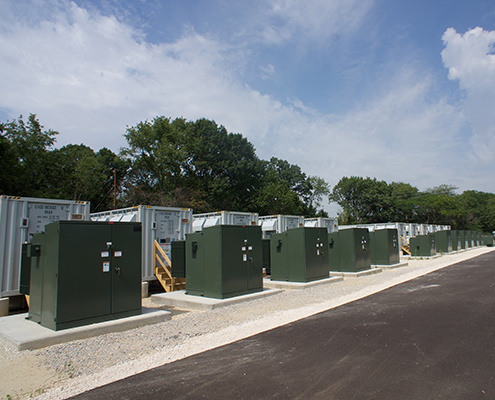
A GlidePath battery storage project in Illinois. Image: GlidePath.

GlidePath Power Solutions has acquired eight wind projects in North Texas with a total capacity of 149MW.

The portfolio, purchased from Exelon Generation, will be optimised by GlidePath while it plans how best to add energy storage on-site at each project. The projects are all north of Amarillo and sell into the Southwest Power Pool (SPP).

Chris McKissack, Chief Operating Officer for GlidePath told Energy-Storage.News:

“We believe there’s an opportunity to build out storage facilities up to the nameplate capacity of the wind farms in the portfolio. There’s great potential for storage to reduce transmission congestion and improve the economics of wind farms in SPP and other markets.”

This article requires Premium SubscriptionBasic (FREE) Subscription

Try Premium for just $1

  • Full premium access for the first month at only $1
  • Converts to an annual rate after 30 days unless cancelled
  • Cancel anytime during the trial period

Premium Benefits

  • Expert industry analysis and interviews
  • Digital access to PV Tech Power journal
  • Exclusive event discounts

Or get the full Premium subscription right away

Or continue reading this article for free

According to GlidePath, they will be the first battery storage projects in the SPP.

“The high penetration of wind energy in North Texas offers us an excellent opportunity to pair these facilities with the latest battery storage technology,” said David Braun, president, GlidePath Asset Management. “We look forward to managing these wind assets in a way that will hopefully strengthen the reliability of supply in the local electric grid and deliver benefits for Texas power consumers.”

In June, SPP revealed that it would launch the Western Energy Imbalance Service market (WEIS) with settlements every five minutes. The previous balancing market run by SPP was launched in 2007 and paid out US$103 million in its first year.

GlidePath has a 1GW battery storage development portfolio, including a 10MW /10MWh project in Texas announced in April this year.
2 February 2027
The Tower Hotel, London, UK
Solar & Storage Finance Europe Summit brings together the developers, investors and lenders financing European solar and storage projects. As grid constraints, curtailment and weaker capture prices put pressure on returns, the summit explores what makes projects bankable, how co-located storage changes the revenue case and where capital providers see investable opportunities. Attendees can compare how their peers structure projects and meet people who could help them move their own projects or investments forward.
20 April 2027
Renaissance Dallas at Plano Legacy West Hotel, Dallas, Texas, Dallas
Policy, Procurement and Power Demand: Defining the Next Chapter for Energy Storage. Two days in Dallas where developers, IPPs, investors, utilities and the manufacturers building the technology come to close deals, not swap business cards. If you need to be in the room with the people deploying capital into US storage, this is that room.

Read Next

November 26, 2026
NYSE-listed energy infrastructure company Energy Vault has reported its Q3 2026 financial results and the close of non-recourse project financing for its 150MW/300MWh SOSA Energy Centre in Texas, US.
Premium
November 25, 2026
Energy-Storage.news speaks with Trina Storage’s Mike Watson about the company’s genset-BESS solution and its approach to safety.
November 24, 2026
Flow battery company CMBLU Energy and California public utility Imperial Irrigation District (IID) have announced a 10MW/100MWh energy storage project that will mark IID’s first deployment of a non-lithium battery system.
November 24, 2026
The US Senate has passed the Bipartisan American Affordability and Jobs Act of 2026 (BAAJA), the permitting reform bill that has been a major source of industry discussion.
November 20, 2026
Sodium-ion (Na-ion) is continuing to gain traction as a legitimate “major chemistry” — with CATL, BYD, and GM all committing to it — some developers, within and outside the US Na-ion space have argued that greater policy support should be directed toward advancing the technology.