Australia-headquartered flow battery manufacturer Redflow is continuing with a strategy of selling devices into the telecoms sector, agreeing a second deal to repower mobile phone towers for a South African provider.
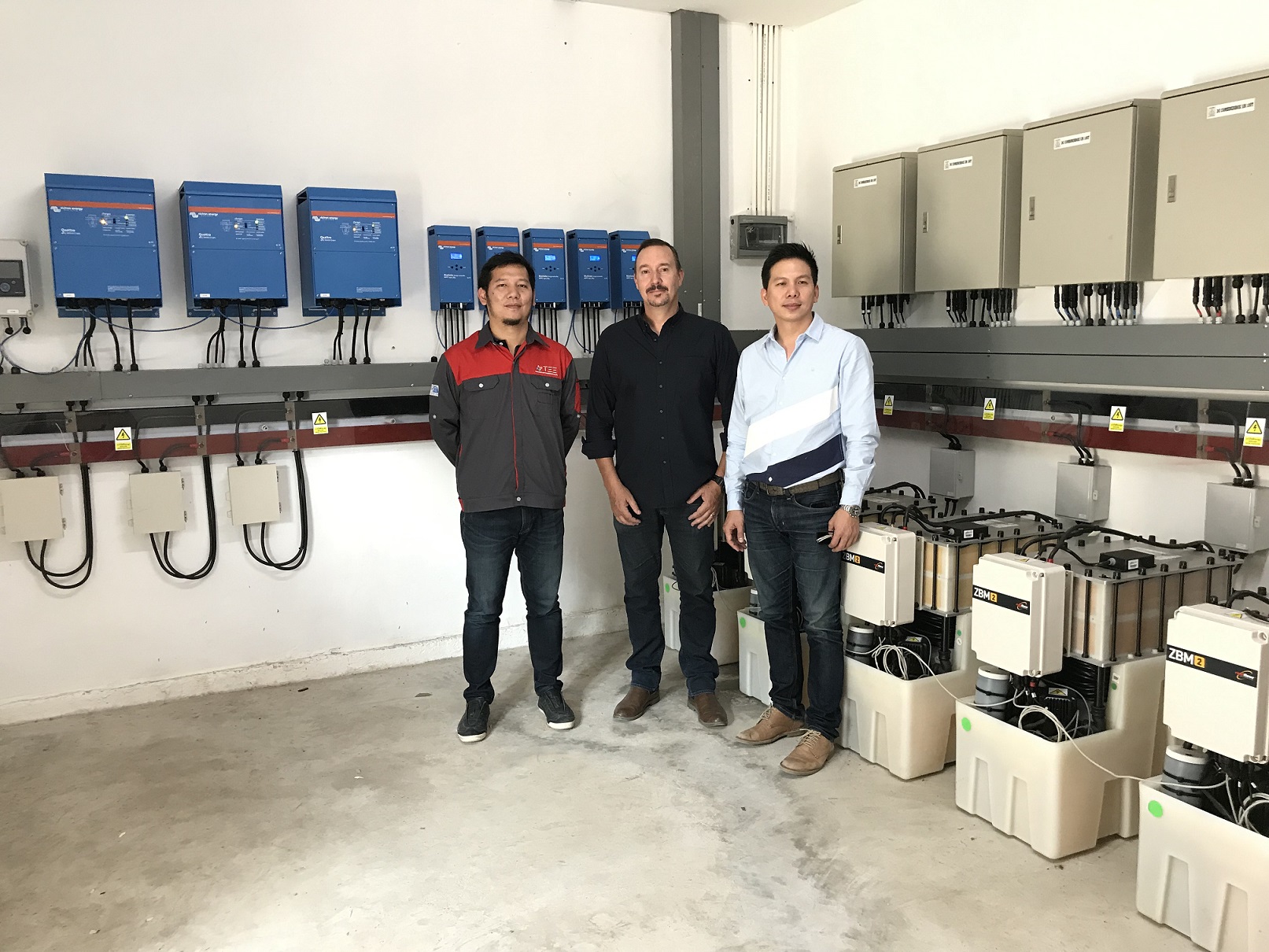
The sale of ‘at least’ 68 of Redflow’s ZBM2 zinc bromine electrolyte flow batteries was announced by the ASX-listed company today, with the batteries to be distributed across 20 mobile phone mast sites. While Redflow has not disclosed the name of the customer, it has been identified as “one of Africa’s leading telecommunication companies”. Locally-headquartered telecommunications tech specialist Mobax is the flow battery maker’s partner on the ground and the issuer of the order for its client. Mobax will install and remain responsible for the operation of the systems, working closely with Redflow’s longtime solar integration and installation partner in South Africa, Specialized Solar Solutions.
The order follows on from a similar deal a year ago, when Redflow sold 32 ZBM2 units to be fitted out at South African mobile phone sites, providing standby energy storage and working closely with Specialized Solar Solutions. Redflow also pointed out that carbon tax policy recently introduced in South Africa will also enhance the competitiveness of its solution.
In short, the use of the technology is expected to have a positive impact on operational costs, reliability of service and the environment. Unsurprisingly, mobile phone masts in South Africa outside the grid tend to be powered or backed up with diesel generators, which can be expensive to run as well as polluting. Not only will the sites require much less diesel fuel and fewer refuelling trips, the use of the flow batteries is also expected to enhance reliability and will require less servicing than diesel generators.
Try Premium for just $1
- Full premium access for the first month at only $1
- Converts to an annual rate after 30 days unless cancelled
- Cancel anytime during the trial period
Premium Benefits
- Expert industry analysis and interviews
- Digital access to PV Tech Power journal
- Exclusive event discounts
Or get the full Premium subscription right away
Or continue reading this article for free
E-S.n quick view on: Redflow
Redflow has also set up an assembly plant in Thailand, where it is targeting the annual production of 30MWh of zinc bromine energy storage. It is one of a handful of relatively new companies fighting to commercialise their own proprietary variant on flow batteries, with others tending to use vanadium electrolyte for the most part. Redflow and Primus Power from the US are among the most prominent to be delivering zinc bromine energy storage units.
Energy-Storage.news has reported extensively on the space over the past few years, most recently and perhaps in most depth in this feature article for PV Tech Power, where we spoke with four different providers to learn about tech, market expectations and market and manufacturing strategies.
Additionally, Redflow contributed a guest blog for the site a few months back on how hybridising an off-grid solar system using a combination of flow batteries and lithium-ion brought reliable power to a remote Thai community for the first time. A representative of Redflow’s engineering partner on that project, TSUS Group, said that the hybridisation is “good for the life expectancy of [the] batteries”.