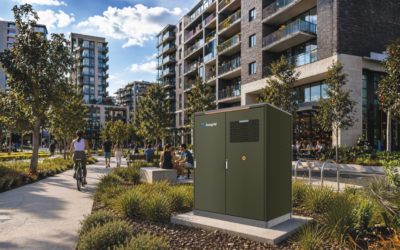
Telecoms specialist Elisa is deploying battery and PV systems at base towers in Finland, which will “implement virtual power plant (VPP) optimisation of locally produced solar energy.”
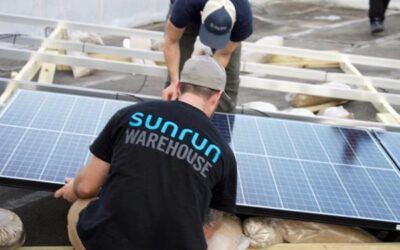
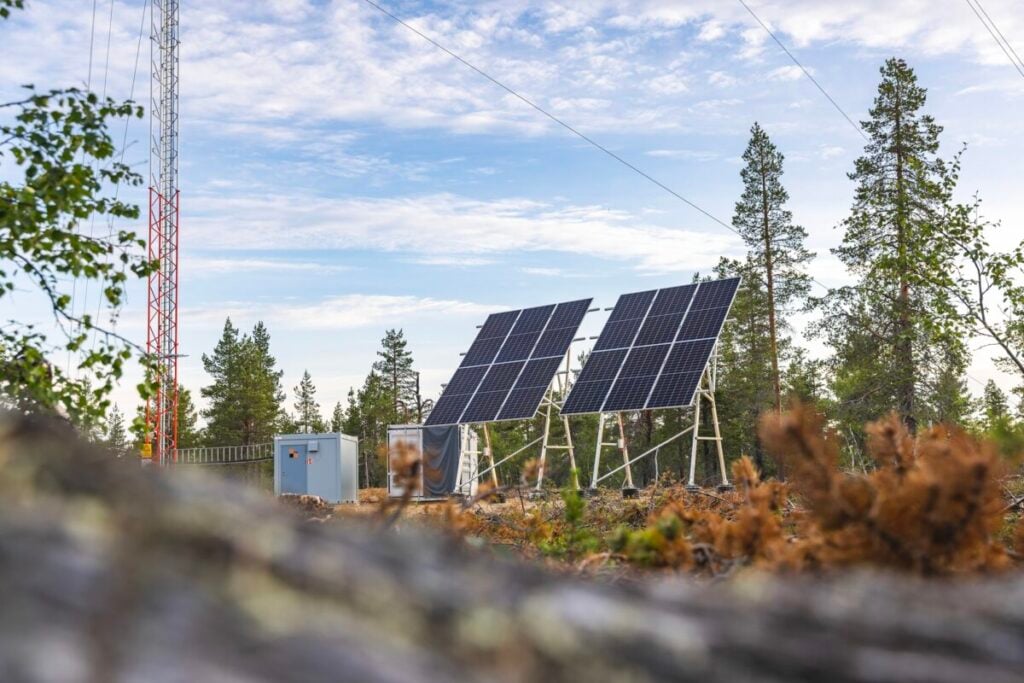
Solar PV arrays of around 5kW generation capacity will be typically paired with 400Ah battery storage systems at mobile network towers on the Åland Islands, an autonomous region in the Baltic Sea between the southwest coast of Finland and east coast of Sweden.
The project follows a successful trial deployment by Elisa with Åland Islands-based telecoms provider Ålcom and local solar PV company Solel Åland.
In addition to supplying solar energy to power the mobile stations, the systems’ batteries can be used as backup power sources. At the same time, supplementary power can be bought from the grid, and Elisa’s Distributed Energy System (DES) technology will optimise the charging of the batteries to maximise cheaper purchases at off-peak times.
Try Premium for just $1
- Full premium access for the first month at only $1
- Converts to an annual rate after 30 days unless cancelled
- Cancel anytime during the trial period
Premium Benefits
- Expert industry analysis and interviews
- Digital access to PV Tech Power journal
- Exclusive event discounts
Or get the full Premium subscription right away
Or continue reading this article for free
The DES solution also enables the batteries’ stored energy to be aggregated into a virtual power plant, accessing the Nordic grids’ frequency regulation ancillary services markets which have become an attractive opportunity for large-scale battery energy storage systems (BESS) with Sweden and Finland leading deployments, trailed by Denmark and Norway.
“This type of democratisation and real-time participation in the energy market has not been accessible to telecom operators before. Selling excess capacity back to the grid to help balance supply and demand can be a source of additional revenue for operators,” Elisa EVP for digital products and services Henri Korpi said in a press release.
Jukka-Pekka Salmenkaita, VP for artificial intelligence (AI) and the DES product at Elisa, told Energy-Storage.news that transmission system operators (TSOs) in the Nordic region “have opened up the electricity grid ancillary services market for technology-neutral competition.”
“This greatly facilitates VPP business cases while simultaneously encouraging new sources of flexibility capacity to enter the market, thus helping the electricity grid cope with large amounts of renewable production.”
15GWh of potential across Europe
Elisa has been bullish on the potential for combining batteries with telecoms stations for a while. When launching the DES solution late last year, a company spokesperson said that Europe-wide, there is scope for the deployment of 15GWh of energy storage at radio access network (RAN) stations.
The combination of the two technologies would also advance Europe’s decarbonisation and slash the costs of investing in clean energy technologies as well as telecoms infrastructure upgrades, the spokesperson said.
The launch of the DES solution came just under a year after Elisa received €3.9 million (US$4.17 million) funding from the Finnish government in February 2023 to develop the technology, stating at the time that the company would target deploying 150MWh of battery storage on its own networks, which it operates in Finland and Estonia.
Meanwhile, it is also working with third parties such as Ålcom and, in a previous deal, with Helsinki-based cellular infrastructure construction and maintenance provider DNA Tower.
Elisa’s Jukka-Pekka Salmenkaita noted, however, that Ålcom’s installation of the DES “is the first one that implemented VPP optimisation of locally produced solar energy,” with projects deployed until now only featuring batteries that charged from the grid.
From there, it has made the hybrid solar-plus-storage solution commercially available to other customers, and Elisa has said previously that it is open to taking the technology into markets elsewhere in Europe.
According to Salmenkaita, the DES can be flexibly dimensioned to meet different requirements from both solar PV and battery perspectives and is compatible with a “wide range” of battery and power electronics vendors’ equipment.
Ålcom head of network Peter Löfman said that for its project, lithium-ion (Li-ion) batteries manufactured in Sweden by startup Polarium have been chosen. Löfman said the telecoms company’s preference had been for a European vendor.
Interestingly, while Elisa’s Salmenkaita said lithium iron phosphate (LFP) chemistry batteries are typically the most competitive for this type of application, the company is “closely monitoring the development of sodium-ion alternatives.”
Elisa was a winner at the 2023 Energy Storage Awards, hosted by our publisher Solar Media in September last year, in the category of Distributed Energy Storage Project of the Year.