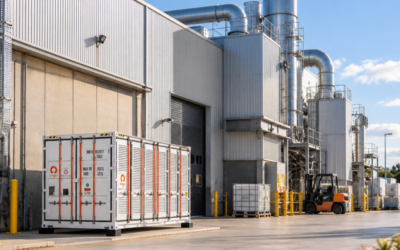
Australian energy company EORA Energy has formed a joint venture (JV) with resources investor Kevin Maloney’s Tulla Group to develop integrated energy infrastructure for mining operations, data centres and other energy-intensive sites.
The deal marks EORA’s shift from a battery technology supplier toward a full energy infrastructure developer.
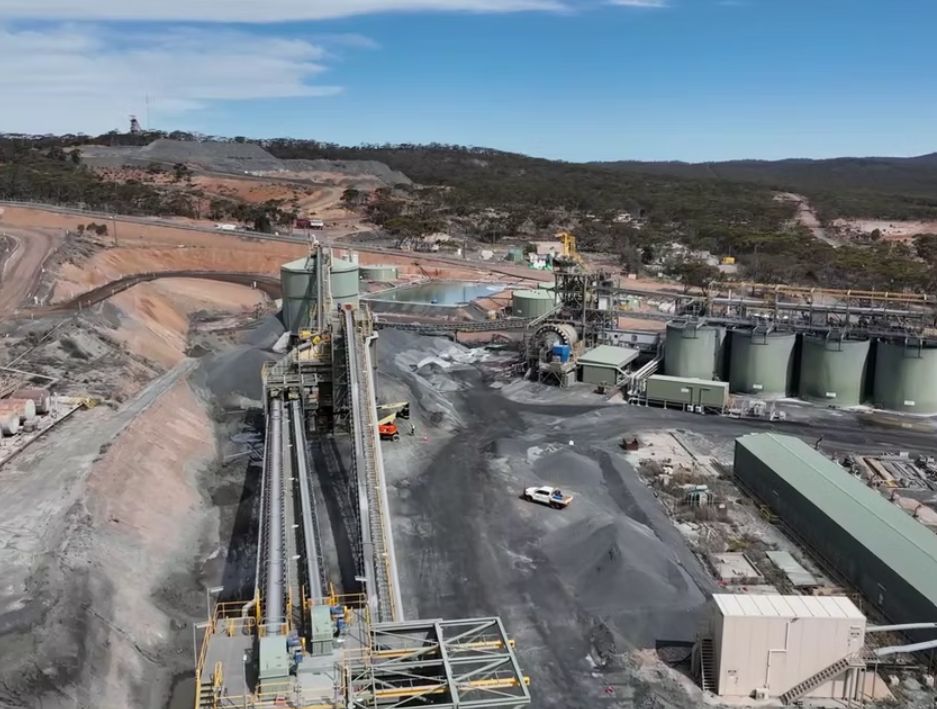
The partnership’s first reference project is the Norseman gold mine and camp site in Western Australia’s Kalgoorlie/Goldfields region, where the JV will deploy a system combining battery storage, solar, existing diesel generation and grid supply, coordinated by an energy management and optimisation system designed to reduce generator run-hours, fuel consumption and peak demand.
Tulla Group owned the Norseman gold mine project in Western Australia as a 50/50 joint venture with Pantoro Limited starting in 2019, before fully merging with Pantoro in June 2023 to consolidate 100% ownership under Pantoro. After the merger, Tulla Group retained a significant shareholding in the combined entity.
Try Premium for just $1
- Full premium access for the first month at only $1
- Converts to an annual rate after 30 days unless cancelled
- Cancel anytime during the trial period
Premium Benefits
- Expert industry analysis and interviews
- Digital access to PV Tech Power journal
- Exclusive event discounts
Or get the full Premium subscription right away
Or continue reading this article for free
The JV is projecting a payback period of under five years for the project.
EORA Energy launched in Australia in April 2026 as a vanadium redox flow battery (VRFB) developer targeting mining operations and data centres, positioning long-duration storage as an alternative to lithium-ion for applications where diesel dependence and grid constraints are most acute.
The joint venture extends that original focus considerably. Rather than supplying battery technology alone, EORA will now work on the design, supply, finance and integration of battery systems alongside generation, solar and intelligent energy-management controls.
EORA Energy CEO James Costello said the company had identified a gap between the availability of energy technologies and capital and the ability to turn viable projects into operating assets.
“By bringing together generation, storage, intelligent controls and private capital, we can develop projects that are technically robust, financially viable and capable of being deployed much faster,” Costello said.
Tulla Group’s Kevin Maloney said the venture was designed to address the same underlying problem from the capital side.
“There is no shortage of technology or potential projects in this country. The challenge is turning those opportunities into investable projects that can actually get built. We need to find ways to mobilise private capital alongside government programs and industry capability to create greater investment certainty.”
A pipeline spanning mining, data centres and remote grids
Beyond Norseman, the JV has identified opportunities across mining, data centres, distribution networks, hydro generation and remote communities.
Its data centre pipeline currently includes several Queensland opportunities in the 6-15MW range, as well as an initial 10MW project.
Separately, the partnership is developing a 5MW/20MWh battery storage project paired with a distribution network, and a 4.95MW/20MWh battery storage project designed to optimise hydro generation.
The JV is also building EPC and Energy-as-a-Service (EaaS) capabilities, under which project capital funds the infrastructure and customers pay through a service charge or a share of resulting energy savings, addressing the upfront capital barrier that has slowed deployment for many energy-intensive businesses.
For data centres, the model offers what the company describes as a “speed-to-power” solution, allowing projects to proceed without being entirely dependent on grid connection timelines.
In an interview with ESN Premium, Fluence, a battery storage system integrator, mapped three distinct commercial uses for batteries co-located with data centres.
This includes load smoothing to manage the highly variable power draw of AI workloads, cold-start backup to replace diesel generators without abandoning existing carbon-neutral commitments, and speed-to-power, where co-located storage reduces the firm capacity a data centre needs from the grid operator and shortens connection timelines.
Fluence’s chief growth officer, Jeff Monday, said the speed-to-power case is potentially the company’s largest global commercial application for the technology, citing US data showing that a 100MW data centre sitting idle while awaiting a grid connection loses around US$100 million in revenue per month, and that co-located storage has compressed three-year US interconnection waits to as little as 15 months.
Mining decarbonisation and a shifting data centre policy landscape
The Norseman project sits within a broader case EORA has made publicly for long-duration storage in remote mining.
In an op-ed for Energy-Storage.news, Costello argued that Western Australia’s mining regions remain heavily reliant on diesel generation, and that a hybrid approach integrating storage behind the meter alongside existing generation, rather than replacing diesel outright, allows operators to reduce fuel consumption from day one without disrupting operational continuity, a framing consistent with the diesel-hybrid design specified for Norseman.
The JV’s data centre ambitions coincide with Australia’s regulatory approach to the sector, which is continuing to take shape.
For instance, Victoria’s Sustainable Data Centre Action Plan requires new data centres to supply their own renewable energy and battery storage rather than drawing on the existing grid, building on a Commonwealth framework requiring large-scale facilities to become net generators of renewable energy.
At the national level, the Australian Energy Market Commission (AEMC) published a four-point framework in August requiring large data centres to offset consumption with new renewable energy generation, contract for firming capacity, and register as National Electricity Market (NEM) participants, while New South Wales has pursued a separate legislative route giving its energy minister renewable energy zone-style powers over large-load grid access.
Not every jurisdiction has uniformly backed the approach. Queensland and the Northern Territory opposed the nationally consistent framework at a Ministerial Council meeting in July.
This prompted federal Climate Change and Energy Minister Chris Bowen to clarify that states could impose stricter requirements than the national minimum but could not weaken it, with Queensland’s own data centre pipeline, the same state where the JV’s initial 6-15MW opportunities are located, now developing under that federal floor, regardless of the state’s opposition to the broader framework.
Never miss an Australian energy storage story. Sign up for our Australia newsletter and get the latest project announcements, policy updates and market analysis delivered directly to you.