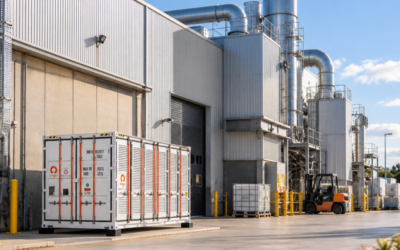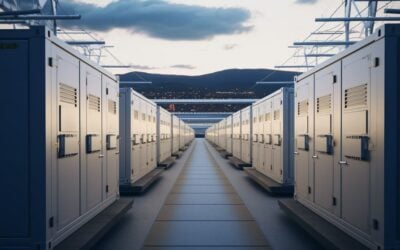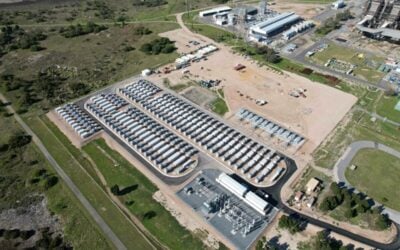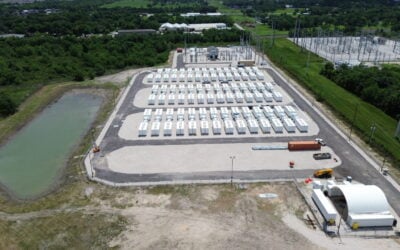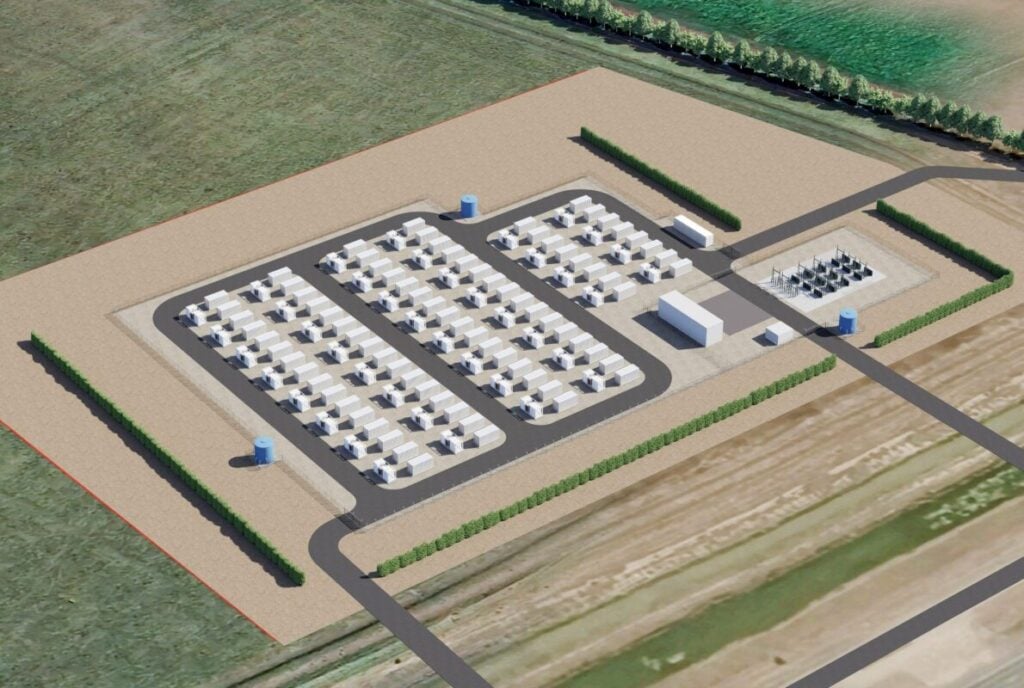
The New South Wales (NSW) government has granted development consent for the Deniliquin East battery energy storage system (BESS), a 100MW/200MWh project in the Australian state’s Riverina region proposed by BESS Arctic Pty Ltd.
BESS Arctic, working through Gransolar Development Australia, the Australian arm of Spain-headquartered Gransolar Group, will develop the facility on Riverina Highway within the Edward River local government area, about 7km southeast of the town of Deniliquin.
The project will connect to the National Electricity Market (NEM) and occupies a 3.53-hectare footprint on land historically used for sheep grazing.
The approval adds a regional project to a state pipeline that has been scaling well beyond the size of individual projects. AEMO reported that a record 9.1GW of new generation and storage capacity reached full output in the NEM during FY26, more than double the volume achieved the previous year, with the broader connections pipeline growing 42% to 75.4GW.
Try Premium for just $1
- Full premium access for the first month at only $1
- Converts to an annual rate after 30 days unless cancelled
- Cancel anytime during the trial period
Premium Benefits
- Expert industry analysis and interviews
- Digital access to PV Tech Power journal
- Exclusive event discounts
Or get the full Premium subscription right away
Or continue reading this article for free
The project was approved by the A/Executive Director, Energy, Resource and Industry Assessments, acting under delegation from the Minister for Planning and Public Spaces, following an assessment process that received 71 public objections and one submission in support.
The consent limits the battery storage system to a maximum power output of 100MW and a maximum energy storage capacity of 240MWh across the site, with conditions requiring a Fire Safety Study before construction begins, an Emergency Plan before commissioning, and a minimum 10-metre trafficable firebreak around the battery storage area.
The Department of Planning, Housing and Infrastructure’s assessment found the project’s benefits outweighed its impacts, citing its role in storing renewable energy for dispatch during peak demand and its consistency with the NSW Climate Change Policy Framework, the NSW Electricity Strategy and the NSW Electricity Infrastructure Roadmap.
The department noted the site’s contamination risk was low, based on a Preliminary and Detailed Site Investigation, and that the development would result in a negligible loss of agricultural land, affecting less than 0.0004% of agricultural land in the Edward River local government area.
The 71 objections centred on fire risk and hazards, the merits of renewable energy and land-use compatibility, with several submissions raising concerns about firefighting water supply, decommissioning security, and PFAS contamination.
The department concluded that these issues could be adequately managed under the conditions of consent and noted that neither the NSW government agency nor the Edward River Council itself objected to the project.
The department’s decision notice puts the project’s capital investment value at approximately AU$118 million (US$82.6 million) and estimates it will create up to 52 construction jobs and two operational jobs.
BESS Arctic has also agreed to a Voluntary Planning Agreement with Edward River Council, delivering AU$600,000 in community benefit contributions.
A regional project inside a fast-moving state pipeline
Other projects continue to move through AEMO’s registration process at a similar stage of development to Deniliquin East.
Vena Energy’s Tailem Bend BESS 3 in South Australia and EnergyAustralia and Banpu Energy Australia’s Wooreen BESS in Victoria both entered AEMO’s Market Management System earlier this month, together adding 554MW of capacity, working toward commercial operation.
NSW’s own procurement track record offers a template for how a project like Deniliquin East might eventually secure revenue certainty.
All battery storage and demand response projects selected under the state’s 2023 firming tender are now operational, delivering around 1GW/3GWh of dispatchable capacity and more than AU$1.8 billion of investment through Long-Term Energy Service Agreements (LTESAs) awarded to AGL Energy, Akaysha Energy, Iberdrola Australia and Enel X, a contracting mechanism the state’s tendering body has said it intends to keep using to bring high-value projects to financial close sooner.
Never miss an Australian energy storage story. Sign up for our Australia newsletter and get the latest project announcements, policy updates and market analysis delivered directly to you.