EPC Renewables has signed a memorandum of understanding (MoU) with state-linked utility Energy Fiji Limited (EFL) for the development of the Yaqara Solar & Battery Project.
The project is a two-stage solar-plus-storage development that the Australian company describes as its first independent power producer (IPP) platform in the Pacific.
EPC Renewables is an Australian-owned, Indigenous-focused engineering, procurement and construction (EPC) contractor founded in 2014, with more than 500MW of installed solar PV and battery capacity across Australia and the Pacific.
Energy Fiji Limited is Fiji’s partly state-owned electricity utility, responsible for generation, transmission and distribution across the country’s main grids.
Try Premium for just $1
- Full premium access for the first month at only $1
- Converts to an annual rate after 30 days unless cancelled
- Cancel anytime during the trial period
Premium Benefits
- Expert industry analysis and interviews
- Digital access to PV Tech Power journal
- Exclusive event discounts
Or get the full Premium subscription right away
Or continue reading this article for free
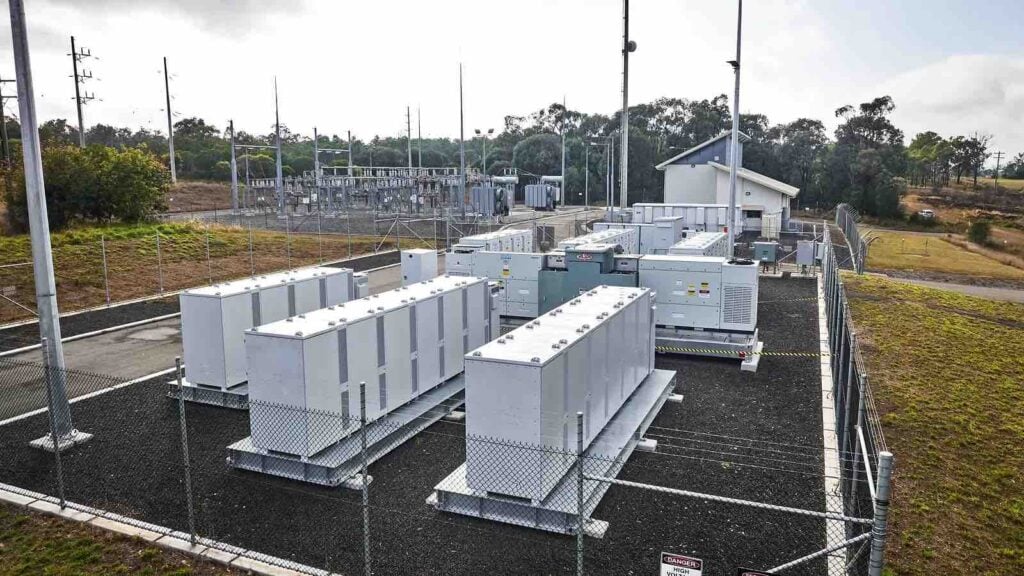
The Yaqara project will be delivered in two stages under a long-term energy supply arrangement with EFL. This will see an initial 22MW of solar PV paired with a 40MWh battery energy storage system (BESS), followed by a second stage adding 120MW of solar and a 200MWh BESS.
EPC Renewables has also signed a separate MoU with Spanish infrastructure group Grupo Cobra, establishing a framework for Grupo Cobra to deliver EPC works on Stage 1 and future project expansions.
EPC Renewables managing director Daryn Stocks described the agreement as establishing the company’s first major IPP platform in Fiji, marking a shift in the company’s business model from EPC contractor toward developer, owner and operator of renewable energy infrastructure.
“This development has the potential to help unlock a new economic corridor in Fiji, supporting future residential, tourism, commercial, industrial, port and airport infrastructure. Reliable and affordable energy is fundamental to that growth,” Stocks said.
The company said it expects the project to support around 200 jobs for Indigenous Fijians through electrical traineeships and apprenticeships, working alongside the Canberra Institute of Technology, the Smart Energy Council and the Sustainable Energy Industry Association of the Pacific Islands on training and workforce development.
Fiji’s push to cut diesel dependence follows a wider Pacific pattern
The Yaqara project aims to reduce Fiji’s reliance on imported diesel generation, a dependency that has shaped energy policy across much of the Pacific.
Fiji has targeted 100% renewable energy by 2030, and in 2018 became the first emerging market to issue a sovereign green bond, raising FJD100 million (US$50 million) with World Bank support to fund climate resilience measures.
EFL has separately pursued its own generation procurement, issuing a tender in 2024 for 31.93MW of ground-mounted solar PV across sites on Viti Levu and Vanua Levu, including a battery storage component on the latter, through a public-private partnership structure.
Fiji’s diesel exposure mirrors conditions across other small Pacific and Indian Ocean island states, where isolated grids and imported fuel costs have pushed battery storage up the policy agenda.
In Palau, the 15.28MWp Palau Solar project paired with a 10.2MWac/12.9MWh BESS was inaugurated in 2023 as the largest solar-plus-storage facility in the Western Pacific at the time, financed with support from the Australian government’s Australian Infrastructure Financing Facility for the Pacific (AIFFP).
Before that project, more than 99% of Palau’s electricity was generated by burning automotive diesel, with the energy sector accounting for up to 96% of the country’s greenhouse gas emissions.
The AIFFP has since backed a further 19.8MWh augmentation of that same Palau facility, bringing total on-site storage to 32.7MWh, part of a broader AU$4.55 billion (US$3.14 billion) Pacific financing facility the Australian government has committed across the region since 2019.
EPC Renewables has framed the project as a potential catalyst for a wider economic precinct in the Yaqara area, citing possible future residential, tourism, commercial, industrial, port and airport development contingent on reliable power being in place.