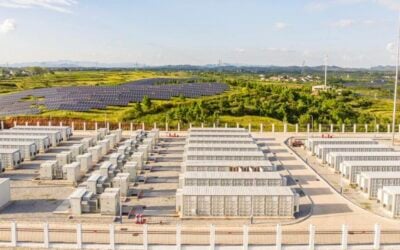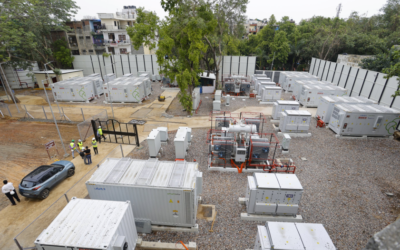
A 19.8MWh battery energy storage system (BESS) is to be added to an existing solar-plus-storage facility in the Republic of Palau, with Australian development finance backing the expansion of one of the Western Pacific’s flagship hybrid renewable energy projects.
Law firm Gilbert+Tobin advised the Australian Infrastructure Financing Facility for the Pacific (AIFFP), administered by Export Finance Australia (EFA), on the transaction.
The augmentation will be developed and operated by Solar Pacific Pristine Power (SPPP), a subsidiary of Philippine-based renewable energy company Alternergy, which developed the original facility.
The expanded system will support Palau Public Utilities Corporation’s (PPUC) electricity network, improve renewable energy integration and help reduce the country’s reliance on imported diesel generation.
Try Premium for just $1
- Full premium access for the first month at only $1
- Converts to an annual rate after 30 days unless cancelled
- Cancel anytime during the trial period
Premium Benefits
- Expert industry analysis and interviews
- Digital access to PV Tech Power journal
- Exclusive event discounts
Or get the full Premium subscription right away
Or continue reading this article for free
When added to the site’s existing 10.2MWac/12.9MWh BESS, the augmentation will bring the total on-site battery storage system to 15MWac/32.7MWh.
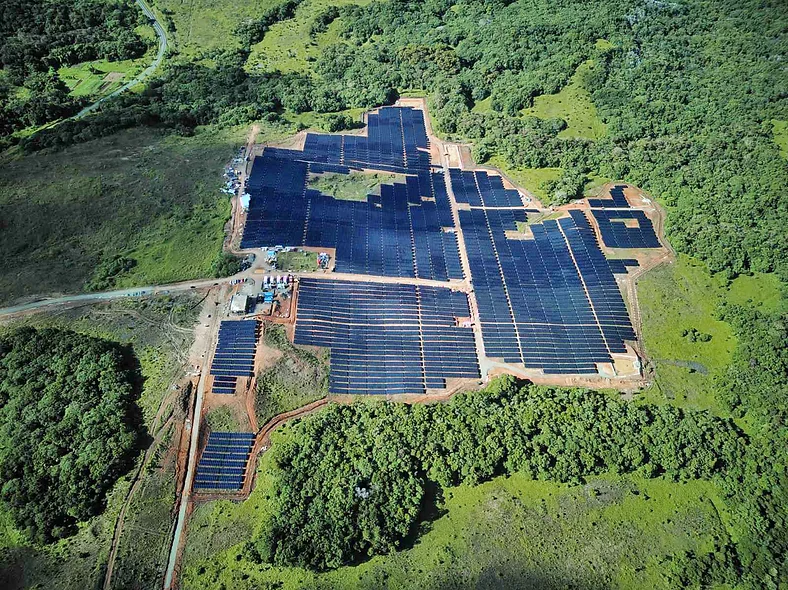
The original Palau Solar project was inaugurated in June 2023 as the largest solar-plus-storage facility in the Western Pacific at the time, pairing a 15.28MWp solar PV facility with the 12.9MWh BESS under a long-term power supply agreement with PPUC.
Located on Babeldaob, Palau’s largest island, the US$29 million project was designed to supply around a quarter of the country’s electricity demand and to contribute to Palau’s nationally determined contribution under the Paris Agreement.
The AIFFP provided the initial financing for the project, a US$18 million loan and US$4 million grant extended to SPPP, and is now backing its expansion.
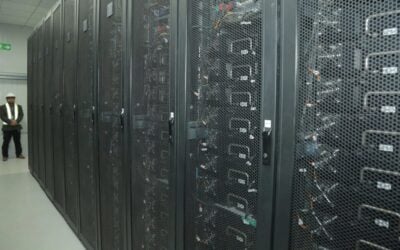
The facility was developed with German EPC contractor Juwi Renewable Energies, with DNV serving as owner’s engineer, and uses First Solar PV modules, SAFT batteries and SMA inverters.
Prior to the project’s commissioning, over 99% of Palau’s electricity was generated by burning automotive diesel, with the energy sector accounting for as much as 96% of the country’s greenhouse gas emissions.
The original installation marked the country’s first grid-scale solar PV plant, while the augmentation deepens the shift away from fossil-fuel generation.
AIFFP, established by the Australian government in 2019 and since committing approximately AU$1.1 billion (US$760 million) in loans and AU$850 million in grants across 58 projects in 11 Pacific countries, has increasingly focused its energy portfolio on renewable energy and storage projects across the region.
In January 2026, Australia’s Foreign Minister announced an additional AU$550 million in facility financing, bringing the total to AU$4.55 billion.
Pacific island storage: a growing template
The Palau augmentation adds to a body of solar-plus-storage projects taking shape across Pacific and Indian Ocean island economies, where energy security, diesel dependence and remote grid management have pushed battery storage up the policy agenda.
Renewable energy companies Akuo Energy and Voltalia have been active in French overseas territories in the Pacific and South America, with Akuo beginning construction of a 50MW/200MWh BESS in New Caledonia, which was described as the largest BESS in France when contracts were awarded, under a 12-year contract with the New Caledonian government.
That project includes grid-forming inverters capable of black-starting the grid in the event of an outage, pointing to the grid resilience functions that battery storage is increasingly called on to perform in isolated power systems.
Palau’s augmentation follows the same logic. For small island developing states running islanded grids on expensive diesel imports, larger storage capacity widens the window during which solar generation can displace thermal generation, reduce curtailment, and improve grid stability as the share of variable renewable energy grows.
The practical payoff is lower fuel costs, reduced exposure to volatile commodity markets, and progress toward nationally committed emissions targets.