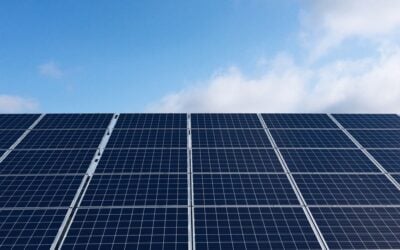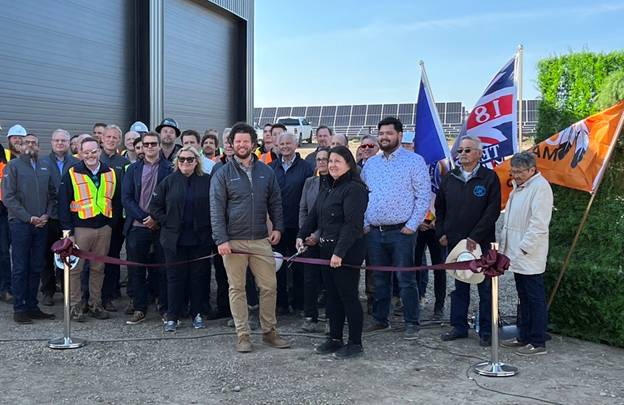
Enfinite has brought online two more battery assets in a nine-project portfolio in Alberta, Canada, while Elemental Energy has commenced operation of a large-scale vanadium flow battery system.
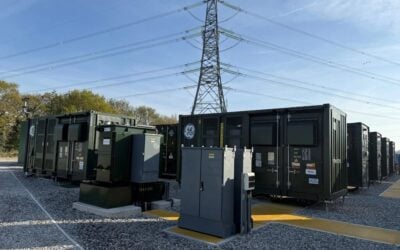
Battery storage developer-operator Enfinite said this week that it has commissioned its lithium-ion battery energy storage system (BESS) projects eReserve4 and eReserve6, each of which has a 20MW output and 35MWh capacity, on private land in Alberta’s Municipal District of Provost No. 52.
The news comes during the Canadian province’s somewhat controversial pause on approvals for new renewable energy projects, which its government enacted in August, primarily due to concerns about land usage.
While originally it had been thought that all processing of applications had been halted in the six-month moratorium, the provincial government recently clarified that processing will continue, but approvals will not be granted until the Generation Approvals Pause Regulation ends.
Try Premium for just $1
- Full premium access for the first month at only $1
- Converts to an annual rate after 30 days unless cancelled
- Cancel anytime during the trial period
Premium Benefits
- Expert industry analysis and interviews
- Digital access to PV Tech Power journal
- Exclusive event discounts
Or get the full Premium subscription right away
Or continue reading this article for free
This, however, is not a concern for Enfinite, which had already gained regulatory approvals for all nine projects in its portfolio, which are identically-sized and collectively have an output and capacity of 180MW/350MWh, during 2022. Furthermore, the projects are sited on disturbed land, which makes them perhaps less likely to concern planners, authorities and the public. Six are now in operation, while another two came online in February this year.
Similarly, Westbridge Renewable Energy, a renewables developer active in Alberta, recently said that it expected two of its proposed large-scale solar-plus-storage plants to be unaffected by the Generation Approvals Pause Regulation is in effect.
However, the company has further projects in its extensive development portfolio, which are at earlier stages of the regulatory approvals process that might yet be affected by the moratorium. Westbridge recently agreed to sell its 1.4GW portfolio on to Greek multinational Mytilineos.
Alberta operating reserve market is ‘sizeable and liquid’
Enfinite’s BESS eReserve projects, as their names imply, will provide operating reserve to the grid of the Alberta Electric System Operator (AESO), charging from the grid at off-peak times and outputting back into the grid when required, as signalled by AESO.
Each of them are strategically sited close to existing substations and join a relatively small BESS fleet of roughly 100MW providing operating reserves.
In an interview earlier this year, Patrick Bateman, an independent consultant working closely with trade association Energy Storage Canada, told Energy-Storage.news that the Alberta operating reserve market is “sufficiently liquid and sizable to support the participation,” of BESS assets.
With operating reserve currently the biggest opportunity for batteries in Alberta, Bateman noted that although there has been some “initial exploration” of opening up ancillary services markets for battery storage participation, for “various reasons” modernisation of the AESO’s storage tariff has not yet been completed.
AESO has, however, initiated the process of doing so and once that is rolled out, a number of projects in Alberta’s connection queue might move more quickly forward, the consultant said.
Alberta recently moved away from a reliance on coal, seven years ahead of a 2030 target, but in replacing them largely with gas, there is now a need to displace that gas. Bateman said the AESO’s storage tariff revision is being carried out with that requirement in mind.
Nonetheless, Alberta and Ontario are considered Canada’s leading provinces for energy storage, something which was covered in a feature article in our journal PV Tech Power (Vol.35) in Q4 2022.
‘North America’s biggest vanadium flow battery system’
Meanwhile, vanadium redox flow battery (VRFB) provider Invinity Energy Systems’ largest system to date has been brought into commercial operation by developer Elemental Energy in the province.
The Chappice Lake Solar + Storage Project, funded with help from the provincial agency Emissions Reduction Alberta, combines 21MWp of ground mount solar PV with a 2.8MW/8.4MWh Invinity VS3 model flow battery system.
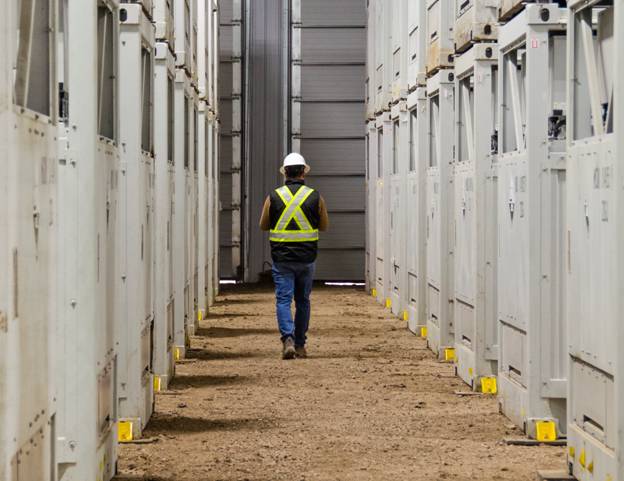
It is also North America’s biggest operational grid-connected vanadium flow battery installation to date, Invinity claimed, being a few hundred kilowatts and kilowatt-hours larger than the 2MW/8MWh system in operation in California utility San Diego Gas & Electric’s service territory, which was made and supplied by Japanese company Sumitomo Electric.
Alberta remains a major centre for oil production, and Emissions Reduction Alberta (ERA), a programme to decarbonise the province’s energy mix, is funded by contributions from greenhouse gas-emitting companies and activities as a kind of offset policy. For instance, Chappice Lake is one of a number of different renewable and low-carbon energy projects funded by ERA.
Energy-Storage.news has extensively covered the Chappice Lake project’s development to date. Last week, Invinity’s North America sales manager Jan Petrenko gave a presentation about it at the RE+ trade show.
The VRFB will, Petrenko said, “turn standard solar PV” into a 24/7 dispatchable asset as the sales manager touted the benefits and technical capabilities of the technology. It will also participate in the Alberta operating reserve and wholesale electricity markets. Also during RE+, Invinity signed a 15MWh supply deal for the newest iteration of its flow battery product with Taiwan-based Everdura Technology Company.
Earlier this year, ERA committed to funding Canada’s first commercial vanadium recovery plant, where petroleum refinery company Suncor intends to recover vanadium created as a by-product of operating coke-fired boilers.