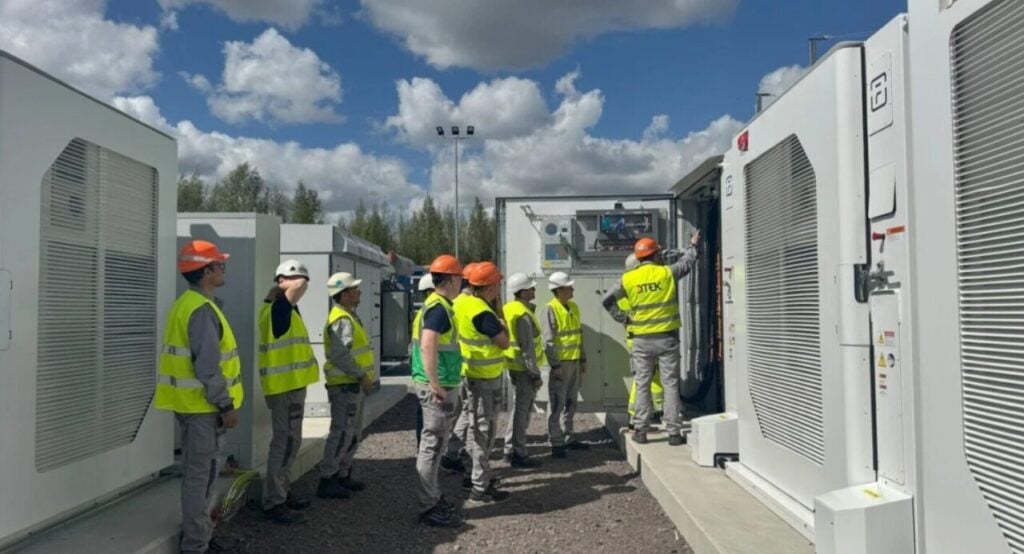
Energy investment firm DTEK and system integrator Fluence have started commissioning a portfolio of six 2-hour BESS projects in Ukraine.
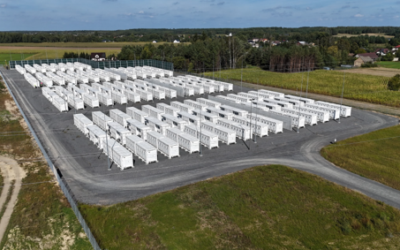
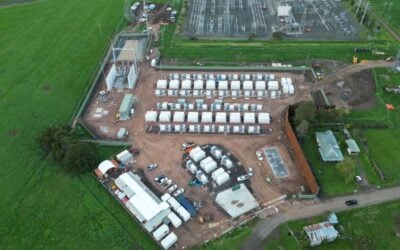
The six totalling 200MW/400MWh of battery energy storage system (BESS) capacity and now in the phase of commissioning, testing and discharging to the grid for the first time. The projects vary from 20MW to 50MW and are all 2-hour systems.
They comprise a total of 689 Fluence Gridstack cubes, the company’s standard grid-scale DC block BESS solution, the latest iteration of which was launched in late 2023. It also has an AC block, the Smartstack, and a storage-as-transmission solution called the Ultrastack.
Commercial operations on the BESS projects are set to begin in October 2025 under a contract with the transmission system operator (TSO) of Ukraine Ukrenergo. Fluence was revealed as the system integrator for them in January this year.
Try Premium for just $1
- Full premium access for the first month at only $1
- Converts to an annual rate after 30 days unless cancelled
- Cancel anytime during the trial period
Premium Benefits
- Expert industry analysis and interviews
- Digital access to PV Tech Power journal
- Exclusive event discounts
Or get the full Premium subscription right away
Or continue reading this article for free
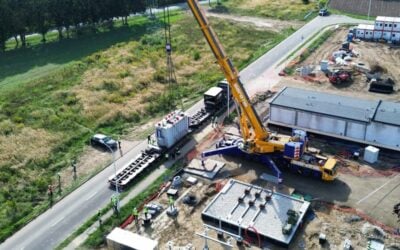
Interestingly, this was the first project that Fluence has had to commission remotely, due to the ongoing war. 20 Ukrainian engineers and operations specialists completed advanced training on Fluence’s existing projects in Germany and Finland. This prepared them to respond to emergencies and quickly resolve potential malfunctions. Fluence will continue to support commissioning and operations through remote diagnostics, testing and performance monitoring.
Julian Nebreda, CEO of Fluence, said: “The remote commissioning approach we have introduced ensures continuity and operational efficiency amid travel restrictions and will also enable faster scaling of any future deployments.”
The projects will provide frequency and power reserve as well as balancing services to reinforce the electricity grid of Ukraine, particularly important during outages.
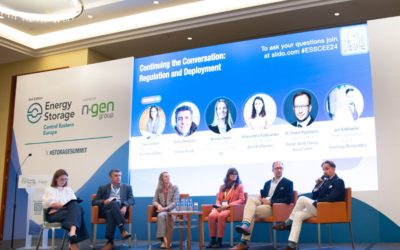
DTEK’s head of storage, Vadym Utkin, discussed ancillary services and Russia’s attacks on Ukraine in an interview with Energy-Storage.news late last year, at Solar Media’s Energy Storage Summit Central Eastern Europe (CEE) 2024 in Poland.
DTEK is also active in Poland, acquiring a 532MWh BESS project from developer Columbus in 2023.