The Ministry of Energy of Bulgaria has selected 82 winning energy storage projects for a share of BGN 1.15 billion (€588 million/US$670 million) in financial support.
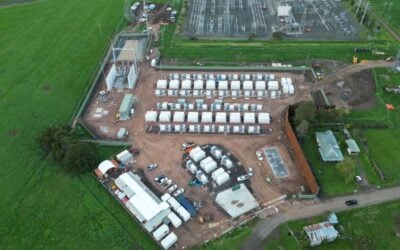
The scheme will support the construction and commissioning of 82 standalone energy storage projects with a total of BGN1,149,013,428.49 spread across the projects, which will add up to 9,712.89MWh of usable energy storage capacity. The money will support up to 50% of construction and commissioning costs.
The RESTORE programme (National Infrastructure for Storage of Electricity from Renewable Sources) is financed within the framework of the EU’s Recovery and Resilience scheme, an initiative to help economies recover from the negative economic effects of the Covid-19 pandemic.
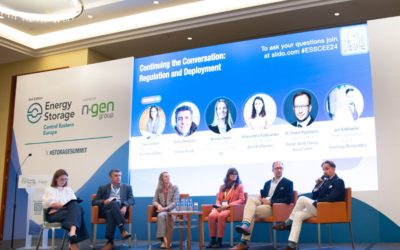
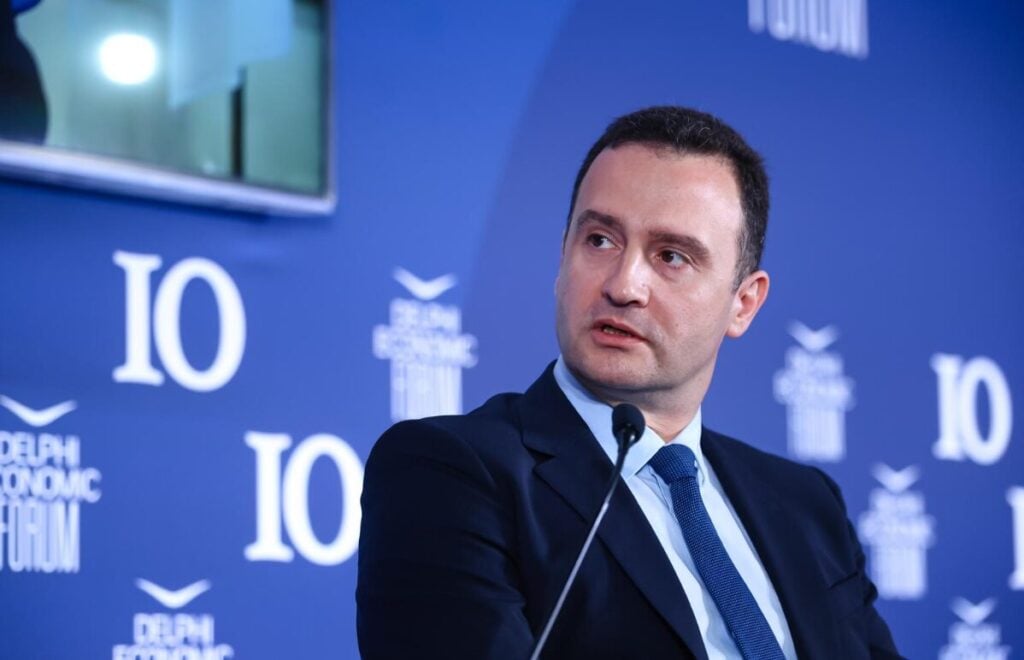
The final amounts were announced by the Ministry of Energy last week (17 April). The Ministry saw a change of leadership in January 2025, when Zhecho Stankov (pictured above) replaced Vladimir Malinov as Minister of Energy following the formation of a new coalition government after national elections in October 2024.
Try Premium for just $1
- Full premium access for the first month at only $1
- Converts to an annual rate after 30 days unless cancelled
- Cancel anytime during the trial period
Premium Benefits
- Expert industry analysis and interviews
- Digital access to PV Tech Power journal
- Exclusive event discounts
Or get the full Premium subscription right away
Or continue reading this article for free
The RESTORE programme aims to help Bulgaria increase its share of wind and solar in the electricity mix while maintaining grid stability and security. Storage projects will be connected to either the transmission network of system operator ESO EAD or local distribution networks.
A total of 151 proposals were received as reported by Energy-Storage.news in December, with 118 of them progressed to the final stage. 30 projects which did not make the final list are ‘in reserve’ for BGN415 million of funding.
The scheme opened for bidding in August 2024. It appears to be separate from one targeting both renewables and storage, also with Recovery and Resilience funding, which concluded in November 2024 awarding funding to 3.1GW of renewables and 1.1GW of storage.
The largest battery energy storage system (BESS) project online in Bulgaria is a 25MW/55MWh system commissioned by IPP Renalfa in June 2024 while a 5.1MW/18.7MWh was commissioned a few months later by China-based energy storage technology firm Sermatec (for an unnamed customer).
In February, state-owned utility and power generation firm NEK announced plans to deploy BESS totalling nearly 300MWh at five of its hydropower sites across Bulgaria.