Bulgaria, European Bank for Reconstruction and Development sign renewables and energy storage agreements

By Jonathan Touriño Jacobo
LinkedIn
Twitter
Reddit
Facebook
Email
EU Member State since 2004, Bulgaria targets to have an installed capacity of 3.3GW for solar PV by 2030. Image: Neven Myst on Unsplash.

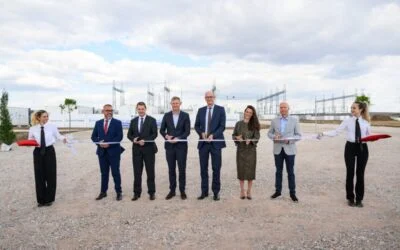
The Bulgarian Ministry of Energy and the European Bank for Reconstruction and Development (EBRD) have signed two agreements for the development of renewables in the country.

A key part of the National Plan for Recovery and Sustainability, the agreements will support the growth of new solar PV capacity as well as energy storage within the national infrastructure for the storage of electricity from renewable energy sources (RESTORE).

The EBRD will conduct an analysis of all existing energy storage technologies in order to determine the best-suited ones for the country, and will also organise tenders for the delivery of two turnkey systems.

To read the full version of this story, visit PV Tech.

This article requires Premium SubscriptionBasic (FREE) Subscription

Try Premium for just $1

  • Full premium access for the first month at only $1
  • Converts to an annual rate after 30 days unless cancelled
  • Cancel anytime during the trial period

Premium Benefits

  • Expert industry analysis and interviews
  • Digital access to PV Tech Power journal
  • Exclusive event discounts

Or get the full Premium subscription right away

Or continue reading this article for free

Energy-Storage.news publisher Solar Media is extending its Large Scale Solar conference series to Southern Europe with the first edition in Athens, Greece during 4-5 July. The event will focus on an ever-growing market with a packed programme of panels, presentations and fireside chats from industry leaders. More information, including how to attend, can be read here.
3 November 2026
Málaga, Spain
Understanding technology and supplier selection for Europe’s utility-scale PV market in 2027. PV ModuleTech Europe 2026 is a two-day conference that tackles these challenges directly, with an agenda that addresses all aspects of PV module, inverter and battery supplier selection; product availability, technology offerings, supply chain traceability, quality assurance, factory auditing, system reliability, and supplier bankability.

Read Next

September 8, 2026
Aukera has closed a €460 million (US$534.23 million) structured credit facility to advance its project pipeline in five European markets.
September 3, 2026
Bulgaria now has a world-leading amount of battery storage capacity relative to energy system despite a period of political turnover, although those assets are now cannibalising the revenues which attracted investment in the first place.
September 1, 2026
Three years after the EU Batteries Regulation (EUBR) entered into force, it is becoming easier to separate regulatory expectations from measurable market impacts, writes patent lawyer Chloe Flower.
August 25, 2026
US lithium-sulphur battery company Lyten is aiming to acquire another of Europe’s failed homegrown battery startups, Norway’s Morrow Batteries, which went into bankruptcy earlier this year. 
August 19, 2026
Copenhagen Infrastructure Partners (CIP) has closed its Growth Markets Fund II (GMF II) at around US$3 billion.