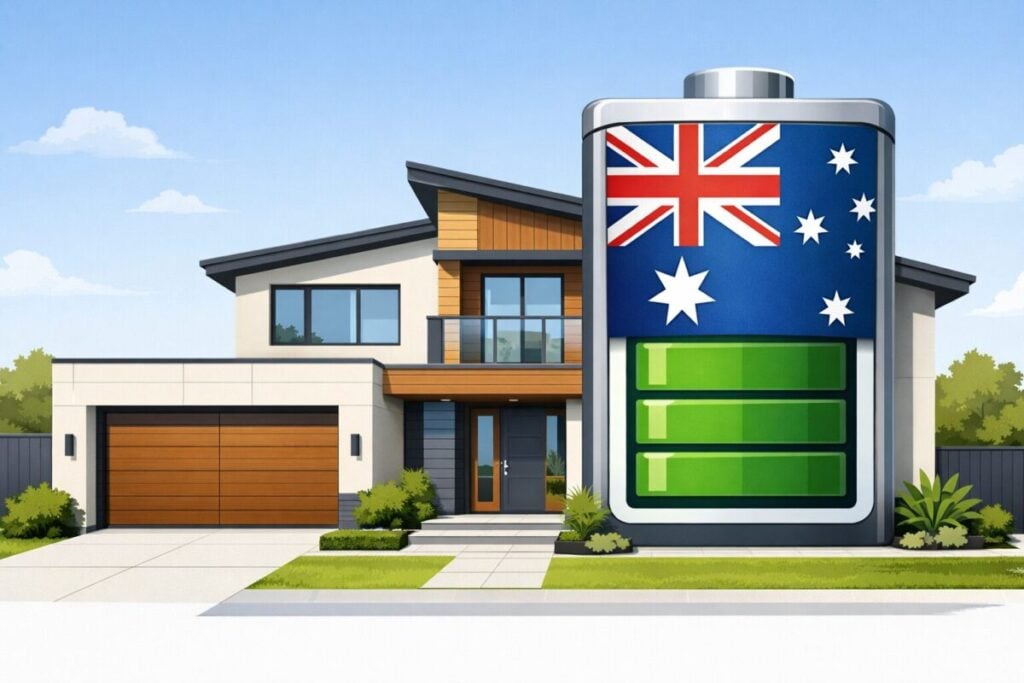
Australia’s Cheaper Home Batteries Program has officially surpassed 250,000 installations, delivering 6.3GWh of distributed energy storage capacity across households, small businesses and community organisations nationwide.
The achievement, announced by Climate Change and Energy Minister Chris Bowen, showcases the substantial growth the support programme has delivered since its launch in July 2025.
It has also affected other distributed energy technologies, with Bowen noting that approximately half of the participants are installing new or upgraded solar systems alongside their battery storage.
The Cheaper Home Batteries Program operates through the Small-scale Technology Certificate (STC) mechanism, providing customers with rebates of around 30% off upfront battery costs when purchasing equipment from approved manufacturer lists.
Try Premium for just $1
- Full premium access for the first month at only $1
- Converts to an annual rate after 30 days unless cancelled
- Cancel anytime during the trial period
Premium Benefits
- Expert industry analysis and interviews
- Digital access to PV Tech Power journal
- Exclusive event discounts
Or get the full Premium subscription right away
Or continue reading this article for free
Systems eligible for support range from 5kWh to 100kWh in capacity, targeting residential, community, and small-business applications.
Minister Bowen emphasised the dual benefits of the installations, noting that home batteries help households store cheaper, cleaner energy generated during daylight hours for use during evening peak demand periods.
This storage capability reduces grid pressure during peak demand while reducing reliance on expensive generation sources.
The programme’s rapid uptake recently prompted the Department of Climate Change, Energy, the Environment and Water (DCCEEW) to expand funding projections and make several changes to the scheme.
Initial estimates of AU$2.3 billion (US$1.63 billion) in support have now grown to AU$7.2 billion by 2030, representing more than a threefold increase from the original projections announced when the Australian government confirmed the Cheaper Home Batteries Program.
This expanded funding framework targets an additional 40GWh of energy storage capacity, potentially serving around 2 million people through home battery storage installations.
Starting from 1 May 2026, the DCCEEW will implement adjustments to the scheme to ensure appropriate system sizing and maintain funding sustainability.
The modifications include changes to the STC Factor calculation methodology, with declining rates applied every six months at higher frequencies than previous schedules.
Under the revised structure, systems receive differentiated support levels based on capacity tiers.
Full STC Factor application covers capacity from 0kWh to 14kWh, while reduced factors of 60% apply to capacity between 14kWh and 28kWh, and 15% factors cover capacity from 28kWh to 50kWh.
These adjustments aim to maintain approximately 30% discount levels across various battery system sizes while managing programme costs.
Speaking at the All-Energy Australia 2025 conference in November, Carl Binning, executive general manager at the Clean Energy Regulator, said that roughly 8,000 Cheaper Home Batteries Program applications per week were being processed.
The Energy Storage Summit Australia 2026 will be returning to Sydney on 18-19 March. It features keynote speeches and panel discussions on topics such as the Capacity Investment Scheme, long-duration energy storage, and BESS revenue streams. ESN Premium subscribers receive an exclusive discount on ticket prices.
To secure your tickets and learn more about the event, please visit the official website.