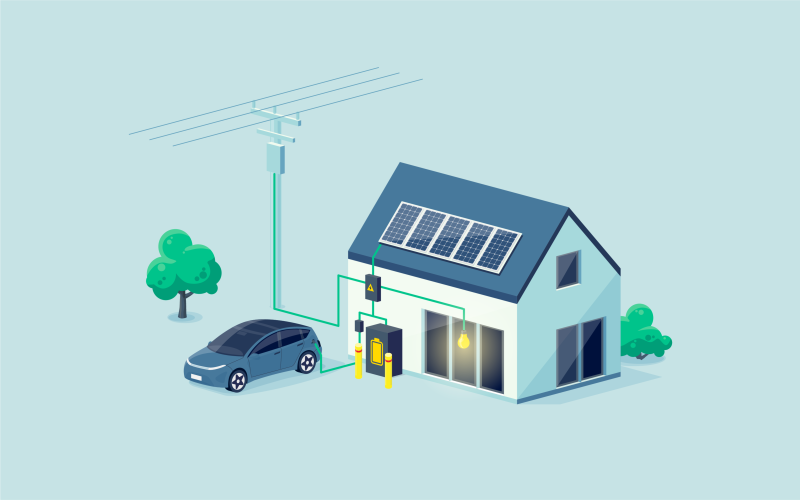
Australia’s Cheaper Home Batteries Program has surpassed 100,000 installations, with households and small businesses now benefiting from subsidised battery installations totalling 2GWh of distributed energy storage capacity.
The initiative, launched by the Albanese government in July 2025, has increased Australia’s home battery capacity by more than 50% in less than four months of operation, the government claims.
Australia’s minister for climate change and energy, Chris Bowen, announced the milestone yesterday (26 October), highlighting the programme’s rapid uptake across outer-suburban communities, including Western Sydney, Ipswich and Geelong, as well as regional towns such as Lismore, Mount Barker and Beaudesert.
The 2GWh of battery storage delivered through the programme represents a substantial addition to Australia’s distributed energy resources, supporting grid stability and enabling households to maximise the value of their solar installations.
Try Premium for just $1
- Full premium access for the first month at only $1
- Converts to an annual rate after 30 days unless cancelled
- Cancel anytime during the trial period
Premium Benefits
- Expert industry analysis and interviews
- Digital access to PV Tech Power journal
- Exclusive event discounts
Or get the full Premium subscription right away
Or continue reading this article for free
The AU$2.3 billion (US$1.41 billion) programme provides approximately 30% upfront discounts on home battery systems through the Small-scale Renewable Energy Scheme. The Australian government fully funds the subsidies by purchasing small-scale technology certificates.
This approach ensures no additional costs are passed to households through energy retailers while supporting the deployment of distributed storage resources that assist in balancing electricity supply and demand across the grid.
Tackling battery attachment rates in Australia
The initiative is also a means to bolster the country’s budding distributed energy resources market. Rooftop solar PV is already a staple of the energy mix, having surpassed 26.8GW in H1 2025. Despite this, battery attachment rates have traditionally lagged behind.
To help solve this, the Australian government confirmed the Cheaper Home Batteries Program would commence on 1 July 2025, following consultation with various industry stakeholders and state governments.
The programme targets households and small businesses with existing or planned solar installations, providing upfront discounts based on battery usable capacity. Eligible systems must meet specific technical standards and installation requirements, with approved retailers and installers required to pass discount benefits directly to consumers at the point of sale.
The scheme operates through the existing Small-scale Renewable Energy Scheme infrastructure, leveraging established administrative processes to minimise implementation complexity.
The initiative has been praised by various members of Australia’s renewable energy community, including Tim Buckley, director of think tank Climate Energy Finance (CEF). In an interview with ESN Premium earlier this year, Buckley noted that the scheme could turn Australia into a ‘red-hot market’ for battery energy storage systems (BESS).
The government has also launched the Consumer Energy Roadmap to support the growth of rooftop solar PV and home battery installations. The Roadmap sets out national reform priorities to harness the full potential of distributed energy resources.
This includes addressing technical challenges related to grid integration, developing new market mechanisms to reward solar exports during peak demand periods, and ensuring equitable access to solar benefits across all communities.
Consumer energy resources have also become increasingly prominent in Australia, given the opportunity they could provide to decarbonise the National Electricity Market (NEM), which spans Australia’s eastern and southern states and Tasmania.
In late July 2024, the Australian Energy Market Commission (AEMC) introduced a new draft determination proposing to enable virtual power plants (VPPs) to compete directly with large-scale generators in the energy market. This would be achieved by allowing aggregated CERs to be scheduled and dispatchable in the NEM.