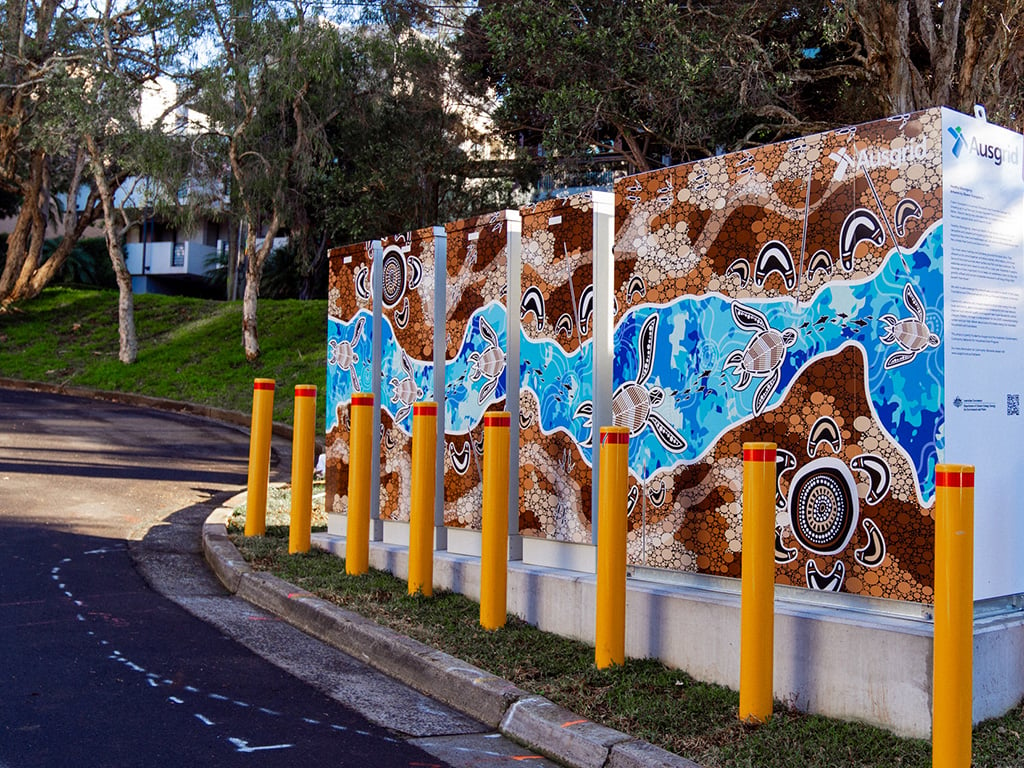
Australian network company Ausgrid has launched a new energy storage-as-a-service (ESaaS) offering alongside Origin Energy and EnergyAustralia whilst launching its ninth community battery energy storage system (BESS) in Bondi, the eastern suburb of Sydney, New South Wales.
The ESaaS offering aims to capitalise on the growing interest surrounding community BESS assets by offering eligible customers an energy retail plan to access the energy stored within. In doing so, Ausgrid argues that this could save some customers more than AU$200 (US$130) per year.
The offering also grants additional benefits for Australians, such as improving grid reliability and supply security, and could also help facilitate the greater integration of renewable energy.
Ausgrid’s new Bondi community battery, a 160kW/412kWh system, becomes the organisation’s ninth asset, and the sixth to be launched under the Federal government’s Community Batteries for Household Solar Program. The Bondi system is also connected to an electric vehicle (EV) charger, allowing drivers to charge up with renewably sourced electricity.
Try Premium for just $1
- Full premium access for the first month at only $1
- Converts to an annual rate after 30 days unless cancelled
- Cancel anytime during the trial period
Premium Benefits
- Expert industry analysis and interviews
- Digital access to PV Tech Power journal
- Exclusive event discounts
Or get the full Premium subscription right away
Or continue reading this article for free
Australia’s minister for climate change and energy, Chris Bowen, believes the ESaaS plan is the next step in the “evolution of the community batteries” and could relieve cost-of-living pressures.
“It’s incredibly exciting to deliver a community battery for Bondi today, our Reliable Renewables plan is bringing cleaner, cheaper reliable renewable energy to communities across the country,” Bowen said.
Indeed, the coupling of solar PV technology with these community batteries could support residential decarbonisation and create an additional incentive to introduce renewable energy generation technology to homes, even if the building has no access to a home BESS asset. This is where the community BESS’ strengths come to the fore.
Ausgrid has already installed community batteries to support households in Beacon Hill, Bankstown, Cameron Park, Cabarita, Narara, Warriewood, North Epping and Bexley North. Each community BESS a designated catchment area and is set by Ausgrid based on network connectivity and battery benefit.
EnergyAustralia’s managing director, Mark Collette, believes the service could play an important role in the energy transition.
“EnergyAustralia is focused on making energy simple for customers, combining customer assets into our portfolio to deliver the most predictable and affordable outcomes. Community batteries help the wider community coordinate their energy assets improving reliability, affordability and sustainability outcomes for everyone,” Collette said.
370 community BESS assets to be rolled out across Australia
Community batteries in Australia continue to grow in number, and this is set to increase further. The Australian Renewable Energy Agency (ARENA) recently allocating AU$143 million in financial backing to build 370 community assets across Australia.
Indeed, the organisation’s Community Battery Funding Round 1 initiative will allocate funding to 20 applicants across all of Australia’s states and territories. ARENA anticipates the initiative will unlock around AU$359 million of investment in renewable energy infrastructure.
Queensland and New South Wales will receive the most community batteries, with 69 and 95, respectively, followed by Victoria with 37 batteries, Western Australia with 28, South Australia with 24, the Northern Territory with 16, and Tasmania with six.
ARENA stated that the batteries will benefit various energy consumers, such as households, hospitals, schools, and other facilities.
Readers of Energy-Storage.news will also be aware that the City of Melbourne recently switched on its first community BESS last month at Council House, as part of its ‘Power Melbourne’ scheme.
The newly installed battery system has an output and capacity of 450kW/1.1MWh, and the council aims to have 5MW of similar assets. Another BESS is expected to be installed at Boyd Community Hub in July, with another one planned for the Library at the Dock later this year.
Market consultancy group Sunwiz also weighed in on the potential of community BESS in Australia, which it dubbed the “Year of the Big Battery”. The group said adding that community battery—or ‘neighbourhood battery’ projects around Australia, classified within the commercial and industrial (C&I) segment—will help drive a 50% growth in C&I installs in 2024.