Developers entering competitive solicitations for energy storage and firm renewable capacity have been offered advice on how to be successful.
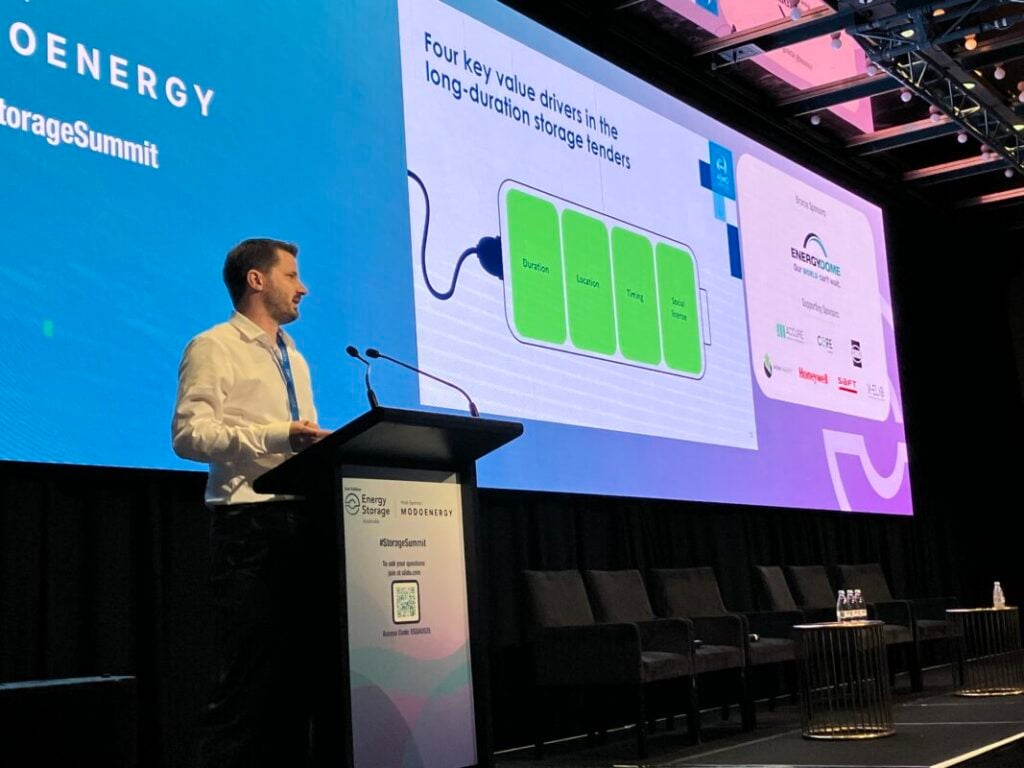
Speaking this morning at Energy Storage Summit Australia 2025, Thimo Mueller, general manager for commercial and AEMO Services, said bids are judged on four main criteria.
Mueller referred to tenders that AEMO Services—an independent subsidiary of the Australian Energy Market Operator (AEMO)—is running as the delivery partner to Australian states.
Through both the nationwide Capacity Investment Scheme (CIS) for renewables backed with storage and energy storage procurements of varying duration technologies in the New South Wales (NSW) Electricity Infrastructure Roadmap, AEMO Services is “focused on bridging ambition and action,” Mueller said.
Try Premium for just $1
- Full premium access for the first month at only $1
- Converts to an annual rate after 30 days unless cancelled
- Cancel anytime during the trial period
Premium Benefits
- Expert industry analysis and interviews
- Digital access to PV Tech Power journal
- Exclusive event discounts
Or get the full Premium subscription right away
Or continue reading this article for free
The CIS was launched with the national Commonwealth government’s Office of the Capacity Investment Scheme at the Department of Climate Change, Energy, the Environment and Water (DCCEEW) as its coordinator.
However, as with all energy policies in Australia, implementation is done at the state level. The CIS targets 32GW of new renewable energy capacity by 2027 in the country’s biggest interconnected market, the National Electricity Market (NEM), including 9GW/36GWh of energy storage to integrate firm dispatchable renewable energy capacity.
The NSW Roadmap, meanwhile, guides towards 2GW/16GWh by 2030 and 28GWh by 2034, and Mueller said it was important to highlight that those are minimum targets.
“If we identify an increased need for reliability in New South Wales, we can procure more on top of this,” he said in a keynote presentation to begin Day One of the conference.
Five tenders have been delivered across the two schemes, resulting in contract awards for a cumulative 4GW/25GWh of energy storage.
The idea is that the tenders support investors in overcoming barriers to revenue certainty.
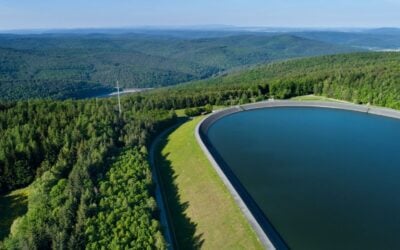
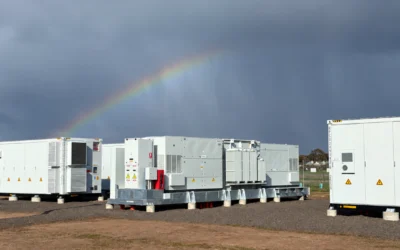
In the case of the NSW Roadmap, this includes long-duration energy storage (LDES) resources with an 8-hour or more dispatch duration at full-rated power. Long-Term Energy Service Agreements (LTESAs) have already been awarded to 18GWh of long-duration lithium-ion (Li-ion) battery energy storage system (BESS) projects, advanced compressed air energy storage (A-CAES) and pumped hydro energy storage (PHES) project bids.
AEMO Services considers ‘value for money, not lowest cost bids’
Mueller said that project bids are assessed on financial and non-financial criteria and that developers should consider the four main criteria they comprise.
The latest tenders that AEMO Services has overseen have “resulted in the lowest cost bids that we’ve seen so far,” Mueller said, but followed this up by saying that the tenders “are not about the lowest cost.”
“They are about value for money, and there are four key drivers that I want to touch on that, in our view, create that value for money.”
Mueller said the first is the project’s duration. The longer the duration, the more benefits to the market it can provide. AEMO Services constructs scenarios that assess system needs for a broad range of durations, including some that deviate from the Integrated System Plan (ISP) scenarios that parent organisation AEMO has modelled,
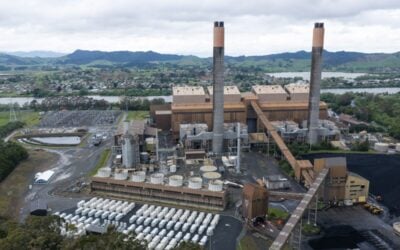
AEMO Services will look at scenarios for expedited retirements of coal-fired thermal generation and extended system outage periods, among others.
“Basically, that shows you the value of developing long-duration storage assets more adequately.”
The second is location. In AEMO Services’ assessment, projects closer to electricity demand load centres, and with good access to grid infrastructure create more value for consumers.
Thirdly, timing. The earlier a project can achieve commercial operations the better, he said.
Finally, the social license a project has is important to consider and projects that “positively impact local communities and offer value to society” while score higher in the non-financial evaluation process, Mueller said.