US-based iron-sodium battery manufacturer Inlyte Energy and Swiss data centre operator NTS Colocation AG are partnering to deploy 2MW of iron-sodium battery capacity by 2028.
Inlyte and NTS’ partnership will begin with a pilot installation at the Bern data centre in Switzerland. The companies are targeting a 600kWh installation for commissioning by the end of this year.
NTS manages high-performance colocation data centres in Zurich and Bern, utilising renewable energy sources and integrating waste heat recovery systems.
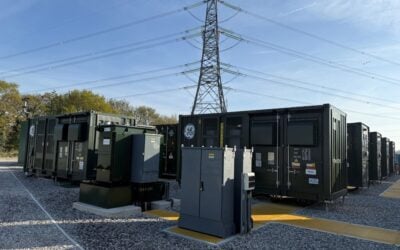
Inlyte claims the initial installation in Bern will function as a technical and operational validation of the technology within a live data centre setting.
Try Premium for just $1
- Full premium access for the first month at only $1
- Converts to an annual rate after 30 days unless cancelled
- Cancel anytime during the trial period
Premium Benefits
- Expert industry analysis and interviews
- Digital access to PV Tech Power journal
- Exclusive event discounts
Or get the full Premium subscription right away
Or continue reading this article for free
This first phase aims to evaluate system performance and its integration with existing electrical and control systems. Achieving successful validation by the end of 2026 is expected to enable wider deployment across NTS’ portfolio, “positioning iron-sodium storage as a scalable component of the company’s long-term energy strategy.”
Inlyte added that lithium-ion (Li-ion) battery energy storage systems (BESS) present challenges such as fire safety and permitting complexities for indoor installations, separation and containment requirements that limit basement deployment, and degradation concerns for long-lived infrastructure assets.
Moreover, diesel generators, which are the industry standard for backup power, have several disadvantages such as noise pollution, local air contaminants, the need for fuel storage, and continuous maintenance. These issues can complicate operations and hinder sustainability objectives.
Inlyte claims it is expanding BESS solutions for both the utility-scale and commercial and industrial sectors, “with a distinct 3-in-1 solution: efficient daily load levelling, low-cost, 24+ hour flexible back-up, and high-performance UPS capability. The technology eliminates fire risk and provides low-cost, long-duration energy storage (LDES), helping facilities shift demand, reduce peak loads, and enhance operational stability.”
The company also highlighted the high grid fees, limited land availability, and strict permitting requirements in Switzerland.
The updated EU Energy Efficiency Directive mandates that data centres report their fossil fuel consumption, including diesel used for backup generators. Although it does not ban diesel, operators are now exploring cleaner and more efficient options to improve overall grid performance.
UK FAT testing, US DOE funding
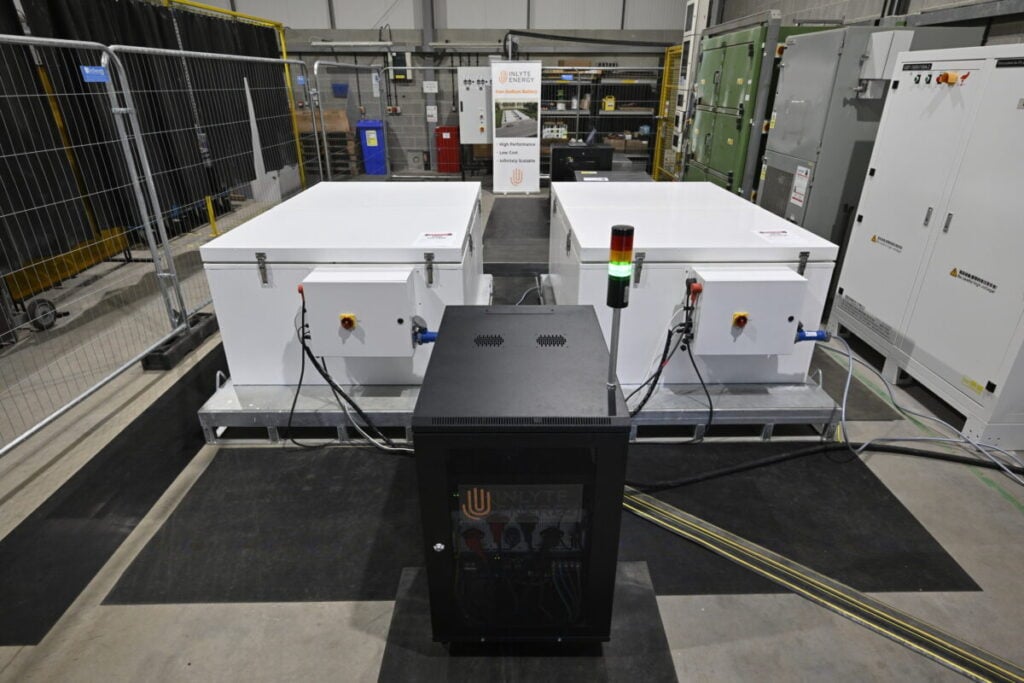
Inlyte recently carried out a factory acceptance test of its first field-ready battery at its facility near Derby, UK, in the presence of representatives from US utility Southern Company. The modules tested each have a storage capacity exceeding 300kWh, which Inlyte claims are the largest sodium metal chloride (SMC) battery cells ever built.
At the time, CEO Antonio Baclig told ESN Premium that the company had “reinvented the SMC battery for low-cost grid storage,” due to a “breakthrough” in its cathode material development. The CEO touted key features and claimed advantages of SMC batteries, which have been around for over forty years, including safety and durability, with the ability to operate in high and low temperature environments.
In June 2025, the US Department of Energy’s (DOE’s) Office of Electricity (OE) announced a funding of up to US$15 million for three storage technologies.
This initiative involves Inlyte and its partners developing and showcasing an iron and sodium-based LDES system to enhance energy resilience at the Alliance Redwoods site in Occidental, California.
In December 2025, energy storage developer Energy Vault signed two contracts in Switzerland for projects with Schindler Aufzüge and Energie Wettingen, to launch the B-Vault FlexGrid programme designed for commercial and industrial (C&I) customers.
In September 2025, Switzerland-based Phenogy commissioned its Phenogy 1.0 sodium-ion BESS near the Bremen Airport in northern Germany.
The 1MWh system is co-located with a pre-existing 50kW solar PV installation and is operating in island mode, powering electric vehicle (EV) charging stations.