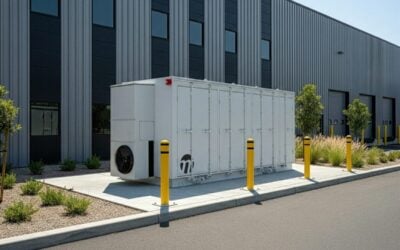
Andrew Forrest, chairman of Australian mining company Fortescue, said the company’s battery energy storage systems (BESS) have demonstrated the ability to stabilise its private mining grid without relying on traditional rotational inertia from spinning generators, using AI to reverse electron flow in nanoseconds during disruptions.
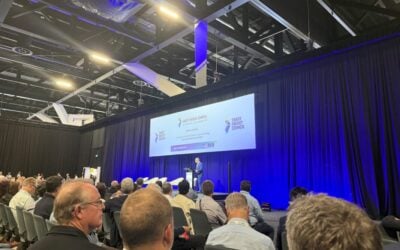
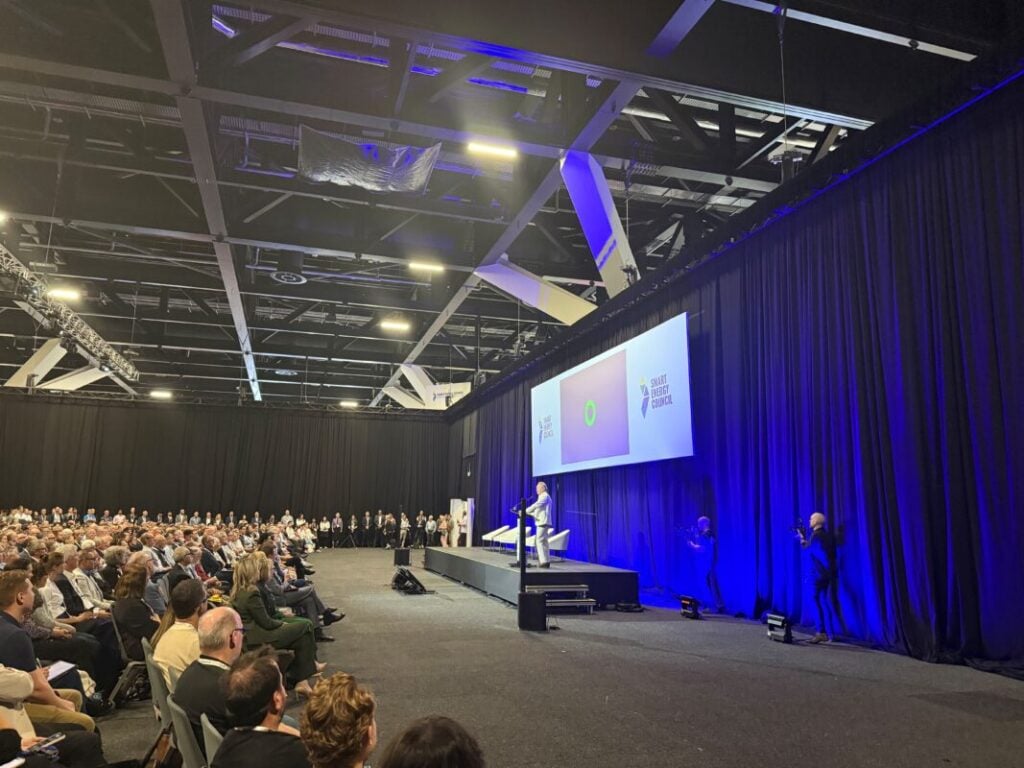
Speaking today at the Smart Energy Conference 2026 in Sydney, Forrest described a recent incident in which the company’s grid-forming battery storage systems autonomously corrected a grid disturbance without human intervention or the mechanical inertia typically provided by diesel or gas generators.
“AI and batteries simply, when that grid got attacked, reversed the electrons,” Forrest said.
“The batteries held the electrons; it sent them the other way, and that grid stayed untouched. If you’re watching these lights, when the grid got attacked, and the grid went down, and AI fixed it, you would not see these lights flicker.”
Try Premium for just $1
- Full premium access for the first month at only $1
- Converts to an annual rate after 30 days unless cancelled
- Cancel anytime during the trial period
Premium Benefits
- Expert industry analysis and interviews
- Digital access to PV Tech Power journal
- Exclusive event discounts
Or get the full Premium subscription right away
Or continue reading this article for free
Forrest quoted Glen Carruthers, a power systems engineer working on the project, who said: “The grid healed itself in front of my eyes. For most of my 35-year career as a power systems engineer, I thought this was impossible. This is a glimpse of the future, and by the birth of my child, the most exciting thing I have ever witnessed.”
The development showcases a technical milestone in grid management, as conventional power systems rely on the kinetic energy stored in large spinning turbines to maintain frequency and voltage stability during disturbances.
Forrest compared traditional grid stabilisation technology to “a wheel on a horse and cart,” stating that the approach has not changed substantially since the early days of electrical systems.
“You have these massive spinning flywheels. It’s called rotary kinetic energy or massive spinning turbines,” Forrest said.
“When the grid goes down, when it gets attacked by a missile in Ukraine or Iran, or by a weather event in the Pilbara, or by some fruit cake running into a pole somewhere else, when that grid is attacked, what keeps it going right now is that rotational kinetic energy.”
Forrest believes the AI technology “emerged on us last year,” explaining that when “you put a cloud floating over a solar plant, or a slight drop on the wind in a wind farm, and you’ve connected a whole grid to it, everything changes in nanoseconds. Humans cannot make decisions that fast, but AI can and has.”
‘This is maths, physics, engineers and a bit of courage in leadership’
Fortescue is deploying what it describes as the world’s largest independently operated green grid to power its iron ore mining operations in Western Australia’s Pilbara region.
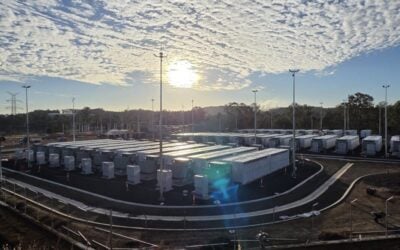
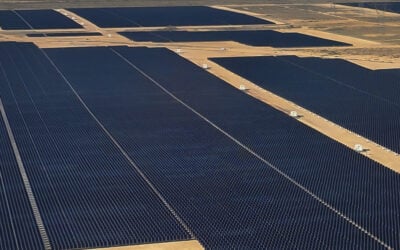
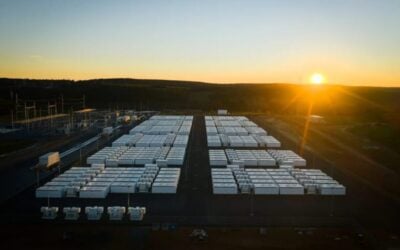
The system comprises 2.3GW of generation capacity, including 1.5GW of solar and 800MW of wind, supported by over 5GWh of battery energy storage and 600 kilometres of transmission infrastructure.
“This green grid can be replicated all over Australia,” Forrest said.
“There’s nothing Doctor Who, Dr Seuss or Harry Potter about this grid. This is just maths, physics, engineers and a bit of courage in leadership.”
The company said it has already replaced 800 pieces of diesel-consuming equipment with battery-electric alternatives.
“We’re not talking about the future. We’re talking about right now,” Forrest said, citing “electric drills, these things chop through a million litres of diesel a year. 240-ton battery electric trucks and these huge excavators.”
He stated that 40% of the company’s dig fleet will be replaced with electric units by the end of the year, and that the company operates “the biggest, heaviest railways on Earth, ladies and gentlemen, there are no bigger.”
Fortescue generated 300,000MWh of renewable energy in recent months, meeting 22% of its total electricity demand. The company’s hematite operations, which produce 180 million tonnes per year and involve “shifting a billion tons of Earth per year,” met 62% of power requirements through solar generation. In December, the company achieved 100% solar-powered operations for a day.
The company is targeting the elimination of fossil fuels from its operations by 2030.
“By 2030, we’ll stop using 1 billion litres of diesel equivalent every year,” Forrest said, adding that this will deliver cost savings of US$1 billion per year.
“Now that’s not chopped liver, a billion a year. I don’t want that to just flip people’s minds off. That pays for a truckload of dividends of people’s dreams, hopes and aspirations and philanthropy.”
He said fuel costs are already down US$100 million and that the green grid will be “mostly complete” by 2027 and finished by November 2028.
“By 2028, ladies and gentlemen, by November 2028, Fortescue is locked and loaded. All we’re waiting on is the delivery of equipment. The pain is behind us by the end of 2028, and by 2030, the final equipment is delivered, and we’ve stopped burning fossil fuel.”
Australia’s diesel fuel rebate
Forrest used the keynote to call for the removal of Australia’s diesel fuel rebate for large industrial users, arguing the subsidy removes economic incentive for decarbonisation.
He noted that the mining industry receives AU$4.5 billion (US$3.25 billion) annually through the fuel tax credit system, with the total rebate allocation reaching AU$10.8 billion across all sectors.
“When you hear from large companies, they say they cannot afford to, that the technology isn’t there. Get hold of your local politician and say, don’t ask these companies to go green when you’ve got a diesel fuel rebate worth billions of dollars of net cash to them to stop them going green,” Forrest said.
He added the rebate provides full refunds up to AU$50 million per year per entity.
Forrest believes the fuel tax credit system has cost AU$122 billion since 2006, with AU$55 billion allocated to miners, and that it will reach AU$184 billion by 2030 if current policy continues.
“More is spent on diesel rebates than on the army or the Air Force of our nation,” he said.
The mining sector burns 9.6 billion litres of diesel annually, according to Forrest, with 90% of Australia’s diesel imported.
He pointed to geopolitical risks affecting diesel supply, noting that the closure of the Strait of Hormuz to commercial shipping could drive diesel prices to AU$3-4 per litre.
“The Strait of Hormuz is not opening up anytime soon,” Forrest declared. “So, for diesel, it’s all bad news.”
Fortescue has committed US$6.2 billion to decarbonising its mining operations and Forrest noted that it has executed AU$46 billion in capital projects “50% faster, 50% less cost” compared to peers.