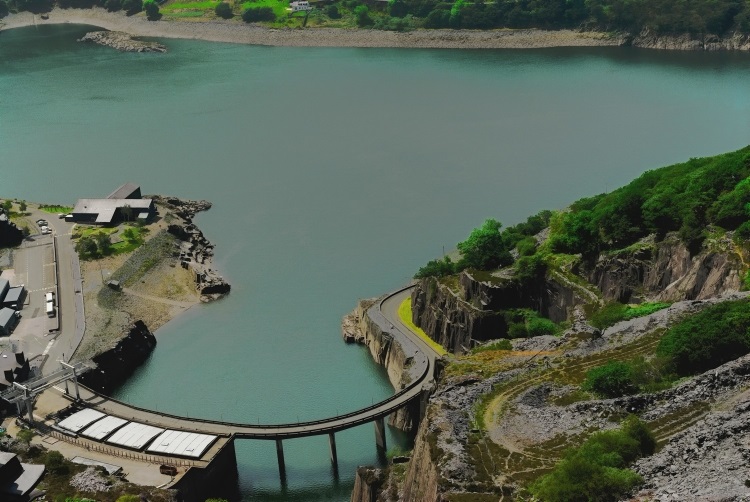
Two large-scale pumped hydroelectric energy storage projects under development in the US have been acquired by fund management company Copenhagen Infrastructure Partners (CIP).
CIP was founded in 2012 and focuses on delivering returns from green infrastructure investments under Environmental, Social and Corporate Governance (ESG) standards. Its projects include wind, solar, waste-to-energy, transmission and energy storage, with the company recently signing a deal to work on offshore wind in the Japanese market.
Earlier this year CIP launched a new global renewable energy fund for greenfield projects, Copenhagen Infrastructure IV, reaching EUR4 billion in commitments by September. CIP said earlier this week that it has acquired the Swan Lake 400MW pumped hydro project in Klamath County, Oregon and 1,200MW Goldendale pumped hydro in Klickitat County, Washington on CIV’s behalf.
While Swan Lake has already secured a 50-year Federal Energy Regulatory Commission (FERC) license in 2019, Goldendale filed an application with FERC in June this year and is awaiting licensing. CIP has acquired the projects from hydropower developer Rye Development and National Grid, which was previously developing them through a joint venture (JV).
Try Premium for just $1
- Full premium access for the first month at only $1
- Converts to an annual rate after 30 days unless cancelled
- Cancel anytime during the trial period
Premium Benefits
- Expert industry analysis and interviews
- Digital access to PV Tech Power journal
- Exclusive event discounts
Or get the full Premium subscription right away
Or continue reading this article for free
Rye Development will continue to lead the two closed-loop pumped hydro projects’ development until construction begins. CIP said that the two projects will contribute to the phase-out of fossil fuels and increase renewable energy capacity in the Pacific Northwest of the US. The long duration energy storage systems will store energy generated by solar and wind resources until they are needed the most, at peak times.
“With the long investment horizon of our funds, it enables us to participate in large projects overseeing contracting, de-risking, financing, construction and operation,” CIP senior partner Christian Skakkebæk said.
“Pumped storage hydro is a unique and valuable asset class that will be a key resource as the global transition to renewable energy continues to accelerate in states such as Oregon, Washington and Montana.”
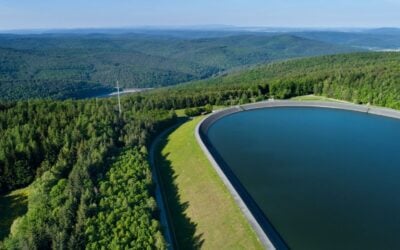
While lithium-ion dominates the global market for new energy storage systems, the vast majority of already-deployed storage capacity is still pumped hydro. The technology offers a low marginal cost of storage once built, using two large bodies of water, one in an upper reservoir and the other in a lower reservoir and then dropping water from the upper to lower reservoir through turbines to generate electricity. Once water has passed through the turbines, the systems can be “recharged” using solar or wind to take it back up again.
However, mostly due to the specific geographical requirements for pumped hydro systems, needing a lot of space and two large bodies of water one above the other, opportunities for developing new projects are largely limited in most parts of the world. Recent exceptions include the 600MW / 7,200MWh Oven Mountain project under development in Australia, while auctions for capacity in India led to independent power producer (IPP) Greenko being awarded a win for what is thought will be one of the lowest cost renewables-plus-storage projects in the world to date, pairing pumped hydro with 2,000MW of solar and 400MW of wind.