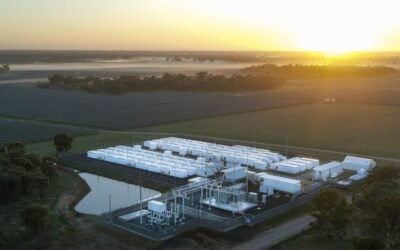
The 1.4MW solar installation on Ta’u, American Samoa. Image: SolarCity.
The soon-to-be-merged Tesla and SolarCity have completed a solar-plus-storage microgrid on an island in American Samoa that will reduce the local population’s reliance on costly and cumbersome diesel imports.
The project is on the US territory’s island of Ta’u, funded by the American Samoa Economic Development Authority and US Environmental Protection Agency and Department of Interior. The island has just 600 inhabitants but relies on more than 100,000 gallons of imported diesel a year.
Combining a 1.4MW utility-scale solar installation from SolarCity and Tesla with 6MWh of battery storage in the form of 60 Tesla Powerpack utility and commercial scale batteries, the facility will add much needed reliance to power supplies as well as saving costs. While a SolarCity spokeswoman declined to reveal any details of the project’s cost or potential savings, a blog published on the company’s website said the stored solar energy would be affordable and would “maximise savings”. Solar-plus-storage is now cheaper than running power generation from diesel almost anywhere in the world, but the savings will be particularly acute on remote islands, as seen in various projects around the world, including Puerto Rico and Portugal.
The spokeswoman pointed out that although the two companies have only just taken the decision to merge at a shareholder vote on 17 November, this latest project follows on the heels of similar endeavours by the pair in Kauaʻi, Hawaii where 52MWh of storage is paired with 13MW of utility-scale solar in another diesel replacement configuration and another for the Connecticut Municipal Electric Energy Cooperative.
Try Premium for just $1
- Full premium access for the first month at only $1
- Converts to an annual rate after 30 days unless cancelled
- Cancel anytime during the trial period
Premium Benefits
- Expert industry analysis and interviews
- Digital access to PV Tech Power journal
- Exclusive event discounts
Or get the full Premium subscription right away
Or continue reading this article for free
The SolarCity spokeswoman confirmed that the merger made jointly executed SolarCity-Tesla installations easier to find and execute. She said more projects like this one are likely to follow, saying that “we plan to continue work on projects like these to bring reliable and cost effective solar and storage solutions to communities across the globe”.
The island of Ta’u is 4,000 kilometres from the coast of the US mainland and suffers frequent power outages and rationing. One villager interviewed by SolarCity for its blog said diesel is often saved for use in the mornings and afternoons only, while local water supplies are also reliant on electricity for pumping. While it didn’t go into specific detail, the blog claims nearly 100% of the island’s power will now come from renewable energy via the microgrid.
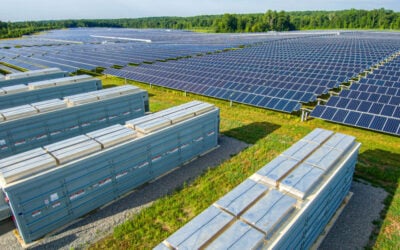
Some of the 60 Tesla Powerpacks in Ta’u, comprising 6MWh of storage. Image: SolarCity.