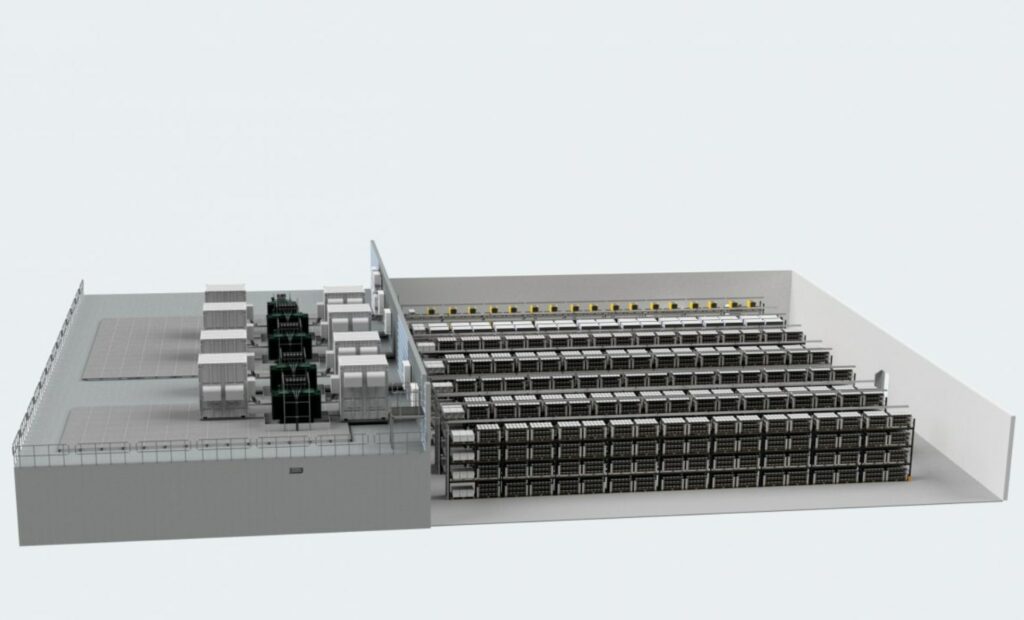
A 25W battery energy storage facility in Germany with used battery cells from EVs including forklifts has been completed by developer JT Energy Systems.
The company, a joint venture between battery manufacturer Triathlon and logistics firm Jungheinrich AG, opened the completed facility last week (30 September), claiming it is the largest battery system in Saxony and the most “powerful of its kind”. The start of construction was announced in January 2022.
The companies said the battery will mainly provide load shifting, storing energy during periods of oversupply to later feed back into the grid when it’s needed.
“Especially in view of the current energy shortage, we need efficient ways to store regenerative energy. Our mega-battery is the ideal solution for this. The storage system helps stabilise energy prices and make a success of the energy turnaround,” said Reinhild Kühne, managing director of JT Energy Systems.
Try Premium for just $1
- Full premium access for the first month at only $1
- Converts to an annual rate after 30 days unless cancelled
- Cancel anytime during the trial period
Premium Benefits
- Expert industry analysis and interviews
- Digital access to PV Tech Power journal
- Exclusive event discounts
Or get the full Premium subscription right away
Or continue reading this article for free
A ‘large part’ of the 10,000 battery modules constituting the 25MW system come from used lithium-ion batteries, mainly from electric forklifts from Jungheinrich but also the passenger EV sector.
“Lithium-ion batteries can generally be used for longer than the electric vehicles in which they are installed. Stationary energy storage systems like the one we have in Freiberg are the logical consequence in order to continue to use the batteries sensibly for a long time to come,” Kühne added.
The battery storage facility was planned and built by partner company TRICERA energy, which Energy-Storage.news recently interviewed, amongst others, for a special report on the German utility-scale energy storage market. TRICERA specialises in building systems using EV batteries, which COO Lars Fallant said is possible thanks to the large existing automotive sector in Germany.
Kühne said: “Due to the rapidly increasing share of electric vehicles with lithium-ion batteries over the past few years, JT Energy Systems anticipates a growing number of battery capacities in the future that will be used for a second life in stationary storage.”
Whilst the residential and commercial and industrial (C&I) sectors have remained strong, the utility-scale market in Germany has been slow in recent years with just 32MW installed in 2021 according to one study.
But 2022 is certain to eclipse that figure substantially. Projects reported on by Energy-Storage.news that have already come online (including JT’s), or are expected to imminently, total around 180MW. That is close to the record 200MW deployed in 2018 according to research firm Delta-EE, which expects it to be beaten this year.