
How similar is the technology of Exa Energy, which just connected a 100MW/1GWh carbon dioxide-based energy storage system to the grid in China, to that of Energy Dome?
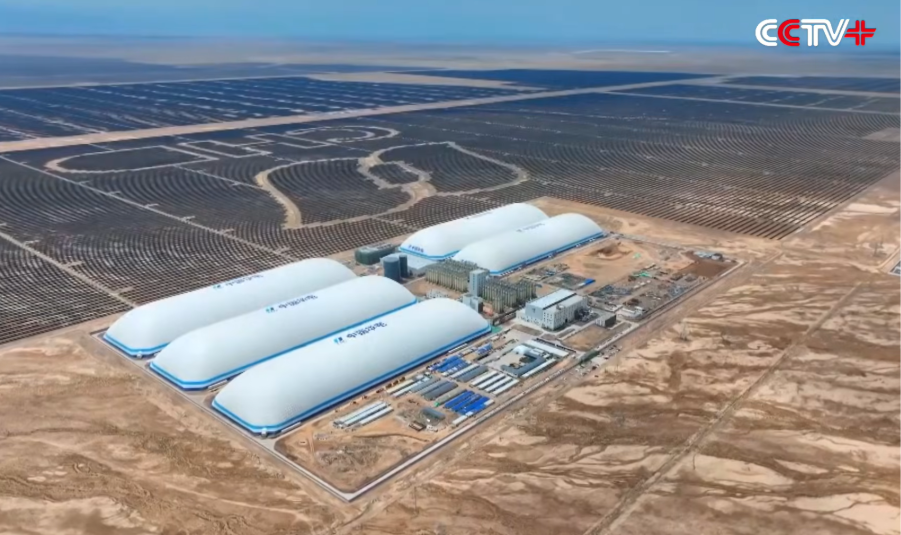
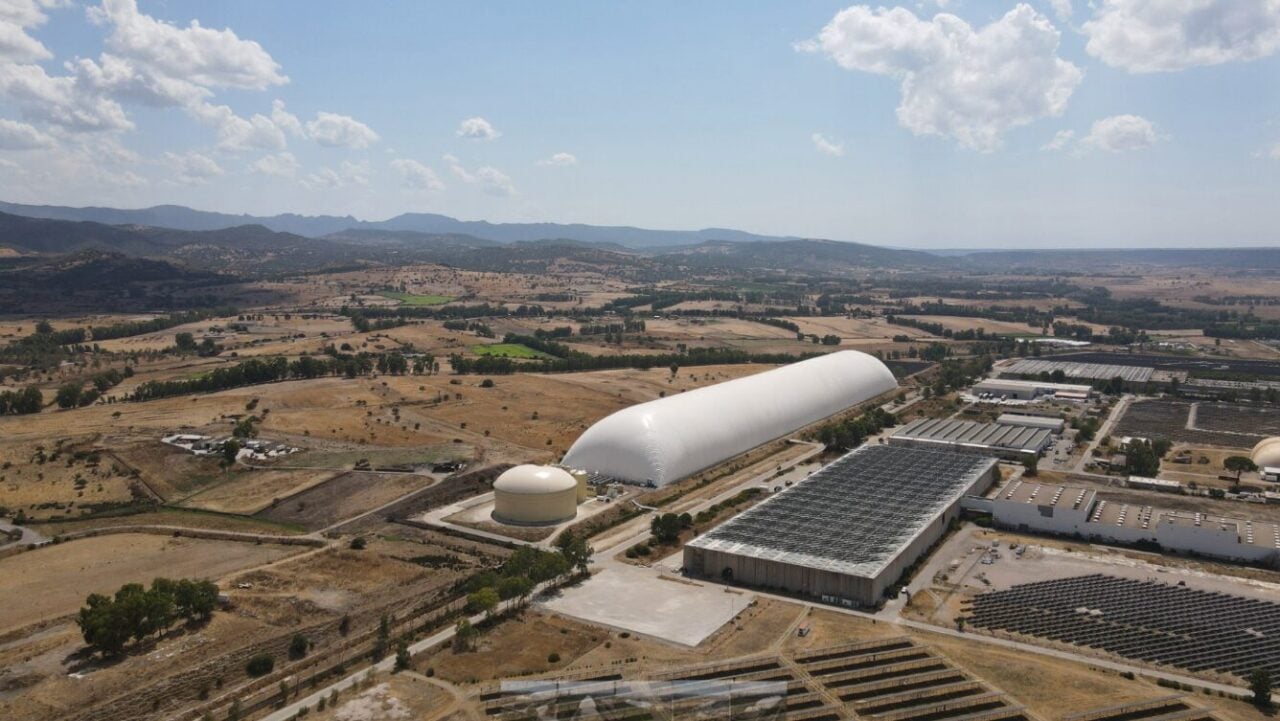
The project milestone was reported on by Chinese state TV outlet CCTV (see the video here). Exa Energy founder and chairman Tom Xiao then sent Energy-Storage.news details on its technology in response to a request for comment, after we noticed how similar the two companies’ projects look.
Energy Dome provided us with this statement in response to our request: “Since Energy Dome’s founding, we have dedicated significant time and resources to protecting our technology and intellectual property worldwide.”
“The CO2 Battery is a proprietary, patented technology that is now being commercially deployed in the United States, Europe, and Asia-Pacific. It is supported by an extensive international patent portfolio designed to protect our intellectual property rights across multiple jurisdictions.” (continues below)
Try Premium for just $1
- Full premium access for the first month at only $1
- Converts to an annual rate after 30 days unless cancelled
- Cancel anytime during the trial period
Premium Benefits
- Expert industry analysis and interviews
- Digital access to PV Tech Power journal
- Exclusive event discounts
Or get the full Premium subscription right away
Or continue reading this article for free
“We take the protection of our intellectual property extremely seriously and are taking appropriate action to defend our rights. Our focus remains on accelerating the global commercial deployment of our CO2 Battery technology, delivering reliable, affordable long-duration energy storage solutions to customers in the United States and around the world.”
Below we compare the two companies’ respective technologies, using the additional information provided by Xiao and publicly available information about Energy Dome’s.
The new Exa Energy CCES carbon dioxide battery
The new Exa Energy project is China’s first 100MW/1GWh compressed carbon dioxide energy storage (CCES) facility to be connected to the grid. The project is a 138-acre facility situated in the Gobi Desert, Mori Kazakh Autonomous County, China’s Xinjiang Uygur Autonomous Region. It’s estimated that the facility can store 290GWh and discharge 180GWh of clean power each year.
The carbon dioxide battery developed by Exa Energy functions as grid-scale battery and contains five gas holders, 141 liquid storage units and 97 thermal storage units, as well as heat exchangers, and expansion power-generation units. The battery is a closed loop system that compresses carbon dioxide gas into a liquid state to ‘charge’ the battery during periods of low electricity demand when there is surplus energy to store. The compression process also generates heat as it squeezes the carbon dioxide gas, and this residual heat is captured and stored in thermal storage units.
To discharge the battery, the carbon dioxide liquid is expanded back into a gas and the carbon dioxide gas drives turbines to generate electricity when there are high power needs. This is essentially a reversal of the charging process, where the liquid carbon dioxide is vaporised using the stored heat, the expands. This its operation as a standalone battery.
Because the system is closed loop, it doesn’t require any specific geological terrain, such as mountains like pumped hydro or the underground caverns required for CAES, and has been stated to have a minute-level response time and over six hours of continuous output. The system also employs a matrix self-balancing system to manage large-scale pressure and thermal energy storage which ensures pressure balance among the tanks.
While the plant is initially going to produce 180GWh of clean power each year, it is expected to generate 200GWh once fully operational, saving up to 50,000 tonnes of coal and 170,000 tonnes of carbon emissions each year.
The carbon dioxide battery installed has 100MW of power and 1,000MWh (1GWh) of energy storage capacity, 6-hour duration, and the ability to store 1.5 million m³ of carbon dioxide using variable-volume gas storage. The gas storage tanks have also been stated to be leak-proof and are made from airtight materials with a water vapor permeability of <0.0005/year. The carbon dioxide battery also has a cycle life of 20,000+ cycles without deformation, calendar life of at least 30 years, and a temperature operating range of -40°C–70°C. The battery also has a stated cycle efficiency of around 70% and a system round-trip efficiency (RTE) of 66%.
The main use case for the carbon dioxide battery is the co-location and integration with high-density data centres. When the carbon dioxide battery discharges, the battery system captures a lot of the waste heat generated by the data centre (like the heat stored from the compression process) and uses this heat to evaporate the carbon dioxide liquid into a gas.
Using recovered heat also makes the system a lot more efficient and the once the waste heat has been removed, the system provides cooling to the data centre to reduce the data centre’s power usage efficiency (PUE). This heat transfer and cooling process is done via coupling the liquid cooling system of the data centre with the battery in a closed loop system. The heated liquid from the data centre—after it has cooled the electronics (and heat has transferred to the cooling liquid)—is then transferred to the battery side. The heat is then transferred to the carbon dioxide to heat it up and cause the liquid-to-gas phase change. Once the heat has been removed from the cooling liquid, the now-cooled liquid is recirculated to the data centre through a return-water line and re-enters the cooling loop ready to cool the data centre again.
How it compares to Energy Dome’s technology
Energy Dome is an Italy-headquartered firm that also has a technology that compresses the carbon dioxide into a liquid to charge and decompresses with heat to discharge.
Energy Dome also has a key installation already up and running, with many other contracts agreed, with durations ranging from 8–24 hours—though at smaler scale than Exa’s. Both Exa Energy and Energy Dome’s installation times are similar.
Its major commercially operating project is the 20MW/200MWh system in Sardinia, Italy. This was the first major project and has been running for about a year now. There is also a 20MW/200MWh project in Wisconsin, US, a 19MW/190MWh 10-hour duration project in Arizona, US, and a 160MWh project in India that are currently being built and will start operating soon. A memorandum of understanding (MOU) has been signed for an installation in Odessa, Texas while a 23MW/200MWh in County Offaly, Ireland, with Google as the offtaker, is set to be in commercial operation by 2028.
Energy Dome has two different battery systems: the CO2 Battery and the CO2 Battery Plus. The CO2 Battery is the standard carbon dioxide battery system where the carbon dioxide is compressed and vaporised as a standalone system using the stored heat. This battery is close to the specifications of the Exa Energy battery with an RTE of 70% and no capacity degradation for over 30 years—but with a longer average discharge time. The CO2 battery is used for utilities, data centres, and national grids.
The CO2 Battery Plus is a different configuration, and the stored heat tank is replaced with direct waste heat from a co-located gas turbine. This is similar to the Exa energy co-location with a data centre example, only this time it is an attached turbine not a liquid cooled heat exchange system that provides the heat. This battery uses the heat from the co-located gas turbine exhaust to vaporise and expand the liquid carbon dioxide instead of stored heat which increases the efficiency of the battery. This is the discharge ‘SuperBoost’ mode that provides additional power comparable to that of an additional gas turbine.
This system more than doubles the peak output of the battery with a boosted RTE of 115%. An RTE for the coupling of the data centre with Exa Energy’s battery has not yet been given for comparison. The battery can still be used with data centres though; it’s just used more for managing the variability of data centre energy requirements. The CO2 Battery Plus also has a ‘generation’ mode where the compressor and turbine run simultaneously with no net mass transfer between the gas and liquid phases, but because it operates in a closed loop, it increases the power output of the gas turbine by as much as 25%.
Energy Dome’s installations are more efficient, but the size of its installations is much smaller, meaning that Exa Energy’s installed system can store and distribute more energy.
One distinction that has been noted by Exa Energy is regarding the thermal energy storage tank. Exa Energy has stated that it use a solid packed‑bed particle thermal energy storage tank integrated into the high‑pressure carbon dioxide process circuit whereas Energy Dome uses standard carbon-steel tanks.
Despite Energy Dome’s ‘Plus’ system being different to the co-location approach employed so far by Exa Energy, there are some distinct similarities between the two company’s technologies. Both systems implement a closed loop carbon dioxide thermodynamic cycle for long duration energy storage, the charging process consumes surplus renewable power or off-peak electricity to drive compressors, heat from the charging compression is harvested for later use, and the high pressure liquid carbon dioxide absorbs the stored thermal energy (or from an external source in co-located systems), to expand the liquid, drive a turbine, and regenerate electricity.
So, while there are some specification differences, the core technologies are very similar.
Energy-Storage.news will update this article or publish additional content if and when further comment or details are provided by either company.
