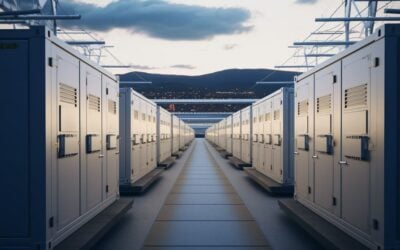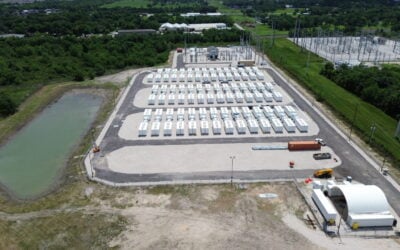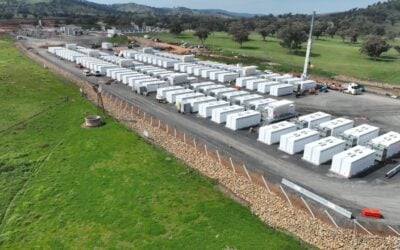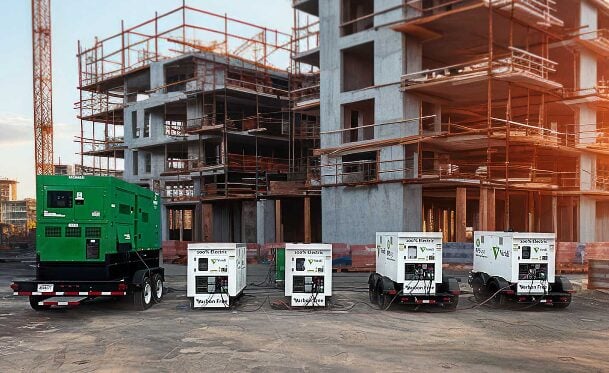
Viridi Parente has announced its battery energy storage systems (BESS) products meet the current Foreign Entity of Concern (FEOC) requirements as expanded under the One Big Beautiful Bill Act (OBBB).
Viridi says the confirmation of compliance makes the company one of the few BESS providers whose systems are both American-made and fully eligible for federal incentives.
Manufactured in Buffalo, New York, Viridi’s proprietary fail-safe lithium-ion (Li-ion) BESS features “advanced anti-propagation technology that prevents thermal runaway from propagating between cells.”
The company claims its technology allows its systems to be deployed in any environment.
Try Premium for just $1
- Full premium access for the first month at only $1
- Converts to an annual rate after 30 days unless cancelled
- Cancel anytime during the trial period
Premium Benefits
- Expert industry analysis and interviews
- Digital access to PV Tech Power journal
- Exclusive event discounts
Or get the full Premium subscription right away
Or continue reading this article for free
Viridi’s product portfolio already meets the 75% Material Assistance Cost Ratio (MACR) threshold set for 2030 and future years, while also adhering to current FEOC sourcing rules, allowing customers to fully benefit from the ITC.
However, note that the Treasury still needs to provide detailed guidance on how FEOC will work in practice, with most industry sources refraining from making forward-looking statements before that guidance is out. It is due to publish it next week, but that could be delayed.
Viridi says its compliance results from domestic manufacturing, rigorous supplier vetting, ownership verification and certification processes.
As covered in the most recent edition of PV Tech Power, our sister site PV Tech’s quarterly journal, FEOC restrictions will deny tax credits for energy projects using too many Chinese components, with regulations taking effect after July 4, 2025.
Starting in 2026, 55% of project costs must come from non-prohibited foreign entities, increasing to 75% by 2030. The regulations create significant compliance risks with penalties for miscalculations, including a 20% penalty for taxpayers and 10% for equipment suppliers providing false certificates.
If projects obtain their cells from non-prohibited foreign entities, the developer will not qualify for the domestic content bonus but will still receive the ITC.
Other companies, like Enphase Energy, have introduced products meeting the domestic content threshold for solar and storage tax credits (45% US-sourced materials, increasing to 55% by 2027). Nevertheless, Viridi is among the most prominent companies to declare compliance with the FEOC requirements.
In April, Viridi acquired the former Moxion Power production facility in Richmond, California, after Moxion’s bankruptcy in 2024, and secured a US$9.3 million grant from the California Energy Commission (CEC). Moxion provided mobile BESS solutions for temporary off-grid power as an alternative to diesel generators.
The grant from the CEC was to be used for building out Moxion’s former facility.
Viridi is also playing a role in the carbon account and energy management platform Gravity’s newly announced Energy Management Marketplace. The Energy Management marketplace links Gravity’s customers to a broad selection of actionable energy projects to reduce operating expenses and carbon footprints. Gravity says it will utilise battery storage products from Viridi, among other companies in its marketplace.
Viridi raised US$95 million for its lithium-ion battery technology in 2022.