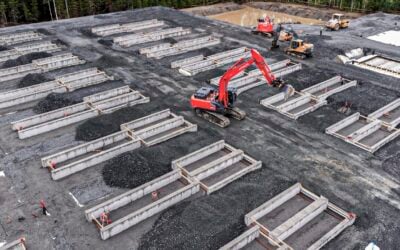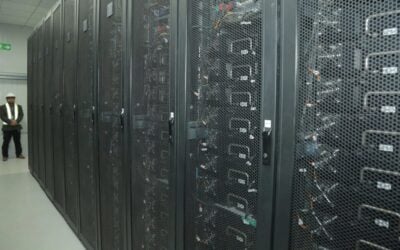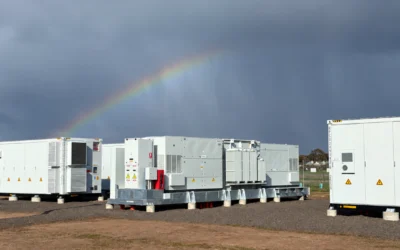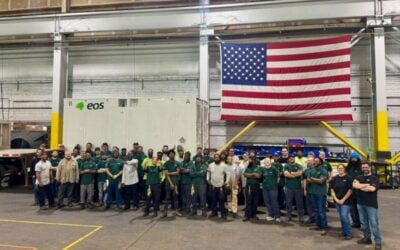
Viridi Parente has acquired the former Moxion Power production facility in Richmond, California, US, and secured a US$9.3 million grant from the California Energy Commission (CEC).
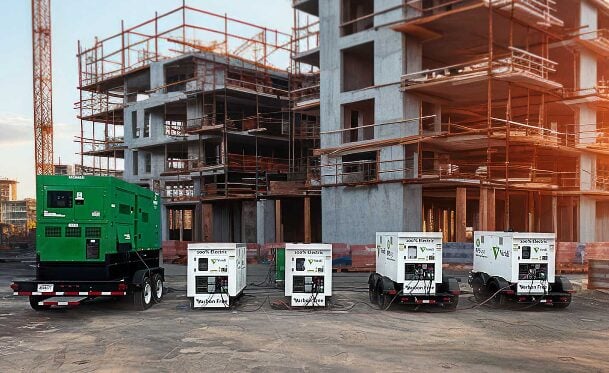
Moxion Power provided mobile battery energy storage systems (BESS) for temporary off-grid power as an alternative to diesel generators.
In a guest blog for Energy-Storage.news in 2024, Moxion co-founder and CTO Alex Smith highlighted how the technology can be used for construction, live events, film sets, electric vehicle (EV) fleet charging, utilities and disaster response.
In August 2024, the company filed for bankruptcy. In Moxion’s petition, it cites a US$28 million net operating loss in 2022, contributing to the decision.
Try Premium for just $1
- Full premium access for the first month at only $1
- Converts to an annual rate after 30 days unless cancelled
- Cancel anytime during the trial period
Premium Benefits
- Expert industry analysis and interviews
- Digital access to PV Tech Power journal
- Exclusive event discounts
Or get the full Premium subscription right away
Or continue reading this article for free
Viridi was founded in 2009 and occupied an industrial campus first built by GM in 1923.
In 2022, the company raised US$94.65 million in a Series C funding round for its lithium-ion (Li-ion) battery technology, which it claims is fail-safe and can be ‘safely installed in nearly any environment.’
Currently, Viridi claims to have ‘the first and only commercial-scale BESS to be installed in existing, occupied spaces, and is deployed nationwide for indoor, behind-the-meter installations across industrial, medical, commercial, and municipal buildings.’
The company plans to use the newly acquired 40,000+ square-foot facility to expand its operations from its headquarters in Buffalo, New York, to California, establishing a ‘bicoastal presence.’
Viridi says that its BESS has a proprietary anti-propagation architecture, which eliminates risk of fire propagation, or spread, if thermal runaway occurs.
The BESS can be used for stationary and mobile applications, and the company claims that it does not require any additional fire suppression systems, HVAC or construction.
Viridi has an indoor installation at the US Department of Energy’s (DOE) Oak Ridge National Laboratory in Oak Ridge, Tennessee, and a 600kWh indoor emergency system at the Hauptman-Woodward Medical Research Institute in Buffalo, New York.
The US$9.3 million grant from the CEC will go toward building out the former Moxion facility.
In addition to Moxion and Viridi, companies such as Kore Power’s Nomad Energy and UK-based Allye Energy have also explored the mobile BESS space.
While there has not been much recent news about these companies, the grant from the CEC does show that the technology is still of interest, especially in areas like California, which often have to use backup power methods in the event of fires or extreme weather events.