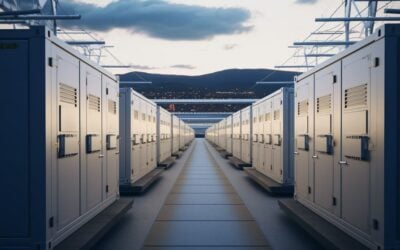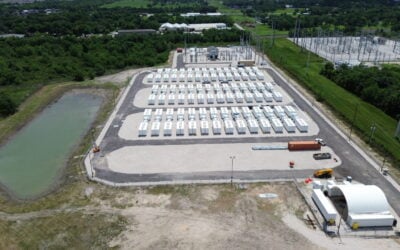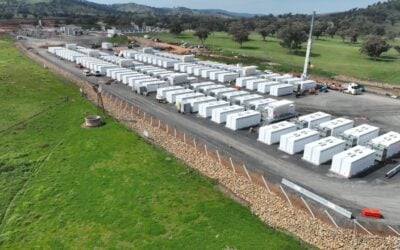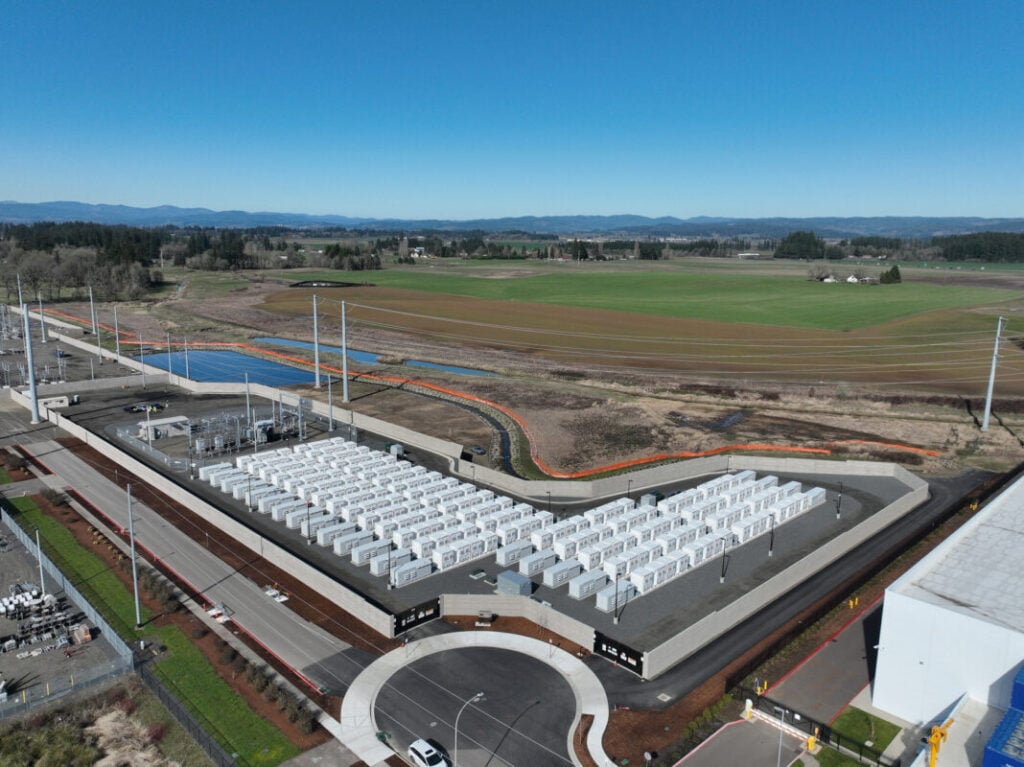
Utility Portland General Electric (PGE) has completed three battery energy storage systems (BESS) totalling more than 1.9GWh in Portland, Oregon, US.
The first of the three, which the utility announced as completed yesterday (7 August), Seaside, is a 200MW/800MWh project owned by PGE in North Portland. The project was delivered to PGE by investor-developer Eolian under a fixed-cost Build-Transfer Agreement (BTA) and achieved commercial operation in July 2025.
Sundial is a 200MW/800MWh project in Troutdale, developed by Eolian and operated by NextEra Energy Resources under a 20-year storage capacity agreement with PGE. Sundial achieved commercial operation in December 2024.
Constable is a 75MW project owned by PGE in Hillsboro. The project was constructed for PGE under an engineering, procurement and construction (EPC) agreement with Mortenson and achieved commercial operation in December 2024.
Try Premium for just $1
- Full premium access for the first month at only $1
- Converts to an annual rate after 30 days unless cancelled
- Cancel anytime during the trial period
Premium Benefits
- Expert industry analysis and interviews
- Digital access to PV Tech Power journal
- Exclusive event discounts
Or get the full Premium subscription right away
Or continue reading this article for free
PGE procured three projects in 2023, claiming it to be the single largest procurement of energy storage in the US by a utility company outside of California at that time.
The resources were chosen via a competitive bidding process and are the final procurements from PGE’s 2021 all-source request for proposals (RFP). These aimed to secure 375MW to 500MW of renewable energy resources and approximately 375MW of “non-emitting dispatchable capacity.”
The 75MW Constable project was included in that procurement under its previous name, Evergreen. It was announced in 2023, a few weeks after the other two projects, when PGE intended to have the whole portfolio in service by 2024.
Speaking with Energy-Storage.news, a spokesperson for PGE clarified that Constable and Evergreen are the same project.
PGE says the projects are “strategically located” at key substations in North Portland, Troutdale, and Hillsboro. They are integrated into PGE’s system to better align electricity production and consumption, reducing strain on the grid.
In 2024, PGE completed its 17MW Coffee Creek Battery Storage system near Wilsonville, adding to three new large-scale battery facilities. The completion of Seaside, Sundial, Constable and Coffee Creek brings PGE’s total large-scale battery storage capacity to 492 MW.
Oregon is not part of a Regional Transmission Organisation (RTO) or Independent System Operator (ISO). The state’s grid is managed by its investor-owned utilities (IOUs) and consumer-owned utilities, while the Oregon Public Utility Commission (OPUC) regulates utility rates and services.
In 2024, PGE became the second entity in the Western US to sign an implementation agreement and officially commit to a regional day-ahead energy market with the California Independent System Operator (CAISO) for its Extended Day-Ahead Market (EDAM).
CAISO describes the EDAM as “a voluntary day-ahead electricity market designed to deliver significant reliability, economic, and environmental benefits to balancing areas and utilities throughout the West.”
In December 2024, the OPUC invited PGE to seek recovery for the costs of a large-scale BESS project. On 20 December, the state regulator approved PGE’s rate review request, allowing a rate increase of 5.5% for residential customers and 7.7% for non-residential customers starting in 2025.
PGE explained that the rate hike would support investments and upgrades in transmission and distribution (T&D), alongside low-carbon technologies, such as enhancing the grid’s resilience to extreme weather and deploying BESS.
Darrington Outama, PGE Senior Director of Energy Supply, said of the newly completed projects, “Batteries play an important role in helping PGE build a more flexible, reliable and diverse generation portfolio.”