US solar manufacturer T1 Energy has entered into a definitive agreement to acquire vertically integrated battery energy storage system (BESS) company KORE Power.
Announced 3 June, the purchase enterprise value consists of approximately US$32 million of equity, cash, and assumption of debt at anticipated closing in Q2 2026.
The deal is expected to give T1 access to energy storage and AI data centre infrastructure markets by expanding its potential customer base for solar and storage products. The acquisition focuses on KORE’s NRI division, which specialises in the design, delivery, installation, and operation of utility-scale BESS.
The companies claim that the NRI team has deployed about 1,100 BESS projects worldwide and has provided solutions to the US government, National Labs, utilities, developers, and other industrial customers for over 50 years. NRI says it performs all its software and controls development domestically. T1 plans to rebrand KORE Power as T1 NRI following the expected close of the transaction.
Try Premium for just $1
- Full premium access for the first month at only $1
- Converts to an annual rate after 30 days unless cancelled
- Cancel anytime during the trial period
Premium Benefits
- Expert industry analysis and interviews
- Digital access to PV Tech Power journal
- Exclusive event discounts
Or get the full Premium subscription right away
Or continue reading this article for free
T1 anticipates the transaction will produce positive EBITDA this year and contribute between US$15 million-US$20 million in EBITDA during 2027. Beyond the US$32 million purchase enterprise value, the deal includes a potential US$9.6 million equity-based earn-out tied to performance in fiscal years 2026 and 2027.
The transaction is expected to close in Q2 of 2026, subject to standard closing conditions, including approval from KORE Power shareholders. Shareholders holding a majority of KORE Power shares have committed to supporting the transaction and are expected to vote in favor of the deal before closing.
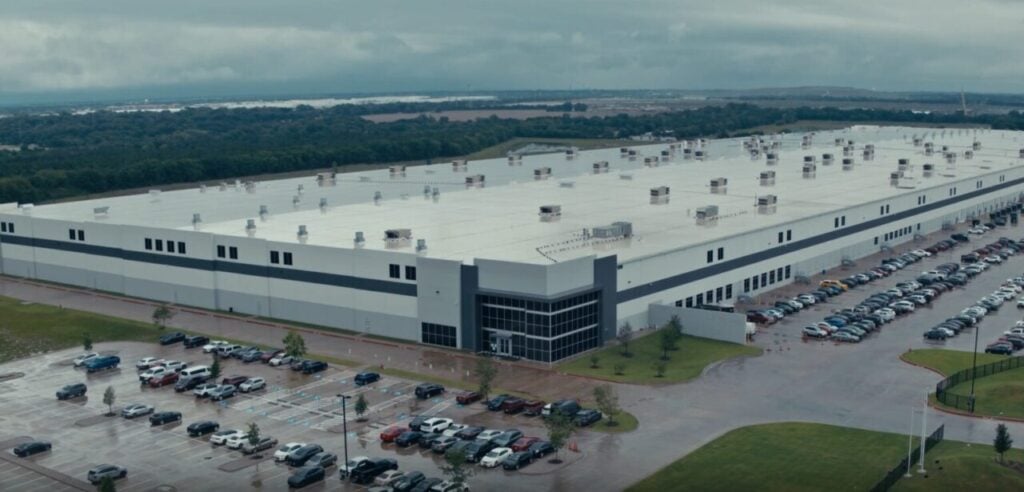
T1 Energy and KORE Power
Notably, both T1, which was formerly known as FREYR Battery in its original incarnation as a Norway-headquartered battery maker, and KORE Power had cancelled planned battery gigafactories in 2025.
T1 cancelled a US$2.57 billion battery cell manufacturing facility in Newnan, Georgia, shortly before its rebrand.
KORE Power announced it was cancelling the planned KOREPlex lithium-ion gigafactory in Arizona, at the same time that the company’s CEO and founder resigned.
Initially, KORE had hoped to open the factory by the end of 2024 or early in 2025, with an initial 6GWh annual production capacity, which would have ramped to 12GWh, in tandem with a ramp-up of its China factory to 6GWh of annual production capacity.
Speaking with Energy-Storage.news yesterday, Daniel Barcelo, chairman and CEO of T1, said of the KORE acquisition, “What we’re not doing is we’re not manufacturing battery cells with KORE. That business does not exist there. We felt that NRI offered a very strong engineering platform that we wanted to incorporate into T1 Energy in order to have a better customer focus. We’re very focused on serving the utility scale developers, and with NRI, we feel that we can do that better.”
He continued, “We bought NRI because we want to have a very strong operationally focused engineering team, in order to go in and work with utility scale developers to ensure that they’re given the best systems. It was a very strategic choice for us to strengthen our relationship, that’s what that’s what that acquisition about. NRI has been in business for over 50 years, they’ve put systems down literally on every continent, including Antarctica, so they have a very, very strong relationship of technical strength, and that’s what we’re really focused on.”