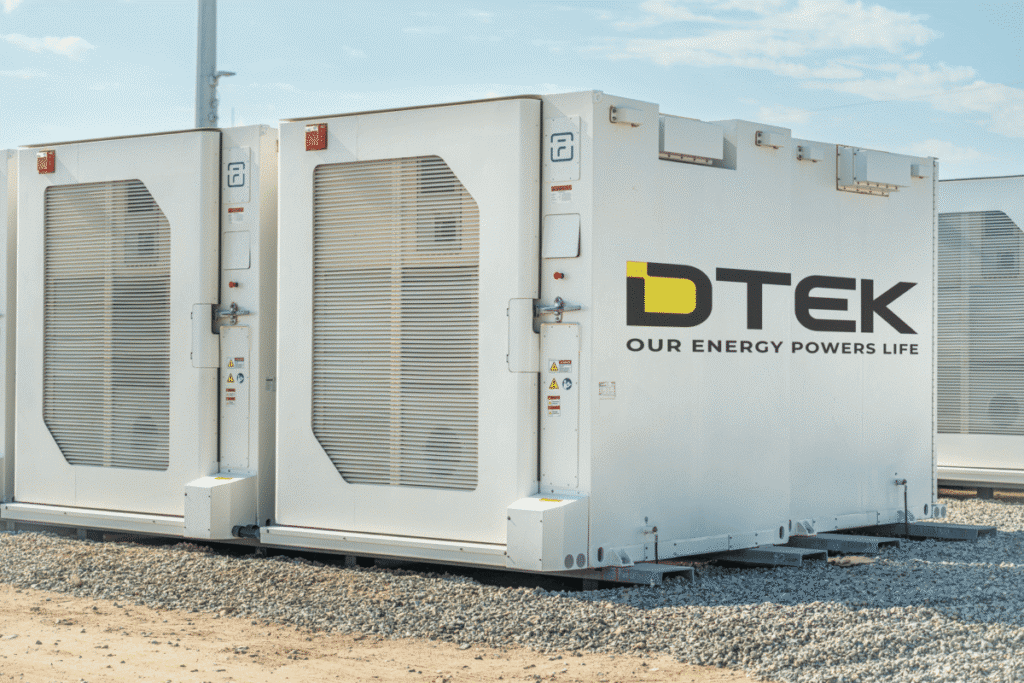
The US has pledged financial support towards an existing 400MWh battery energy storage system (BESS) portfolio in Ukraine.
The International Development Finance Corporation (DFC), the US government’s development finance institution, announced earlier this week (16 September) that a package of investments totalling more than US$8 billion will include support for energy and digital communications infrastructure in its war-torn European ally.
According to the DFC, the new projects secure essential services for partner nations while prioritising US export growth, securing reliable energy and advancing US technology.
They include DFC support for US exports to emerging markets through a counter-guarantee to the International Finance Corporation (IFC) Global Trade Finance Program, a seawater desalination and conveyance system in Jordan and equity investment in digital infrastructure across Africa.
Try Premium for just $1
- Full premium access for the first month at only $1
- Converts to an annual rate after 30 days unless cancelled
- Cancel anytime during the trial period
Premium Benefits
- Expert industry analysis and interviews
- Digital access to PV Tech Power journal
- Exclusive event discounts
Or get the full Premium subscription right away
Or continue reading this article for free
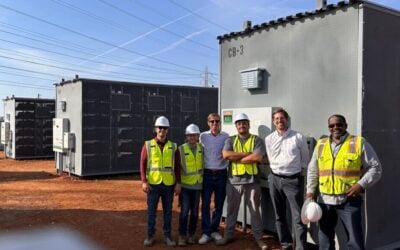
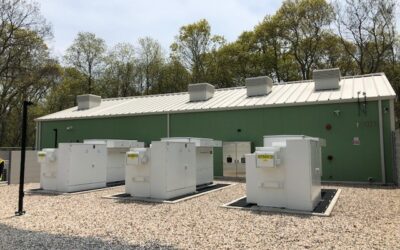
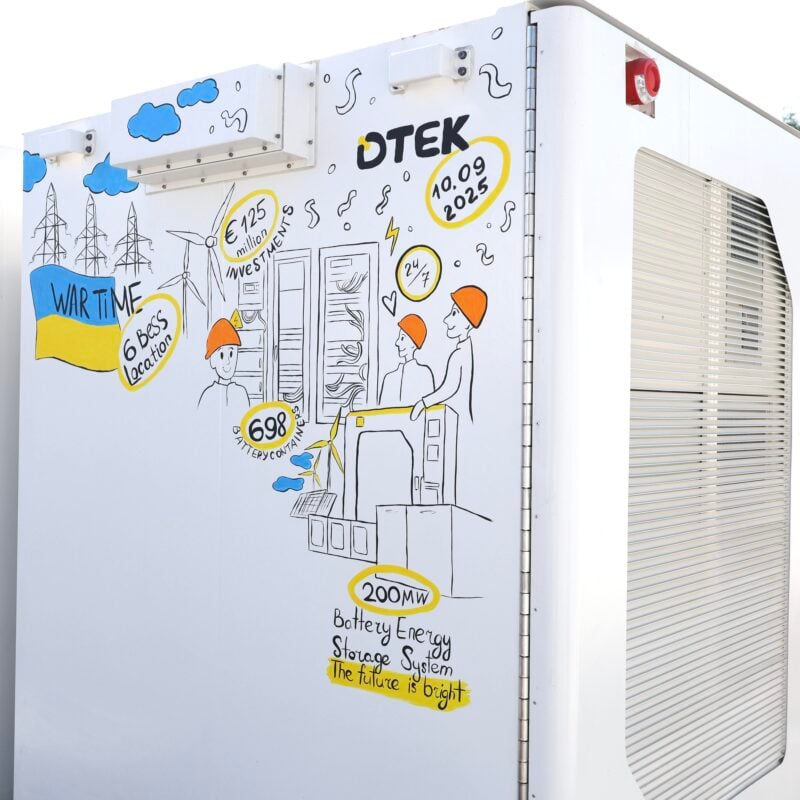
Alongside those investments, the development finance group approved a loan to support a 200MW/400MWh BESS portfolio, spread across six sites in Ukraine’s Kyiv and Dnipropetrovsk regions.
The portfolio has been developed by DTEK, Ukraine’s biggest energy sector investor, with BESS technology supplied by US-headquartered system integrator and services provider Fluence.
The projects use Fluence’s Gridstack DC block BESS solution. They entered commissioning and testing in the summer of 2025, ahead of the start of commercial operations under contract with transmission system operator (TSO) Ukrenergo.
Due to the ongoing war, it was the first time Fluence commissioned BESS assets remotely, after giving training to 20 Ukrainian engineers and operations specialists.
The portfolio of six sites, which range from 20MW to 50MW, each of 2-hour duration, went into commercial operation in September last year. According to DTEK, they were built in just six months.
DFC funding will also strengthen and modernise Ukraine’s telecommunications networks, supporting the cellphone operator Vodafone Ukraine in deploying 5G infrastructure.
“These are exactly the kinds of investments President Trump empowered DFC to make,” DFC CEO Ben Black said.
“These projects will support billions in American exports, secure critical infrastructure and resources in Ukraine, Jordan, and across Africa, and strengthen US companies competing in some of the most important markets in the world.”
Ukraine needs storage to survive in wartime, thrive in peace
The announcement comes just a few days after Trump told reporters that Ukrainian attacks on Russian diesel refineries were responsible for global energy price shocks, contrary to the conventional thinking that the war with Iran and closure of the Straits of Hormuz are the primary drivers of the present steep rises in fuel costs.
Terms of the loan to finance the DTEK portfolio were not disclosed. Both DFC and DTEK noted, however, that it is the largest investment in Ukraine’s energy sector since the 2022 Russian invasion.
DTEK also got a financing commitment worth around US$77 million towards five of the six projects from a consortium of lenders, including Ukrainian state-owned bank Oschadbank, in June last year. The company put the total investment cost of the portfolio at about €125 million (US$143.6 million).
Earlier this year, a prominent Ukrainian politician spoke with Energy-Storage.news about the country’s critical and strategic need for energy storage resources.
Serhii Nahorniak, Ukrainian Member of Parliament and chair of the Subcommittee on Energy Saving and Energy Efficiency, said that investment in renewable energy and energy storage was “a matter of survival” under wartime conditions, but also a means for economic, industrial and social development once peace is restored.
DTEK energy storage lead Vadym Utkin, interviewed after speaking onstage at the Energy Storage Summit EU 2026 in London early this year, told this site that Ukraine’s addition of renewable energy to its mix of ageing nuclear and thermal generation means that there is a fundamental need for storage, and there is also a business case.
“The DFC’s decision represents a vote of confidence in our energy sector and demonstrates that Ukraine is a compelling destination for international investors,” DTEK CEO Maxim Timchenko said of the new financing.
“As the largest private investor in Ukraine, this approval allows DTEK to deploy further capital into a pipeline of projects that will strengthen our collective energy security in the years ahead. Moreover, it shows that with the right projects and partners, long-term capital can be mobilised at scale to support Ukraine’s recovery.”
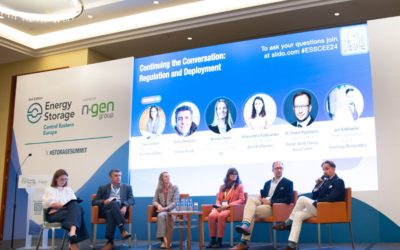
Energy Storage Summit CEE 2026, the essential meeting point for the most influential voices shaping the future of Central and Eastern Europe’s power landscape, takes place 6-7 October 2026 at the Warsaw Presidential Hotel, Poland and is hosted by our publisher Solar Media (part of the Informa Group). Learn more at the official website.