Redwood Materials has closed a US$350 million Series E funding round to scale up its critical battery materials and energy storage businesses.
The Series E was led by investor Eclipse with participation from new strategic investors including NVentures, Graphics processing unit (GPU) maker Nvidia’s venture capital arm.
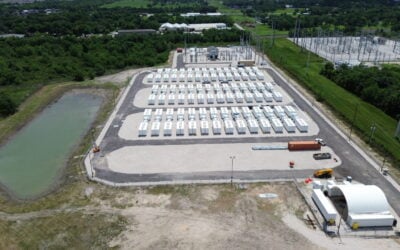
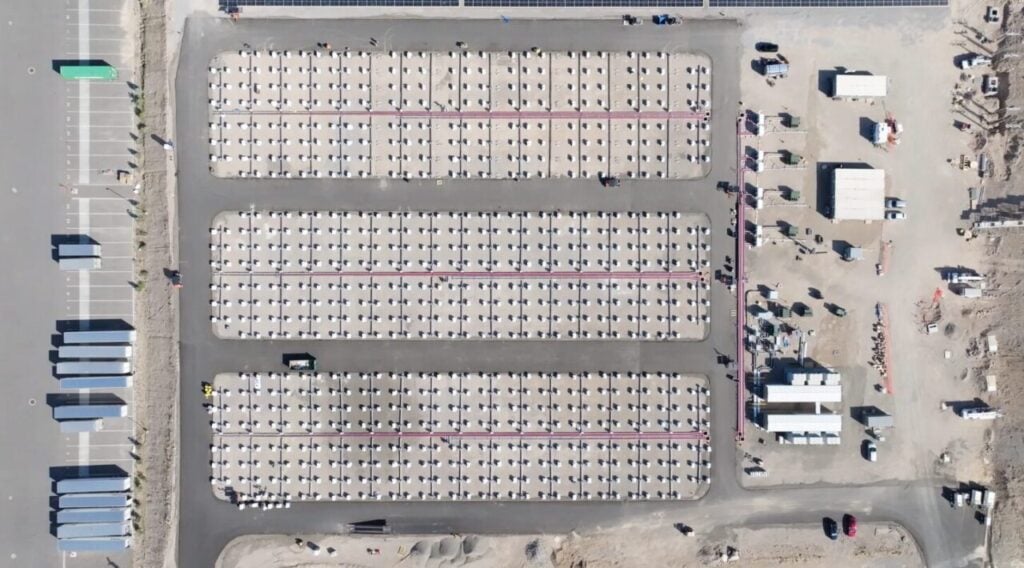
Redwood was founded in 2017 as a battery recycling and materials company by former Tesla CTO JB Straubel, but this year expanded into deploying battery energy storage system (BESS) projects using repurposed EV batteries, so-called ‘second life’ products. Its first project was a 63MWh second life BESS microgrid powering two data centres.
Redwood said the Series E fundraising demonstrates the potential of its two business lines: critical materials, covering cobalt, nickel, copper, lithium and cathode active material (CAM); and grid energy storage, which it described as “very large scale, lowest cost, best integration”.
Try Premium for just $1
- Full premium access for the first month at only $1
- Converts to an annual rate after 30 days unless cancelled
- Cancel anytime during the trial period
Premium Benefits
- Expert industry analysis and interviews
- Digital access to PV Tech Power journal
- Exclusive event discounts
Or get the full Premium subscription right away
Or continue reading this article for free
It cited the growth of AI data centres as a key enabler of energy storage, and that its deep materials and manufacturing expertise will help it scale solutions to reduce reliance on imported LFP batteries.
“With this new capital, Redwood will accelerate the expansion of our energy storage deployments, refining and materials production capacity, and our world-class engineering and operations teams,” its announcement said.
Many companies have shifted vertically or horizontally into the energy storage space, looking to capitalise on one of the fastest growing and most dynamic segments within the energy sector.
However, the move by Redwood could also have been driven by challenges in its core business of battery recycling and materials. Ever falling prices for new batteries from China, and their underlying materials, have had a knock-on effect on the price of recycled materials.
Another US firm, Li-Cycle, ultimately filed for bankruptcy earlier this year following which it was acquired by mining giant Glencore, though as with any bankruptcy there were company-specific factors in its demise.
However, incoming foreign entity of concern (FEOC) rules for the energy storage investment tax credit (ITC) look set to limit Chinese supply of batteries and BESS to the US market, possibly improving the business case for domestically-sourced materials and technology. Though, full details of implementation are still to be clarified.
In late 2023, Redwood announced it would decommission and recycle 4.6MWh BESS in Hawaii. That same year it got a US$2 billion loan commitment from the Department of Energy’s (DOE) Loan Programs Office (LPO), though since Trump took office in January 2025 the future of the LPO and its loan recipients is unclear.