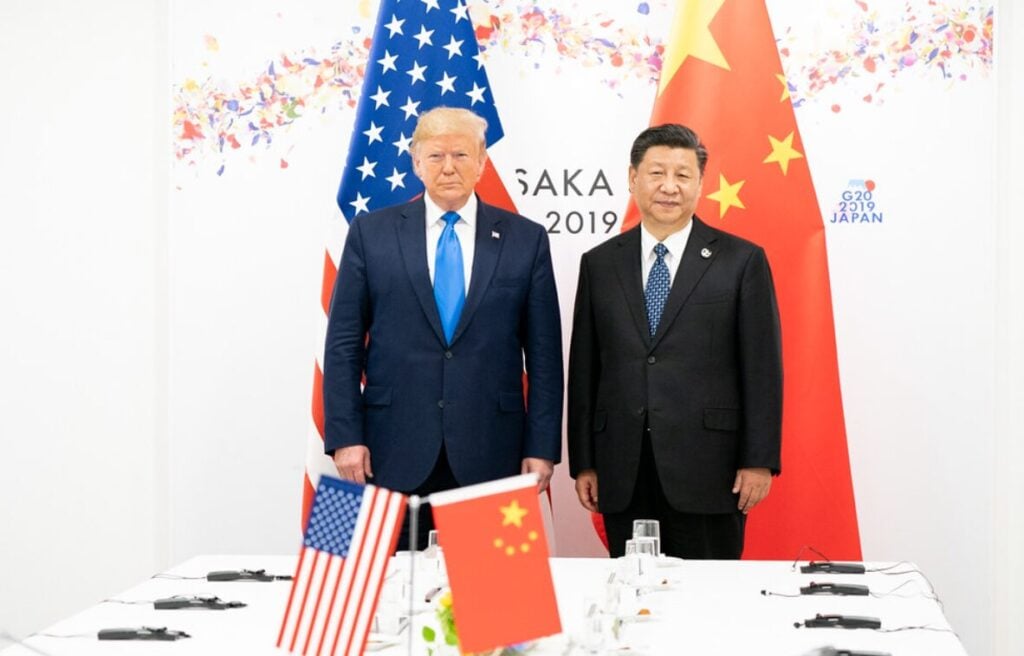
The US and China have announced a 90 day ‘pause’ on their huge reciprocal tariffs while they continue negotiations, with the effective tariff on BESS more than halving to around 60%.
In what was the two countries’ first joint statement on trade in years yesterday (12 May), the White House said they have agreed to lower their current tariffs for a 90 day period which expires on 1 July. Global stock markets and commodities jumped in response.
Specifically, the US will reduce its ‘Liberation Day’ tariffs announced on 2 April from 125% to 10% while China will reduce its retaliatory ones down to 10% too (those had prompted a retaliatory hike in the US’ tariffs, having initially been 34%).
What this means is a reduction in US tariffs on all Chinese goods from 145% to 30%. That 30% is made up of the two separate 10% tariffs announced prior to 2 April and the temporarily lower 10% Liberation Day tariff.
Try Premium for just $1
- Full premium access for the first month at only $1
- Converts to an annual rate after 30 days unless cancelled
- Cancel anytime during the trial period
Premium Benefits
- Expert industry analysis and interviews
- Digital access to PV Tech Power journal
- Exclusive event discounts
Or get the full Premium subscription right away
Or continue reading this article for free
That means an effective tariff on battery energy storage systems (BESS) or batteries for BESS of 40.9% right now and 58.4% from 1 January 2026, Energy-Storage.news calculates.
This is based on a pre-existing 3.4% tariff on all lithium-ion batteries globally plus a Section 301 tariff on batteries from China, currently 7.5% and set to increase to 25% in January 2026 for BESS, and already in place for EVs.
Clean Energy Associates’ senior policy analyst Christian Roselund meanwhile posted on LinkedIn that the effective tariff on BESS will be 65%. Energy-Storage.news has reached out to the company for comment on the news.
Roselund also cautioned that this week we may see the result of the AD/CVD petition by the American Active Anode Material Producers (AAAMP) calling for huge duties on active anode material from China, which would affect batteries and BESS.
Energy-Storage.news had been told that the 145% tariff meant that virtually no US BESS projects have been able to be finalised and financed since 2 April, so this reduction, even temporary, could unblock some of them. Some developers and owners may opt to wait out the 90 days to see what final agreement is made, while others may decide to push forward on the basis that tariffs will either increase or not change substantially.